


When selecting Corten Steel for outdoor or structural projects, Q355GNH and Q355NH are two commonly confused grades-many buyers assume they are interchangeable, only to face performance mismatches or unnecessary cost overruns. Both meet GB/T 4171 standards, offer excellent atmospheric corrosion resistance, and share the same base strength, but subtle differences in alloy composition and impact toughness make them suited for distinct scenarios.
So, how do these two Corten Steel grades compare, and which one fits your project best? Based on material standards and industrial practice, the core answer is clear: Q355GNH and Q355NH are similar in basic strength and corrosion resistance, but Q355GNH provides higher low-temperature impact toughness, making it more suitable for cold regions, while Q355NH can be a more cost-effective option for mild environments.

Key Similarities: Why They're Often Confused
Q355GNH and Q355NH share core traits that make them both reliable Corten Steel options, especially for outdoor use:
Base Strength: Both have a minimum yield strength of ≥355 MPa and tensile strength of 490–630 MPa, suitable for medium-load structural applications.
Corrosion Resistance: Both form a dense, protective patina through alloying elements such as Cu and Cr. Under suitable atmospheric exposure conditions, their corrosion rate can be around ≤0.03 mm/year. This value is an indicative value for specific atmospheric environments rather than a universal corrosion rate for all service conditions.
Weldability & Processability: Both can be welded using conventional processes and commonly used weathering-steel-compatible consumables such as E5015 electrodes and ER50-6 wire. For plates ≤16 mm, no preheating is generally required under common fabrication conditions; actual welding parameters should be determined according to plate thickness, restraint, welding procedure and project requirements.
Production Standard: Both comply with GB/T 4171, the core Chinese standard for weathering-resistant steels.

Chemical Composition: The Key Alloy Difference
Although Q355GNH and Q355NH have similar basic strength and weathering characteristics, their alloying systems are not completely identical. Q355GNH may use trace Ni alloying to improve low-temperature toughness, while Q355NH primarily relies on the conventional Cu/Cr weathering-steel system.
This difference helps explain why Q355GNH is preferred for applications requiring improved low-temperature impact performance.
| Element | Q355GNH | Q355NH |
|---|---|---|
| Carbon (C) | - | - |
| Silicon (Si) | - | - |
| Manganese (Mn) | - | - |
| Copper (Cu) | Weathering alloy | Weathering alloy |
| Chromium (Cr) | Weathering alloy | Weathering alloy |
| Nickel (Ni) | Trace alloying may be used | Conventional composition |
| Sulfur (S) | According to GB/T 4171 | According to GB/T 4171 |
| Phosphorus (P) | According to GB/T 4171 | According to GB/T 4171 |
The exact chemical composition should be verified against the applicable GB/T 4171 grade, thickness and mill test certificate. The table above is intended to highlight the alloy-design difference rather than replace the standard chemical-composition table.
The Critical Difference: Low-Temperature Toughness
The most important practical distinction between the two grades is low-temperature impact toughness. This is where Q355GNH stands out, partly because of its optimized alloy design and trace Ni addition.
Q355GNH: Minimum Charpy V-notch impact energy is ≥34 J at -20°C according to the relevant GB/T 4171 requirement. A requirement of ≥27 J at -40°C may be specified as an additional or customized requirement, but it should not be treated as a mandatory standard value for every Q355GNH product.
Q355NH: Minimum Charpy V-notch impact energy is ≥34 J at 0°C according to the relevant GB/T 4171 requirement. The applicable impact requirement can vary with plate thickness and delivery condition, so the project specification and mill certificate should be checked before procurement.
Therefore, Q355GNH is generally more appropriate when the structure must maintain reliable impact toughness at lower temperatures, while Q355NH can meet the needs of many mild-to-moderate climate applications.

Other Practical Differences (Cost & Availability)
Cost: Q355GNH may be approximately 5–10% more expensive than Q355NH because of its alloy design and production requirements. This is a market experience range rather than a fixed price difference; actual pricing depends on thickness, quantity, production route, certification and order conditions.
Availability: Q355NH is often more widely stocked, with 3–40 mm being a common market inventory range. This is also a market availability reference rather than a universal stock specification. Q355GNH may require custom production for certain thicknesses or project-specific requirements.
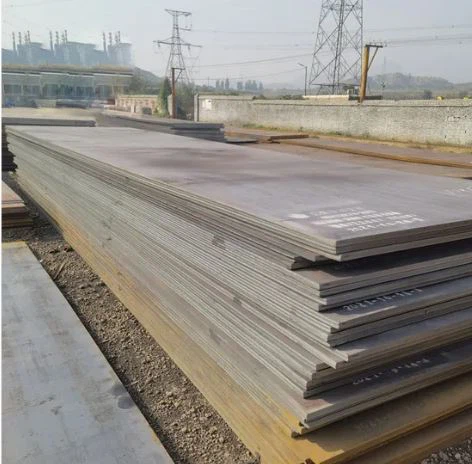
Which One to Choose? (Practical Selection Guide)
Match the grade to your project's environment-this ensures optimal performance and cost-effectiveness:
Choose Q355GNH If: Your project is in low-temperature regions, particularly where the design requires improved impact toughness at sub-zero temperatures, such as cold coastal areas and northern structural projects including bridge supports and warehouse frames.
Choose Q355NH If: Your project is in mild to cool environments, such as urban/suburban outdoor cladding, guardrails, or non-cold coastal decorative structures. Q355NH can provide the required weathering performance without paying for additional low-temperature toughness where it is not required.
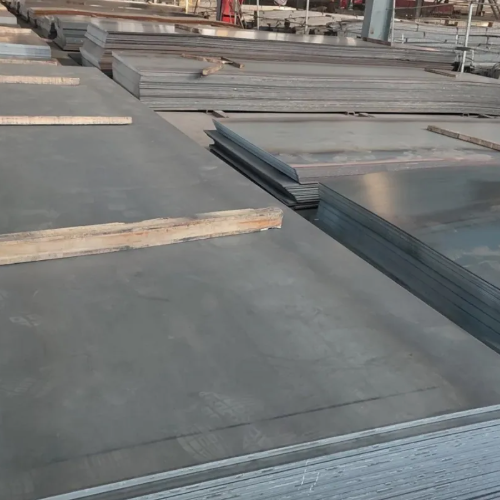
Both grades offer good weldability when suitable welding procedures and consumables are used. E5015 and ER50-6 can be used as common welding consumable options under appropriate fabrication conditions.
For plates ≤16 mm, no preheating is generally required as a conventional recommendation under suitable welding conditions. For thicker plates or highly restrained joints, preheating and interpass temperature should instead be determined through the applicable welding procedure and project requirements.
For weathering structures where maintaining a consistent appearance and corrosion behavior is important, weathering-steel-compatible consumables should be selected rather than treating the two grades as ordinary carbon steel.
In summary, Q355GNH and Q355NH are both high-quality Corten Steels with similar basic strength and atmospheric corrosion resistance, but their low-temperature toughness requirements are different. Q355GNH provides ≥34 J Charpy impact energy at -20°C under the relevant GB/T 4171 requirement, while Q355NH provides ≥34 J at 0°C. Q355GNH therefore has an advantage for cold-region applications, while Q355NH can offer better cost-efficiency for mild conditions.
The final grade selection should be based on minimum service temperature, required impact toughness, plate thickness, delivery condition, project specification and procurement availability, rather than strength alone.


