


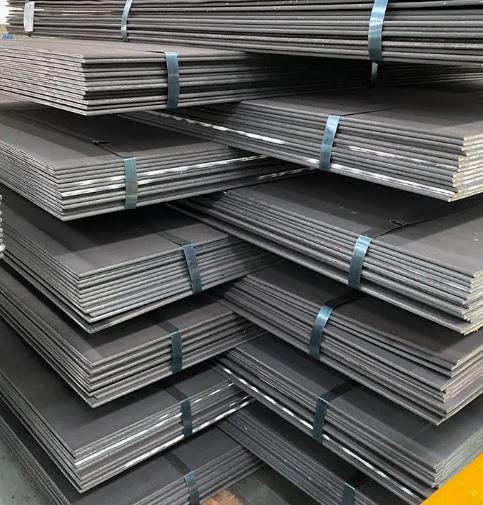
When selecting Q355GNH Corten Steel for outdoor or structural projects, understanding its core properties is key to ensuring it fits your needs-many buyers confuse it with other Corten grades, leading to mismatched performance or unnecessary costs. Unlike ordinary weather-resistant steels, Q355GNH balances corrosion resistance, strength, and processability for harsh or low-temperature environments. So, what are the core properties that define Q355GNH and make it stand out? Based on GB/T 4171 standards and industrial practice, the core answer is clear: Q355GNH Corten Steel's core properties include enhanced low-temperature toughness, excellent corrosion resistance, medium-high strength, and good weldability-tailored for harsh outdoor and low-temperature projects. Below is a concise, actionable guide.

1. Enhanced Low-Temperature Toughness (Key Differentiator)
Q355GNH's biggest advantage over standard Corten grades (e.g., Q355NH) is its superior low-temperature performance, critical for cold-region projects:
Standard Requirement: Minimum Charpy V-notch impact energy ≥34J at -20℃ (vs. 0℃ for ordinary Q355NH), with optional grades reaching ≥27J at -40℃ for extreme cold.
Practical Value: Resists brittle fracture in freezing environments (e.g., northern Europe, northern North America), making it ideal for cold-region outdoor structures.
Alloy Support: Trace Ni and Mn elements enhance ductility, ensuring stability even in prolonged low temperatures.
2. Excellent Corrosion Resistance (Core Trait of Corten Steel)
As a high-performance Corten Steel, Q355GNH delivers long-lasting weather resistance without frequent maintenance:
Patina Formation: Forms a dense, adherent protective patina in 6-12 months when exposed to air and moisture, blocking further corrosion.
Corrosion Performance: Corrosion rate ≤0.025mm/year (better than Q355NH), 4-6 times more resistant than ordinary carbon steel.
Suitable Environments: Thrives in coastal, high-humidity, and mild industrial zones-resists salt spray and light chemical fumes.

3. Medium-High Strength (Mechanical Core)
Q355GNH's strength balances load-bearing capacity and processability, fitting most structural needs:
Key Metrics (GB/T 4171): Minimum yield strength ≥355MPa, tensile strength 490-630MPa (the "355" refers to yield strength).
Practical Application: Suitable for medium-load structural components (bridge supports, warehouse frames, coastal guardrails) and heavy-duty decorative parts.
Thickness Adaptability: Maintains strength even for thick plates (up to 100mm), with slight yield strength adjustment for ultra-thick sizes.
4. Good Weldability & Formability (Easy to Fabricate)
Despite its enhanced performance, Q355GNH remains easy to process, reducing fabrication costs:
Weldability: Compatible with common welding processes (SMAW, GMAW, TIG); only thick plates (>16mm) need mild preheating (80-120℃) to avoid cracks.
Formability: Good ductility allows bending, rolling, and laser cutting-recommended bending radius ≥3×plate thickness for best results.
Post-Processing: No special heat treatment needed after fabrication, except for complex thick-joint projects.

Quick Summary for Practical Selection
Q355GNH's core properties make it ideal for: Low-temperature outdoor projects, coastal structures, medium-load bearings, and harsh-environment applications where standard Corten Steel (Q355NH) is insufficient. Its balance of toughness, corrosion resistance, and processability ensures long service life while controlling costs.

In short, Q355GNH Corten Steel's enhanced low-temperature toughness, excellent corrosion resistance, reliable strength, and good processability make it a versatile, high-value choice for harsh outdoor and structural projects-understanding these properties helps you select the right material for your needs.


