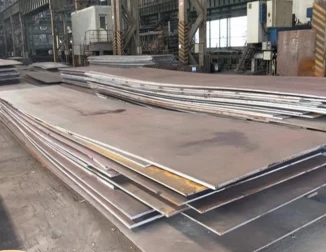
Chromium (Cr) is one of the key alloying elements in SPA‑H that directly improves its atmospheric corrosion resistance, mainly by refining and stabilizing the patina layer.
1. Promotes formation of a dense, protective patina
Chromium encourages the formation of fine, compact crystalline oxides - especially α‑FeOOH (goethite) - the most stable component in mature patina.This makes the surface layer tight, low‑porosity, and impermeable to water and oxygen, effectively blocking further corrosion.
2. Increases oxidation and chemical stability
Chromium forms stable Cr‑rich oxides and oxyhydroxides in the inner patina layer.These compounds are chemically inert and reduce the rate of electrochemical corrosion, even in urban, industrial, or mildly acidic environments.

3. Improves adhesion between patina and steel substrate
Chromium enhances the bonding strength between the oxide film and the base metal.The patina becomes less likely to peel or powder and remains protective over decades.
4. Accelerates patina maturation
Chromium helps the surface quickly transition from loose, orange early rust to a stable, dark brown protective patina.This shortens the unstable period and reduces rust runoff.

5. Works synergistically with Cu, Ni, and P
Chromium does not act alone:
With copper (Cu): further densifies the patina
With nickel (Ni): improves durability in harsh environments
With phosphorus (P): speeds up uniform formation