1.5mm Q550NH steel combines a thin-gauge steel form with the high strength and atmospheric corrosion resistance of GB/T 4171 Q550NH weathering steel.
For container manufacturers and fabricated transport equipment producers, thin Q550NH can be considered where weight reduction, continuous forming, corrosion resistance and structural strength are required together.
At 1.5 mm thickness, Q550NH falls within the ≤16 mm mechanical-property range of GB/T 4171. The specified minimum yield strength is 550 MPa, tensile strength is 620–780 MPa, and minimum elongation is 16%.

Why Use 1.5mm Q550NH Steel for Lightweight Containers?
Container structures require a balance between steel thickness, strength, corrosion resistance, forming capability and finished weight. Conventional weathering steel container side panels are commonly found around 1.6 mm, while 2.0 mm material is also used depending on panel position and structural requirements.
Using 1.5mm Q550NH weathering steel can reduce raw steel weight per unit area while maintaining the high nominal strength level of Q550NH. However, thickness reduction cannot be determined from yield strength alone. Corrugation profile, panel span, welding design, fatigue, impact resistance and applicable container standards must also be checked.
Weight Advantage of 1.5mm Q550NH Steel Sheet
Using a typical steel density of approximately 7,850 kg/m³, the theoretical mass of a 1.5mm Q550NH steel sheet is approximately 11.78 kg/m².
| Thickness | Theoretical Weight | Difference vs. 2.0 mm |
|---|---|---|
| 1.5 mm | 11.78 kg/m² | −25% |
| 1.6 mm | 12.56 kg/m² | −20% |
| 2.0 mm | 15.70 kg/m² | Reference |
For the same surface area, changing from 2.0 mm to 1.5 mm steel reduces the theoretical raw-sheet mass by approximately 25%. Compared with 1.6 mm steel, the reduction is approximately 6.25%.
These figures only describe material mass. They do not mean that a 1.5 mm panel can directly replace a 1.6 mm or 2.0 mm container panel without structural verification.
1.5mm Q550NH Steel Mechanical Properties
Because 1.5 mm is within the t≤16 mm thickness range, the corresponding standard mechanical-property requirements for Q550NH are:
| Property | 1.5mm Q550NH Requirement |
|---|---|
| Thickness | 1.5 mm |
| Minimum Yield Strength | ≥550 MPa |
| Tensile Strength | 620–780 MPa |
| Minimum Elongation | ≥16% |
| Standard | GB/T 4171 |
| Product Form | Hot Rolled |
The combination of high yield strength and thin gauge is one reason Q550NH steel can be evaluated for lightweight fabricated structures where conventional lower-strength material may require greater thickness.
Chemical Composition of Q550NH Weathering Steel
Q550NH is not simply a high-strength carbon steel. Cu, Cr and Ni are included in the alloy design to improve atmospheric corrosion resistance.
| Element | GB/T 4171 Q550NH (%) |
|---|---|
| C | ≤0.16 |
| Si | ≤0.65 |
| Mn | ≤2.00 |
| P | ≤0.025 |
| S | ≤0.030 |
| Cu | 0.20–0.55 |
| Cr | 0.30–1.25 |
| Ni | 0.12–0.65 |
GB/T 4171 also permits controlled additions of Nb, V and Ti for property adjustment. The combined Nb + V + Ti addition should not exceed 0.22%.
Where Can 1.5mm Q550NH Steel Be Used in Container Fabrication?
For lightweight container projects, 1.5mm Q550NH steel is more appropriate to describe as a material for engineered thin-gauge components rather than assuming it can replace every standard container steel component.
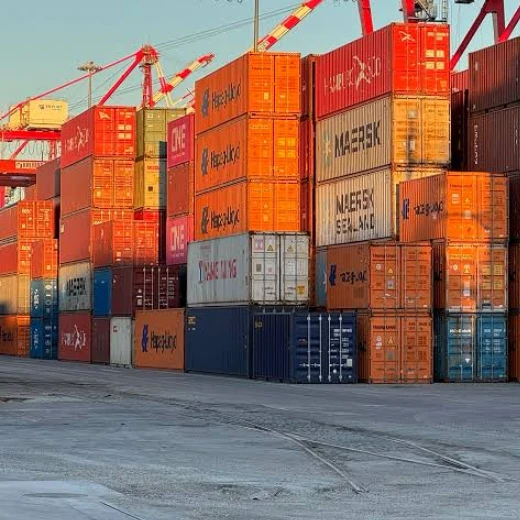
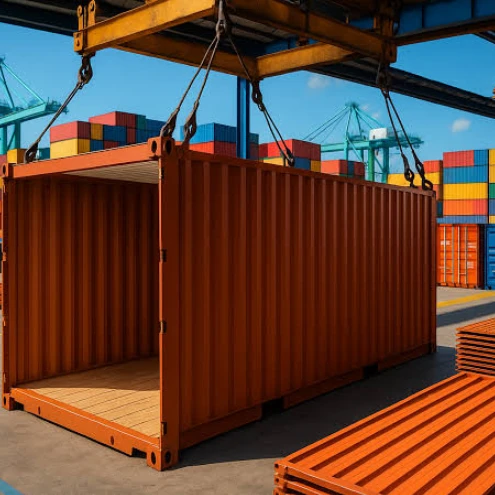
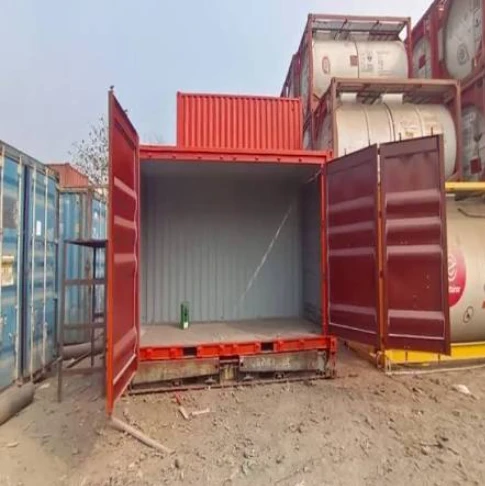
Potential applications include corrugated side wall components, lightweight enclosure panels, container-related equipment housings, transportation equipment panels and other formed weather-resistant components.
For reference, commercial container side-wall products commonly use approximately 1.6 mm weathering steel, and corrugated profiles are used to provide panel rigidity. Therefore, a proposed 1.5 mm Q550NH design should be evaluated together with corrugation geometry rather than comparing flat-sheet thickness alone.
Why Form Is Suitable for Container Production
For high-volume container fabrication, Q550NH steel has an important processing advantage over individually supplied steel plates.
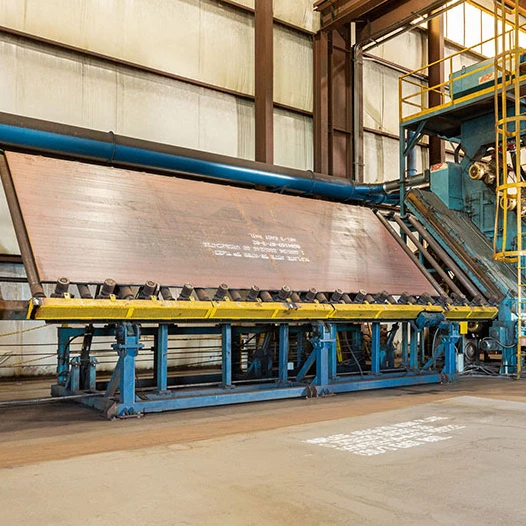
The steel can be decoiled and leveled before entering continuous cutting or roll-forming equipment. Manufacturers can then produce repeated panel dimensions and corrugation profiles with fewer interruptions between individual sheets.
For this reason, thin Q550NH weathering steel is particularly relevant to manufacturers requiring high-volume sheet forming rather than heavy individual structural plates.
Processing 1.5mm Q550NH Steel
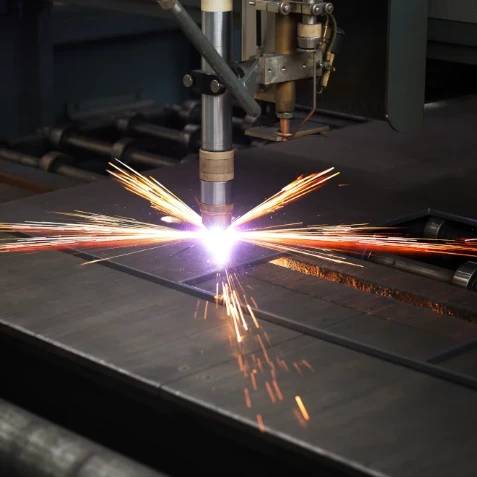
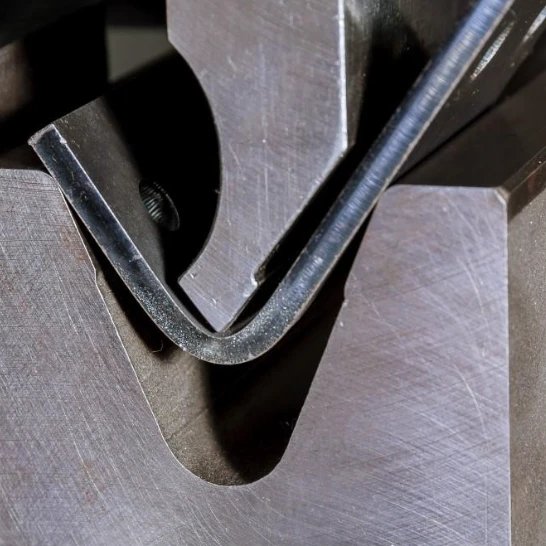
A typical processing route starts with decoiling and leveling. The material can then be slit to the required width or cut to specified sheet lengths. Depending on the final component design, subsequent processes may include roll forming, corrugation forming, bending, punching, laser cutting and welding.
For 1.5mm Q550NH steel sheet, dimensional accuracy and flatness become particularly important because thin material is more sensitive to distortion during leveling, forming and welding.
Welding parameters should also be selected according to actual joint design, heat input and finished component requirements rather than assuming that the same procedure used for thicker Q550NH plate can be applied directly.
1.5mm Q550NH vs. Conventional Container Weathering Steel
Many commercial container panels use weathering grades such as SPA-H/Corten-type steel, with 1.6 mm being a common side-panel thickness in current supplier specifications.
| Comparison | 1.5mm Q550NH | Typical 1.6mm Weathering Panel |
|---|---|---|
| Thickness | 1.5 mm | Around 1.6 mm |
| Q550NH Yield Strength | ≥550 MPa | Depends on selected grade |
| Mass | 11.78 kg/m² | 12.56 kg/m² |
| Difference | About 6.25% lower | Reference |
| Main Advantage | High strength + thin gauge | Established container panel specification |
| Engineering Verification | Required | Required according to container design |
The value of Q550NH is therefore not simply that it is "0.1 mm thinner." The more important question is whether its 550 MPa strength level and weathering properties can support a redesigned lightweight component while still meeting structural, forming, welding and service requirements.
What Should Buyers Specify for 1.5mm Q550NH Steel?
When requesting a quotation, the buyer should confirm not only 1.5mm Q550NH steel, but also the required steel width, total quantity, single-steel weight, steel inner diameter, edge condition, surface requirement and downstream processing.
If the steel will be used for container panels, the final panel dimensions, corrugation profile, forming method, welding requirements and applicable container specification should also be provided for technical review.
1.5mm Q550NH Steel Supply For Container Projects
Gnee supplies Q550NH weathering steel, Q550NH steel sheet and Q550NH steel plate for transportation equipment, container-related fabrication and lightweight structural projects.
For thin-gauge requirements such as 1.5mm Q550NH steel , actual mill availability, width, weight and production route should be confirmed according to the order.
Send us your required 1.5mm Q550NH steel width, weight, quantity, final container component drawing and destination port. We can review the required specification and provide available production information, processing options, quotation and sample MTC.