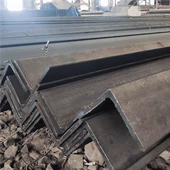
Structural design drawings are the backbone of any construction project, and imprecise material specifications can lead to costly errors-especially for high-strength Corten Steel like ASTM A871 Grade 65. Used widely in tubular structures, industrial framing, and coastal infrastructure, this grade requires clear, standard-aligned to ensure suppliers deliver the right material. How do you properly specify it in drawings, while also understanding its real-world applications? Here's a practical, lightweight guide tailored to clarity and usability.

First: Real-World Applications of ASTM A871 Grade 65 Corten Steel
To specify the grade correctly, it helps to align with its common, industry-proven uses (per ASTM A871 standards and project practices):
Tubular structures and utility poles: Its high strength and formability make it ideal for seamless or welded tubular sections.
Industrial framing and support columns: Handles heavy static and dynamic loads in factories and warehouses.
Coastal and outdoor infrastructure: Resists salt spray and atmospheric corrosion, suitable for costal buildings and transmission towers.
Petrochemical and energy structures: Used in oil well frames and power-related support components.

Core Specification Elements for Design Drawings
Include these four critical, ASTM-aligned details to avoid ambiguity-they ensure suppliers match your project's needs:
Full ASTM Designation: Always write "ASTM A871/A871M Grade 65 Corten Steel" (never just "Corten Steel"). This avoids substitution with lower-grade weathering steels.
Mechanical Properties: Note key specs: Minimum yield strength 450 MPa (65 ksi), tensile strength 550–690 MPa, and ASTM G101 corrosion resistance index ≥6.0.
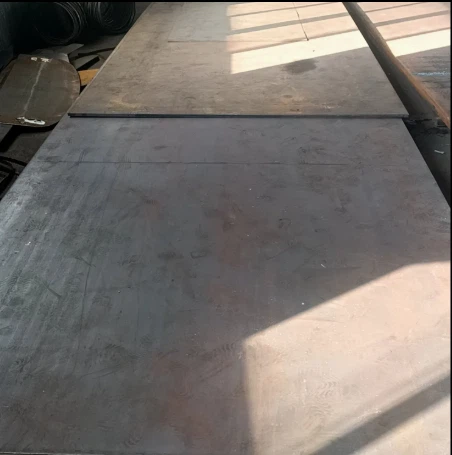
Material Form & Dimensions: Specify form (e.g., "mill plate for tubular fabrication," "structural sections") and dimensions (thickness 3mm–150mm per ASTM A871).
Quality & Delivery Requirements: Add "Mill Test Report (MTR) required" and specify delivery condition (as-rolled, normalized, or quenched and tempered).
Quick Step-by-Step Annotation Guide
Follow these simple steps to integrate the specification into your drawings:
Add a "Materials" section in drawing notes, labeling components (e.g., "tubular utility poles: ASTM A871/A871M Grade 65 Corten Steel").
List mechanical properties and corrosion resistance index to confirm compliance.
Specify fabrication compatibility: "Suitable for cold forming and welding per ASTM A6/A6M guidelines."
Include MTR requirement to verify material quality before delivery.

Key Mistakes to Avoid
Skipping the full ASTM designation (e.g., "A871 Grade 65" without "ASTM A871/A871M").
Omitting mechanical properties-suppliers need clear strength specs to deliver the right steel.
Vague form/dimension notes (e.g., not specifying "tubular fabrication")-misalignment with application needs.

In short, specifying ASTM A871 Grade 65 Corten Steel comes down to clarity and alignment with its real-world applications. By including the full designation, key specs, and quality requirements, you ensure your drawings translate to the right material-keeping your project on track, compliant, and tailored to its intended use.