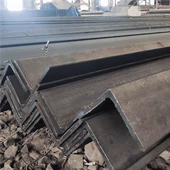
Corten steel earns its reputation in exactly the conditions that destroy ordinary steel: salt-laden coastal air, industrial pollution, freeze-thaw cycling and intense UV. Its protection comes not from coatings but from a dense oxide patina that forms on the surface and blocks further corrosion. Understanding how this works, and where it does not, is essential before specifying weathering steel for a demanding site.
Key Takeaways
Patina forms through wet-dry cycling and stabilizes in 6-24 months depending on climate.
Corrosion rates typically drop to 0.02-0.05 mm/year after stabilization, versus 0.1-0.2 mm/year for carbon steel.
Coastal and industrial zones need design precautions: avoid pooling water, use weathering fasteners, seal welds.
Grades such as ASTM A588, GB/T 4171 Q355NH-Q460NH and EN 10025-5 S355J2WP cover most specifications.
Corrosion Resistance in Coastal and Marine Environments
Salt spray accelerates corrosion of conventional steel by keeping the surface wet with an electrolyte. Corten steel resists this through its alloy system: copper, chromium and nickel promote a compact, adherent patina that starves the corrosion cell of oxygen and chloride. In coastal air the patina stabilizes more slowly than inland but reaches the same protective state. Structures in the splash zone or in permanent contact with seawater still require a marine-grade alloy or protective coating, because corten is not stainless steel.
Impact of Extreme Weather Conditions
Freeze-thaw cycles do not crack a mature corten patina, because the oxide layer is porous at a microscopic level and does not trap expanding water. In hot, arid climates the patina forms slowly but remains stable, and the material keeps its full mechanical properties across typical service temperatures of -20 °C to 60 °C for standard grades. For colder service, specify grades with guaranteed low-temperature impact energy, such as Q460NH with impact testing at -20 °C.
Low Maintenance Requirements
Because the patina is the protection, corten eliminates painting cycles, coating inspection and recoating labor. Over a 40-80 year structure life, lifecycle cost is typically 30-50% below painted carbon steel when maintenance labor is included. Periodic washing with low-pressure water removes salt deposits in coastal zones and extends patina stability; no chemical treatments are required.
Design Considerations in Harsh Environments
Design drainage so water never pools on horizontal surfaces or inside box sections.
Use weathering-grade fasteners and seal welds with matching filler metal.
Avoid buried or permanently wet applications; if unavoidable, coat or use stainless steel.
Round sharp edges and corners to promote uniform runoff and patina formation.
Grade Selection Guidance
Select the grade by strength and environment: ASTM A588 Grade A/B for US structural projects, EN 10025-5 S355J2WP for European, and GB/T 4171 Q355NH, Q415NH or Q460NH for higher load capacities. All develop the same protective patina; the choice is driven by yield strength, plate thickness and impact testing requirements.
Frequently Asked Questions
Q: How fast does corten corrode in harsh environments once stabilised?
Corrosion rates typically fall to 0.02-0.05 mm/year after the patina stabilises, against 0.1-0.2 mm/year for carbon steel in the same exposure.
Q: How long does the patina take to stabilise?
Stabilisation takes 6-24 months depending on climate, because the protective layer forms through wet-dry cycling.
Q: Can corten be used in direct seawater contact?
No. Structures in the splash zone or in permanent contact with seawater still require a marine-grade alloy or a protective coating, because corten is not stainless steel.
Q: Do freeze-thaw cycles crack the patina?
No. The oxide layer is porous at a microscopic level and does not trap expanding water, so it survives freeze-thaw cycling while the steel keeps its full mechanical properties.
Q: What design precautions are needed for coastal or industrial sites?
Avoid water pooling, use weathering fasteners, seal welds and plan inspection of welds and drainage points, because salt and pollutants slow patina formation.
Q: Which grades cover most harsh-environment specifications?
ASTM A588, GB/T 4171 Q355NH to Q460NH and EN 10025-5 S355J2WP cover most specifications; for cold climates choose a grade with low-temperature impact testing such as Q460NH with -20 °C Charpy requirements.