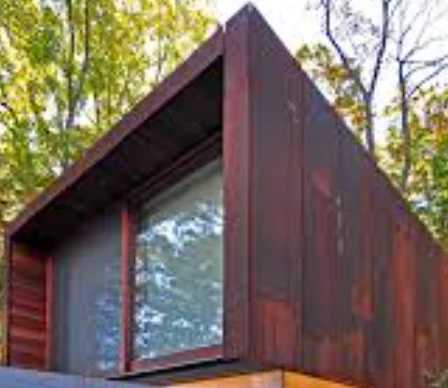
1. Textural & Aesthetic Advantages
Rustic, Dynamic Patina: Forms a dense, matte reddish-brown patina in 6–12 months outdoors, adding depth and warmth to both minimalist and industrial-style facades. For consistent color across panels, use water-based patina accelerators (cure at 20–30°C, 70–90% RH for 3–5 days pre-installation).
Customizable Texture & Pattern: Laser-cut or stamped into intricate designs (e.g., geometric perforations, organic slats) to create visual interest and control light penetration. Thin-gauge panels (3–5 mm) suit lightweight cladding; 6–8 mm grades work for load-bearing accent walls.

2. Fabrication & Installation Best Practices
Surface Prep: Sandblast panels to remove mill scale and contaminants, achieving a uniform roughness (Ra 3–5 μm) for even patina growth. Avoid oil contamination during handling.
Welding & Mounting: Weld with weathering steel-specific electrodes (e.g., E7018-W) and grind seams smooth. Install panels with a 5–10 cm gap from the building structure to prevent moisture trapping and ensure air circulation.

3. Low-Maintenance Care
Initial Weathering (6–12 Months): Rinse monthly with low-pressure water to avoid spotty patina caused by dust or debris.
Long-Term Upkeep: Clean 1–2 times yearly once patina matures. For coastal/industrial environments, apply a transparent breathable fluorocarbon sealant to lock in texture and extend service life.