


For project owners and engineers building outdoor structural infrastructure-from utility poles to transmission towers-service life is a make-or-break factor for long-term cost efficiency and reliability. ASTM A871 Grade 60 Corten Steel is trusted for its durability in harsh outdoor conditions, but what is its typical service life outdoors, and what factors can extend or shorten it? The answer is straightforward, yet tied to environment and proper use: this structural Corten Steel delivers a long, low-maintenance service life, with clear variations based on where and how it's installed.
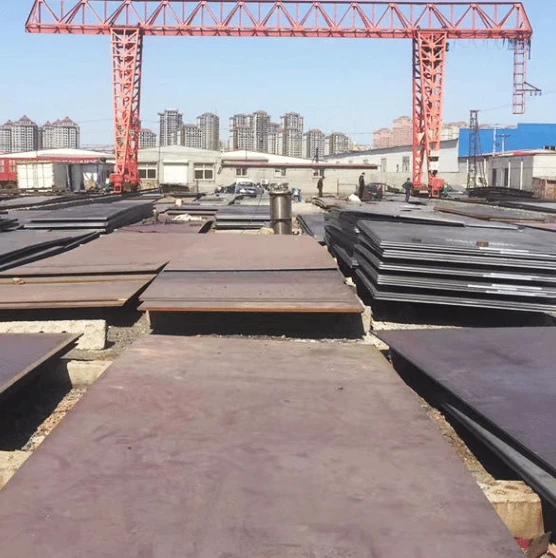
Typical Service Life Range (Outdoor)
Under normal outdoor conditions and proper installation, ASTM A871 Grade 60 Corten Steel has a typical service life of 25 to 50 years. This range is not arbitrary-it's backed by its ASTM-specified alloy composition and real-world applications, far outperforming ordinary carbon steel (which typically fails in 10–15 years outdoors without coatings).
In exceptional cases, such as arctic industrial facilities, its service life has been verified to reach 75 years, thanks to its robust corrosion resistance and cold-temperature toughness.

How Environment Impacts Service Life
The biggest variable in service life is the outdoor environment-different conditions affect the rate of patina formation and corrosion, directly influencing longevity. Here's a practical breakdown for common scenarios:
Rural/Suburban Areas: 35–50 years. Clean air and minimal pollutants allow the protective patina to form evenly and stabilize quickly, slowing corrosion to a near-negligible rate.
Urban/Industrial Areas: 25–40 years. Acidic pollutants and industrial residues can slightly accelerate patina aging, but the steel's alloy blend (copper, chromium, nickel) still provides strong protection.
Coastal Areas: 20–30 years. Salt spray is corrosive, but regular fresh water rinsing can extend this range-Grade 60's patina still outperforms uncoated carbon steel by 2–3 times.
Extreme Industrial Environments: 15+ years. In harsh industrial settings with high chemical exposure, corrosion loss is around 15 mm per year, but Grade 60 still offers longer service than standard structural steels.

Why It Lasts So Long: The Corten Advantage
ASTM A871 Grade 60's long service life stems from its intentional alloy design, mandated by the ASTM A871/A871M standard:
Its blend of copper, chromium, and nickel forms a dense, adherent protective patina that blocks oxygen and moisture from penetrating the steel.
It requires no paint or coatings (unlike carbon steel), eliminating the risk of peeling coatings that trap moisture and accelerate corrosion.
Mandatory fine-grain practice and cold-temperature toughness (per ASTM E23 testing) ensure it resists brittle fracture in extreme climates, avoiding premature structural failure.

Simple Tips to Extend Service Life
Maximizing Grade 60's service life requires minimal effort-focus on supporting its natural corrosion resistance:
Ensure proper drainage and airflow to avoid standing water, which can cause uneven patina and localized corrosion.
Rinse periodically (especially in coastal/industrial areas) to remove salt or pollutant buildup.
Use stainless steel fasteners and isolate from incompatible metals (e.g., aluminum) to prevent galvanic corrosion.

In short, ASTM A871 Grade 60 Corten Steel offers a typical outdoor service life of 25–50 years, with environmental conditions and simple maintenance dictating its upper limit. Its ASTM-standardized alloy design and protective patina make it a cost-effective, long-lasting choice for unpainted outdoor structural projects worldwide.


