


When selecting corrosion-resistant structural steel for bridges, buildings, outdoor frameworks, and infrastructure projects, ASTM A588 Grade A and ASTM A242 are two important weathering steel specifications to consider.
Both ASTM A588 Gr.A and A242 belong to the high-strength low-alloy (HSLA) structural steel family. They are designed to provide improved atmospheric corrosion resistance compared with conventional carbon structural steel. When properly exposed to suitable wet-dry atmospheric conditions, both materials can develop a protective rust layer and be used without conventional painting in many applications.
However, ASTM A588 Grade A and A242 are not identical materials. They have different standard requirements, chemical composition controls, thickness limits, and mechanical property classifications.
One important difference is that ASTM A588 Gr.A specifies a minimum yield strength of 50 ksi (345 MPa) for plates up to 4 inches (100 mm) thick, while ASTM A242 uses thickness-dependent mechanical requirements, with its minimum yield strength decreasing from 50 ksi to 42 ksi as plate thickness increases from 20 mm to 100 mm.
What Are ASTM A588 Gr.A and ASTM A242?
ASTM A588 Grade A Corrosion-Resistant Structural Steel
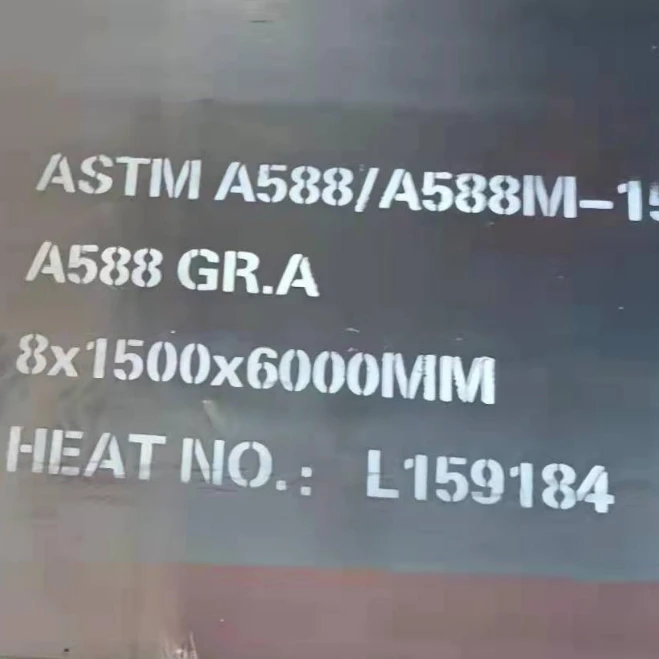
ASTM A588 Grade A is a high-strength low-alloy structural steel with enhanced atmospheric corrosion resistance. It is commonly used in welded bridges, buildings, exposed steel frameworks, and other outdoor structural applications.
A588 Gr.A contains controlled alloying elements such as copper, chromium, nickel, silicon, and vanadium. These elements contribute to the steel's strength and atmospheric corrosion performance.
Main characteristics of A588 Gr.A:
Minimum yield strength of 50 ksi (345 MPa) for plates up to 4 in. (100 mm).
Minimum tensile strength of 70 ksi (485 MPa) within this thickness range.
ASTM G101 corrosion-resistance index requirement of at least 6.0.
Suitable for many properly designed bare-steel applications.
Maximum standard thickness coverage of 8 in. (200 mm).

ASTM A242 High-Strength Low-Alloy Structural Steel
ASTM A242 is another high-strength low-alloy structural steel specification developed for applications where structural strength, durability, and atmospheric corrosion resistance are important.
It covers steel plates, shapes, and bars used in welded, riveted, and bolted structures. Typical applications include bridges, outdoor structural members, industrial frameworks, and other exposed steel structures.
ASTM A242 has a long history in weathering steel applications. Its standard requirements include chemical composition control, atmospheric corrosion-resistance assessment, and tensile testing.
Main characteristics of A242:
High-strength low-alloy structural steel.
Suitable for welded, riveted, and bolted construction.
Can be used bare in many properly exposed environments.
Maximum standard thickness coverage of 4 in. (100 mm).
Mechanical properties are classified according to plate thickness.
ASTM A588 Gr.A vs A242: Standard Requirements
The standards define the scope and technical requirements of each steel grade. Although both materials are weathering structural steels, their standard thickness limits and mechanical property classifications are different.
Standard Comparison Table
| Comparison Item | ASTM A588/A588M | ASTM A242/A242M |
|---|---|---|
| Standard edition used for reference | A588/A588M-24 | A242/A242M-24 |
| Steel classification | HSLA weathering structural steel | HSLA weathering structural steel |
| Product forms | Plates, shapes, bars | Plates, shapes, bars |
| Main applications | Bridges, buildings, welded structures | Structural members requiring strength and durability |
| Maximum standard thickness | 8 in. (200 mm) | 4 in. (100 mm) |
| Atmospheric corrosion resistance | Improved | Improved |
| Corrosion evaluation | G101 index requirement ≥6.0 | Atmospheric corrosion resistance is estimated under the specification |
| Tensile testing | Required | Required |
| Welding | Suitable welding procedure required | Suitable welding procedure required |
A588/A588M covers products up to 200 mm thick, while A242/A242M covers products up to 100 mm thick. This means A588 may be considered for certain thicker structural plate requirements where A242 is outside its standard scope.
Chemical Composition: A588 Gr.A vs A242
Chemical composition is one of the key factors affecting the strength, weldability, and atmospheric corrosion resistance of weathering steel.
A588 Gr.A has a clearly defined chemical composition table covering carbon, manganese, phosphorus, sulfur, silicon, nickel, chromium, copper, and vanadium.
A242 uses a different composition-control approach. Under the ASTM A242/A242M-24 description, heat analysis includes carbon, manganese, phosphorus, sulfur, and copper.
The manufacturer selects and uses additional alloying elements as necessary to achieve the required mechanical properties and atmospheric corrosion performance.
Chemical Composition Comparison
| Element | ASTM A588 Gr.A (wt.%) | ASTM A242/A242M-24 Requirement |
|---|---|---|
| Carbon (C) | ≤0.19 | Controlled |
| Manganese (Mn) | 0.80–1.25 | Controlled |
| Phosphorus (P) | ≤0.030 | Controlled |
| Sulfur (S) | ≤0.030 | Controlled |
| Silicon (Si) | 0.30–0.65 | - |
| Nickel (Ni) | ≤0.40 | - |
| Chromium (Cr) | 0.40–0.65 | - |
| Copper (Cu) | 0.25–0.40 | Controlled |
| Vanadium (V) | 0.02–0.10 | - |
Mechanical Properties: A588 Gr.A vs A242 Steel
Mechanical properties are essential when selecting weathering steel for structural projects. Yield strength, tensile strength, and elongation affect structural calculations, member dimensions, fabrication, and safety.
Both A588 Gr.A and A242 have similar minimum strength levels in some corresponding thickness ranges. However, their standard thickness classifications are different.
Yield Strength and Tensile Strength Comparison
| Plate Thickness | A588 Gr.A Minimum Yield Strength | A588 Gr.A Minimum Tensile Strength | A242 Minimum Yield Strength | A242 Minimum Tensile Strength |
|---|---|---|---|---|
| ≤20 mm | 345 MPa (50 ksi) | 485 MPa (70 ksi) | 345 MPa (50 ksi) | 480 MPa (70 ksi) |
| >20–40 mm | 345 MPa (50 ksi) | 485 MPa (70 ksi) | 315 MPa (46 ksi) | 460 MPa (67 ksi) |
| >40–100 mm | 345 MPa (50 ksi) | 485 MPa (70 ksi) | 290 MPa (42 ksi) | 435 MPa (63 ksi) |
| >100–125 mm | 315 MPa (46 ksi) | 460 MPa (67 ksi) | Outside A242 standard scope | Outside A242 standard scope |
| >125–200 mm | 290 MPa (42 ksi) | 435 MPa (63 ksi) | Outside A242 standard scope | Outside A242 standard scope |
Elongation Requirements
| Test Condition | A588 Gr.A | A242 |
|---|---|---|
| Elongation in 2 in. (50 mm) | 21% min. | 21% min. |
| Elongation in 8 in. (200 mm) | 18% min. | 18% min. |
| Wide plate adjustment | Subject to ASTM A6/A6M rules | Subject to ASTM A6/A6M rules |
Elongation requirements may be adjusted according to plate width and specimen conditions. For example, the referenced A242/A242M-04 requirements specify a reduction of two percentage points for plates wider than 24 inches (600 mm) under the relevant test provisions.
What Do These Strength Differences Mean?
For plates up to 20 mm thick, both materials specify a minimum yield strength of 345 MPa.
For plates between 20 mm and 40 mm, A588 Gr.A retains a minimum yield strength of 345 MPa, while the referenced A242 requirement decreases to 315 MPa.
For plates between 40 mm and 100 mm, A588 Gr.A retains 345 MPa, while A242 decreases to 290 MPa.
This means A588 Gr.A may provide a higher specified minimum yield strength in thicker plate categories under the referenced requirements.
Applications: Where Are A588 Gr.A and A242 Used?
Both grades are used in structural applications where improved atmospheric corrosion resistance is required. Their actual selection depends on mechanical requirements, standard thickness limits, and project specifications.
Typical Applications of A588 Gr.A
A588 Gr.A is commonly considered for:
- Welded bridge structures.
- Outdoor building steel frameworks.
- Exposed structural beams and columns.
- Industrial support structures.
- Weathering steel architectural facades.
- Outdoor platforms and walkways.
- Infrastructure projects requiring reduced coating maintenance.
Typical Applications of A242
A242 is also used for structural members requiring high strength and improved atmospheric corrosion resistance. Typical applications include:
- Bridge components.
- Outdoor structural frames.
- Industrial steel structures.
- Transportation-related structural components.
- Architectural weathering steel elements.
- Welded and bolted structural assemblies.


Welding and Fabrication: A588 Gr.A vs A242
Both A588 Gr.A and A242 can be used in welded structural fabrication. However, welding procedures should be selected according to the steel grade, chemical composition, plate thickness, joint design, and service conditions.
Welding and Fabrication Comparison
| Processing Item | A588 Gr.A | A242 |
|---|---|---|
| SMAW welding | Applicable with suitable procedures | Applicable with suitable procedures |
| GMAW welding | Applicable with suitable procedures | Applicable with suitable procedures |
| FCAW welding | Applicable with suitable procedures | Applicable with suitable procedures |
| SAW welding | Applicable with suitable procedures | Applicable with suitable procedures |
| Flame cutting | Available | Available |
| Plasma cutting | Available | Available |
| Drilling | Available | Available |
| Bending | Depends on thickness and bend radius | Depends on thickness and bend radius |
| Welding consumables | Consider strength and weathering performance | Consider strength and weathering performance |


How to Choose Between A588 Gr.A and A242?
Choosing between A588 Gr.A and A242 requires more than comparing the minimum yield strength. Buyers and engineers should evaluate the standard edition, thickness, actual chemical analysis, mechanical properties, environmental exposure, and project specifications.
Selection Comparison
| Purchasing Requirement | Recommended Consideration |
|---|---|
| Plate thickness up to 20 mm | Compare actual mechanical requirements and MTC |
| Plate thickness over 20–40 mm | A588 Gr.A retains a higher specified minimum yield strength in the referenced editions |
| Plate thickness over 40–100 mm | A588 Gr.A has a higher specified minimum yield strength in the referenced editions |
| Plate thickness over 100 mm | A588 may be considered within its standard scope, subject to the applicable grade requirements |
| Improved atmospheric corrosion resistance | Evaluate the applicable corrosion-resistance requirements and site environment |
| Welding and fabrication | Review WPS, consumables, and material certificates |
| Bare outdoor applications | Confirm drainage, moisture cycles, and chloride exposure |
| International procurement | Confirm standard edition, inspection, MTC, and delivery requirements |
Purchasing Checklist for Weathering Steel Plates
Before requesting a quotation, buyers should prepare the following information:
| Item | Required Information |
|---|---|
| Steel Grade | ASTM A588 Grade A or ASTM A242 |
| Standard Edition | Applicable ASTM edition |
| Product Form | Steel Plate / Steel Sheet |
| Thickness | Required thickness in mm |
| Width | Required width in mm |
| Length | Required length in mm |
| Quantity | Metric tons or number of plates |
| Mechanical Requirements | Yield strength, tensile strength, elongation |
| Chemical Requirements | Applicable standard and MTC |
| Inspection | Mill inspection or third-party inspection |
| Destination | Destination port or delivery address |
| Trade Terms | FOB, CFR, or CIF |
ASTM A588 Gr.A and ASTM A242 are both high-strength low-alloy weathering structural steels designed for applications requiring improved atmospheric corrosion resistance and structural durability.

The main differences are found in their standard thickness coverage, chemical composition requirements, and mechanical property classifications.


A588 Gr.A offers a clearly specified 50 ksi (345 MPa) minimum yield strength for plates up to 4 inches (100 mm), while the referenced A242 requirements reduce the minimum yield strength from 50 ksi to 42 ksi across increasing plate thickness categories up to 100 mm.
A588 also covers material up to 200 mm under its standard scope, whereas A242 is limited to 100 mm.
For projects requiring thicker structural steel plates, higher specified yield strength in certain thickness ranges, and improved atmospheric corrosion resistance, ASTM A588 Gr.A is worth evaluating.
If your project requires A588 Gr.A weathering steel plates for bridges, buildings, industrial structures, or outdoor frameworks, Gnee can assist with product sourcing and international supply.
Contact Gnee Today for ASTM A588 Gr.A Steel Plate Pricing!
Send us your required thickness, width, length, quantity, and destination port to receive a quotation.


