


Welding SPA-H Corten Steel (JIS G 3125 standard) boils down to one key goal: ensuring weld joints match the base material's weather resistance and mechanical strength. The right welding consumables are the foundation of durable welds-so which ones work best? Below is a concise, application-focused guide to match consumables with common welding methods, plus critical selection and procurement tips for overseas projects.

Material Standard & Alloy Anti-Corrosion Mechanism
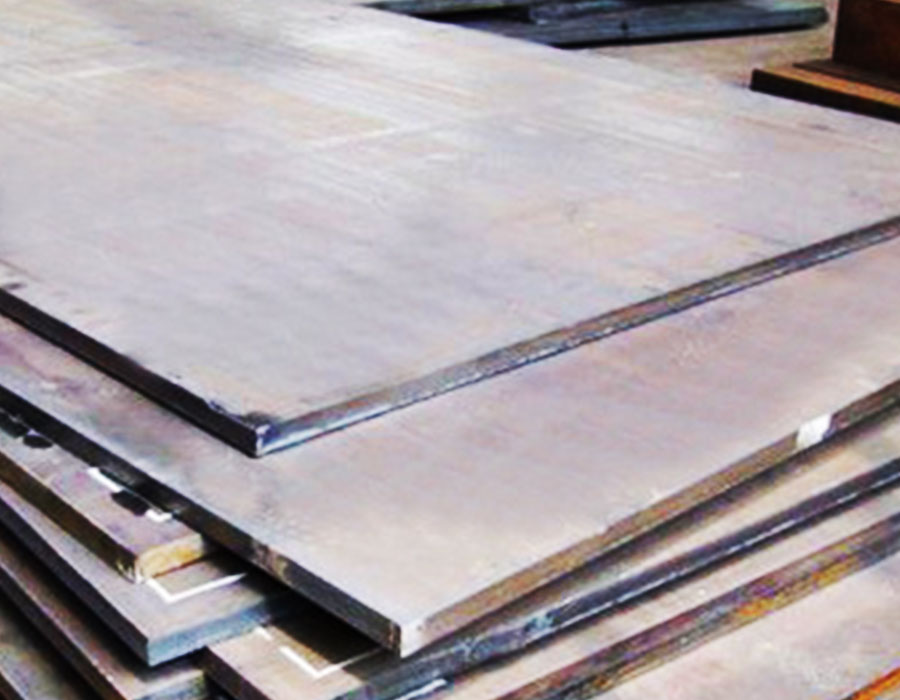
SPA-H follows JIS G3125 weathering steel standard, alloyed with Cu, Cr, Ni and P. These elements form a compact protective rust patina to block further oxidation under outdoor atmospheric, coastal salt fog environment.
Mechanical & Welding Challenges
SPA-H steel complies with JIS G3125 standard. Its mechanical indicators vary by plate thickness: for sheets ≤6.0 mm, yield strength ≥355 MPa, tensile strength ≥490 MPa; for plates over 6.0 mm, yield strength ≥355 MPa, tensile strength ≥490 MPa.; Explain key risk: unmatched weld metal lacks anti-rust alloys, making joints corrode faster than base SPA-H plate; thick plates over 16mm carry cold cracking risks without low-hydrogen consumables.
Core Application Scenarios with Strict Durability Requirement
Shipping container panels & frames, freight truck chassis, railway vehicle carriages, outdoor landscape & bridge components.
Four Core Standards to Select SPA-H Welding Consumables for Max Durability
•Matched Weathering Alloy Content (Top Priority) Weld metal shall contain similar Cu & Cr percentage as SPA-H base steel; general carbon steel consumables without these alloys are forbidden for long-service structures.
•Equivalent Mechanical Strength Matching Consumables shall match SPA-H tensile & yield strength to minimize welding residual stress and fatigue cracking.
•Low Hydrogen & High Toughness Low-hydrogen series fillers reduce cold crack risk on thick SPA-H plates under temperature fluctuation.
•Stable Welding Process Performance Low spatter, smooth bead appearance and easy slag removal ensure consistent weld quality in mass production.
Optimal Welding Consumables by Welding Process
| Welding Process | Recommended Consumable (AWS Grade) | Weathering Advantage | Suitable Plate Thickness | Application Scenario |
|---|---|---|---|---|
| SMAW Stick Welding | E7018-W Low-Hydrogen Weathering Electrode | Balanced Cu-Cr alloy, excellent crack resistance | All thickness, especially 16mm+ thick plate | On-site manual welding, railway heavy structures |
Consumable selection depends on the welding method, as different processes require tailored alloy compositions to maintain weld durability. Here's the most reliable matching for overseas project scenarios:
Scenario 1: MIG/MAG Welding (High Efficiency for Large-Scale Projects)
Recommended Consumable: ER50-GNiCuCr Solid Wire
Alloy Advantage: Contains Ni (0.20-0.40%), Cu (0.20-0.40%), and Cr (0.40-0.65%)-matching SPA-H's Ni-enhanced composition to form a corrosion-resistant rust layer with the base material.
Practical Application: Ideal for welding thin to medium-gauge SPA-H (3-12mm) in projects like coastal steel structures or offshore components. Ensures arc stability and uniform weld bead formation.
Scenario 2: SMAW (Stick Welding, Versatile for On-Site Work)
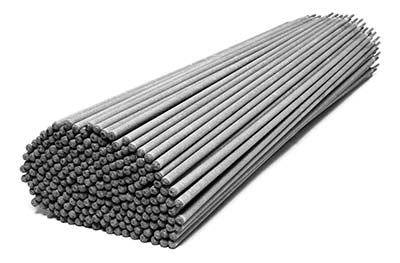
Recommended Consumable: E7018-W Weather-Resistant Covered Electrode
Alloy Advantage: The electrode coating contains supplementary Cu and Cr elements, which are released during welding to compensate for alloy loss in the weld pool. Ensures weld yield strength ≥345MPa, matching SPA-H's base material.
Practical Application: Suitable for thick-gauge SPA-H (≥8mm) and on-site welding (e.g., bridge maintenance, port facility installation) where MIG equipment is unavailable. Offers strong resistance to atmospheric corrosion.
Scenario 3: GTAW (TIG Welding, Precision for Thin Sheets/Decorative Welds)
Recommended Consumable: ER50-GNiCuCr TIG Filler Wire
Key Advantage: Same alloy composition as MIG wire, with ultra-low impurity content. Minimizes heat input during welding, avoiding grain
coarsening in the weld heat-affected zone-critical for maintaining the ductility and corrosion resistance of thin SPA-H (≤6mm).
Practical Application: Used for precision components like decorative architectural elements or thin-walled offshore pipelines where weld appearance and quality are paramount.
Critical Selection Principles for Durable Welds
Alloy Compatibility First: Avoid standard carbon steel consumables (e.g., ER70S-6, E6013). Their lack of Ni, Cu, and Cr will make welds a corrosion weak point, leading to premature rusting-especially in marine or industrial environments.
Weather Resistance Certification: Select consumables meeting international standards (e.g., AWS A5.18 for MIG wire, AWS A5.5 for SMAW electrodes). Request manufacturer test reports to confirm weld corrosion rate matches SPA-H.
Environment Adaptation: For marine offshore projects, choose consumables with slightly higher Ni content (e.g., ER50-GNiCuCr with Ni ≥0.30%) to enhance resistance to salt spray and Cl⁻ erosion.
Tips for Overseas Procurement & Application
Specify consumable requirements in contracts: Clearly state "ER50-GNiCuCr for MIG/GTAW" or "E7018-G for SMAW" and require compatibility with SPA-H Corten Steel. Add clauses for quality verification via mill test reports (MTRs).
Storage & Handling: Store covered electrodes in a dry, moisture-proof warehouse (relative humidity ≤60%) and keep them in a heat-preserving barrel (100-150℃) after drying to avoid coating moisture absorption.
Welding Parameter Matching: Use low heat input (1.2-1.8 kJ/mm for MIG, 1.5-2.5 kJ/mm for SMAW) to reduce alloy burning loss and ensure weld durability.
In summary, the best welding consumables for SPA-H are ER50-GNiCuCr (MIG/GTAW) and E7018-G (SMAW). Prioritizing alloy compatibility and weather resistance certification ensures weld joints match SPA-H's durability, meeting the long-term performance needs of overseas projects.


