


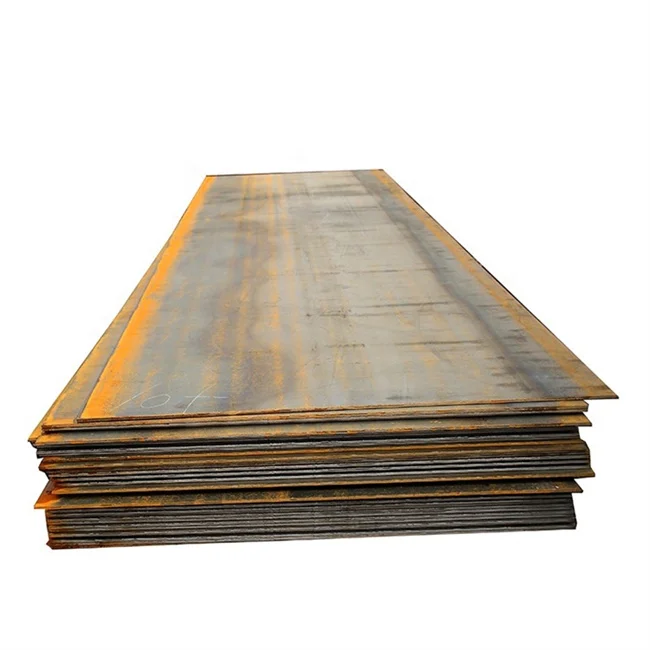
S355J0WP Corten Steel, renowned for its protective rust patina and structural strength, raises an important question for coastal projects: can its famous corrosion resistance withstand the harsh, salt-laden marine environment?
The straightforward, consensus-based answer from major international engineering standards and research is: bare, unpainted S355J0WP is generally not recommended for long-term use in direct coastal salt spray zones. Its performance is fundamentally challenged there, but with careful planning and additional protection, it can still be a viable option.
The Core Challenge: Salt vs. The Patina
Corten steel protects itself by forming a dense, adherent layer of rust (the patina) that blocks further corrosion. This process requires alternating cycles of wetting and drying.
Salt spray disrupts this natural mechanism in two key ways:
Chloride Attack: Chloride ions in salt are highly corrosive and penetrate the initial rust layer, preventing it from stabilizing into a protective barrier. This can lead to continued, accelerated corrosion.
Extended Wetness: Salt is hygroscopic, meaning it attracts and retains moisture. This keeps the steel surface damp for longer periods, inhibiting the crucial drying phase needed for patina formation and creating a persistently corrosive environment.
Practical Guidance from Standards
This understanding is reflected in official guidance. For instance, UK and European standards advise that weathering steel should not typically be used for bridges within 2 kilometres of the coast unless specific, low levels of airborne salinity can be confirmed. One key benchmark is keeping chloride deposition below 300 mg/m² per day.
The table below summarizes the performance difference:
| Environment | Patina Formation & Stability | General Recommendation for Bare Steel | Key Reason |
|---|---|---|---|
| Inland / Urban | Optimal. Forms a stable, protective layer. | Recommended. Delivers the intended low-maintenance benefit. | Cyclic wet/dry conditions allow the protective patina to mature. |
| Coastal Salt Spray | Compromised. Slower to form and less stable. | Generally not recommended within immediate splash/spray zones. | Chlorides prevent patina stabilization, leading to higher corrosion rates. |
Important Note: A supplier's website claims S355J0W (a similar grade) has "excellent resistance to salt spray corrosion". While it is more resistant than ordinary carbon steel, this optimistic view is not aligned with the more conservative and widely adopted engineering guidance for critical, long-term structural applications.

Solutions for Coastal Applications
If the aesthetic or structural benefits of Corten steel are desired for a coastal project, all is not lost. The challenge can be managed through proactive design:
Site Assessment is Critical: Before specifying bare Corten, conduct a professional assessment of the specific site's microclimate. Factors like distance from the water, prevailing winds, and topography greatly influence salt deposition.
Apply Protective Coatings: The most effective solution is to apply a high-performance coating system. This sacrifices the raw rusted aesthetic but provides a guaranteed barrier against salt. Specialized multi-layer systems (e.g., epoxy zinc-rich primer with a polyurethane or fluoropolymer topcoat) are designed for such severe environments.
Use Hybrid Designs: A common and practical approach is to use bare Corten for parts of a structure sheltered from direct salt spray (e.g., upper sections of a facade) and apply coatings to elements that are directly exposed (e.g., lower sections, railings).

Key Takeaway
While S355J0WP Corten Steel offers superior atmospheric corrosion resistance inland, its use in coastal salt spray environments requires caution. For reliable, long-term performance in these aggressive conditions, you should plan for protective coatings or a detailed site-specific corrosion assessment rather than relying on its bare, self-protecting patina alone.
I hope this clarifies the practical considerations for your coastal project. If you can share more about the specific application and location, I may be able to offer more targeted insights.


