


1. Thin Gauges (1.6–6 mm): Excellent Formability (Most Versatile for Shaping)
Core characteristics: Low deformation resistance, high surface-to-volume ratio, and a small grain structure (even in cold-rolled state) make these gauges the most formable of SPA-H. Hot-rolled thin SPA-H retains ≥20% elongation, while cold-rolled thin SPA-H (even work-hardened) still has moderate ductility (≤15% elongation) for simple shaping.
Applicable forming processes: Enables complex cold forming (no preheating needed) including tight-radius bending (minimum bend radius = 1×thickness, e.g., 3 mm steel → 3 mm bend radius), stamping, laser cutting with folding, and shallow drawing-ideal for architectural facades, decorative sign panels, lightweight trim, and small brackets.
Key consideration: Weld distortion (not cracking) is the main risk for formed parts; light tack welding and clamping mitigate this issue.

2. Medium Gauges (6–25 mm): Good Formability (Balanced Shaping & Rigidity)
Core characteristics: Moderate deformation resistance with retained ductility (hot-rolled: ≥20% elongation; normalized: ≥22–24% elongation) allows for most common structural shaping, but cold forming requires slightly larger bend radii to avoid stress-induced microcracking. Work hardening is minimal in hot-rolled medium gauges, preserving formability.
Applicable forming processes: Supports mild cold forming (preheating optional) with a minimum bend radius of 2–3×thickness (e.g., 10 mm steel → 20–30 mm bend radius), as well as roll bending for curved structures (e.g., pergolas, retaining wall edging) and simple press forming. Preheating (80–120°C) is only needed for cold ambient conditions (≤5°C) or tight-radius bends to boost ductility temporarily.
Key consideration: Normalization further improves formability for medium gauges, especially if cold-rolled or welded, by restoring elongation and relieving residual stresses.
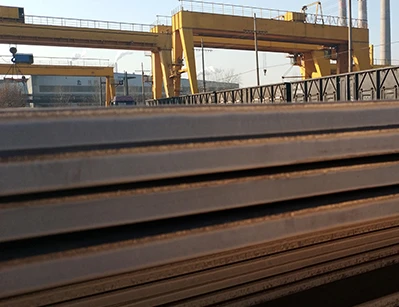
3. Thick Gauges (25–100 mm): Limited Formability (Only Simple, Low-Stress Shaping)
Core characteristics: High deformation resistance, lower elongation in the core (due to slower cooling during hot rolling), and coarse grain structure create significant formability limitations. Even with full ductility (≥20% elongation in surface layers), the thick cross-section resists plastic deformation, and stress concentration at bend points easily leads to cracking.
Applicable forming processes: Restricted to simple, large-radius hot forming (mandatory preheating required) including gentle roll bending (minimum bend radius = 5–10×thickness, e.g., 50 mm steel → 250–500 mm bend radius) and straight-line cutting with minimal shaping. Cold forming is not recommended for thick SPA-H-even small bends will cause brittle fracture or permanent surface cracking.
Key preheating requirement: For any forming, heat thick gauges to 200–300°C to soften the matrix, reduce deformation resistance, and distribute stress evenly across the cross-section; post-forming normalization is often needed to relieve residual stresses and restore structural integrity.

4. Universal Thickness-Related Formability Rules for SPA-H
Cold rolling exacerbates thickness effects: Cold-rolled SPA-H (all gauges) has reduced ductility vs. hot-rolled/normalized SPA-H, so the formability decline with increasing thickness is more pronounced-cold-rolled thick gauges are essentially non-formable without prior annealing/tempering.
Normalization boosts formability across all thicknesses: By refining grains and restoring ductility, normalizing improves bendability and shaping capability for every gauge, especially cold-rolled or welded SPA-H (e.g., normalized 20 mm SPA-H can tolerate a smaller bend radius than as-hot-rolled 20 mm SPA-H).
Edge preparation is critical for thicker gauges: Unfinished, sharp edges on thick SPA-H act as stress risers during forming; chamfering or grinding edges to a smooth radius (≥1×thickness) prevents cracking at bend points.


