


Initial loose rust stage (1–3 months)
A thin, uneven reddish-brown rust layer forms on the planter's surface after outdoor exposure. This rust is loose and easy to flake off when washed by rain or touched, has no effective corrosion resistance, and only presents a preliminary rust color appearance-this is the start of patina formation but not yet a protective layer.

Patina densification stage (6–12 months)
The initial loose rust reacts with oxygen, moisture in the air and the Cu/Cr/Ni alloy elements inherent in SPA-H steel. The rust layer gradually compacts and adheres tightly to the steel surface, the color becomes more uniform (reducing patchiness), and basic corrosion resistance is formed, which can effectively slow down further oxidation of the planter's substrate and lay the foundation for a mature patina.
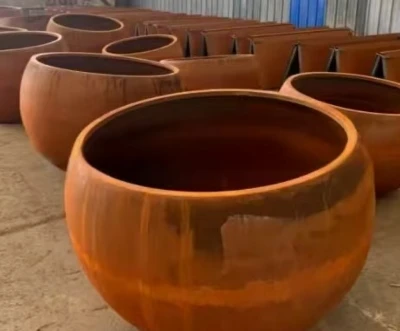
Mature protective patina stage (12–24 months)
A fully dense, firm reddish-brown oxide film is formed on the planter's inner and outer surfaces, tightly bonded to the steel base. This mature patina acts as a natural, self-protective barrier, isolating the inner steel from air, moisture and mild atmospheric corrosive media, and the corrosion rate of the SPA-H steel drops to ≤0.03mm/year-achieving the long-term anti-corrosion effect unique to weathering steel, and this patina will remain stable for decades with no significant fading or peeling.

Key factors affecting the patina formation speed
●Faster maturation (about 12 months): In temperate zones with moderate humidity, regular rainfall and mild temperatures (e.g., urban parks, residential gardens, suburban landscapes), the moist and well-ventilated environment accelerates the chemical reaction of alloy elements, making the patina densify and mature in about 12 months.
●Prolonged maturation (24+ months): In dry, cold or arid inland regions with low air moisture and little rainfall, the lack of water slows down the oxidation and alloy reaction of the steel surface, so the mature patina may take more than 24 months to form, and the initial rust layer will remain loose for a longer time.
●Unstable formation (harsh environments): In high-salt coastal areas (within 1km of the sea), heavy industrial zones with acid mist/dust, or areas with long-term high humidity and poor ventilation, the natural patina is not only slow to mature but also difficult to form a uniform, dense oxide layer, and may even cause local pitting corrosion on the planter's surface-auxiliary protection such as a transparent weathering sealer is recommended for such environments.
●Planter structure impact: Planters with unobstructed bottom drain holes and good overall ventilation form patina more evenly and quickly; closed-bottom planters or those in long-term contact with wet soil/standing water may have uneven patina formation (slower on damp inner surfaces) and even local rust accumulation.


