


Welding S335J2WP Corten Steel presents a unique challenge: the weld joint must not only be strong but also inherit the parent metal's iconic weather resistance and meet required toughness levels, often down to -20°C. The right welding consumables are critical to achieving this. This guide explains the key principles and suitable choices.
The Core Goal: Matching the Patina
The primary purpose is to ensure the weld metal develops a protective rust patina similar to the base Corten steel. This requires the weld's chemical composition-particularly its levels of copper (Cu), chromium (Cr), and sometimes phosphorus (P)-to broadly match that of the S335J2WP. Mismatched filler metal can lead to unsightly, uneven rusting and accelerated local corrosion.
Two Key Requirements for Consumables
For a successful joint, your filler metal must address:
Atmospheric Corrosion Resistance: By mirroring the key alloying elements.
Low-Temperature Toughness: To ensure impact toughness at -20°C, the weld metal often needs lower phosphorus levels and different micro-alloying compared to the base metal, as phosphorus can embrittle the weld.
Recommended Welding Consumable Types
Consumables are classified under standards like AWS (American Welding Society) or EN ISO. Here are the most suitable types:
For Shielded Metal Arc Welding (Stick/MMA):
AWS E7018-W2 / EN ISO 960-1: E Mo 1 Ni 1 2 H5: This is a very common and excellent choice. The "W" indicates a weathering grade, with a chemistry (like added Ni for toughness) designed to match Corten steels and provide good impact values at -20°C.
For Gas Metal Arc Welding (MIG/MAG):
AWS ER70S-3 (G3Si1) for root passes: Often used for the initial layer where dilution from the base metal is high, helping to achieve the final target chemistry.
AWS ER80S-G / EN ISO 14341: G Mn3Ni1Cu: A more alloyed solid wire. The added Nickel (Ni) and Copper (Cu) directly enhance toughness and corrosion matching for the fill and cap layers.
For Flux-Cored Arc Welding (FCAW):
AWS E71T1-W2 / E81T1-Ni1C: Flux-cored wires are highly productive. These "W"-designated wires are specifically formulated for weathering steels and typically contain Ni and Cr to achieve the required properties.
Essential Practical Welding Considerations
Pre-Weld Cleaning: Remove the mill scale from the weld bevel area using grinding. Welding through the scale can cause porosity and weaken the joint.
Low Heat Input: Use controlled, moderate heat input to preserve the metallurgical properties of both the base metal and the weld, preventing excessive grain growth.
Preheat & Interpass Temperature: For thicker sections (typically >30mm) or in cold environments, a mild preheat of 50-100°C is often recommended to prevent cracking.
Protect the Weld: Always keep the weld area dry and shield it from strong wind during the process.
Do Not Paint the Weld Alone: If the structure is meant to weather naturally, do not paint just the weld seam. Let the entire structure, including welds, develop the patina uniformly.
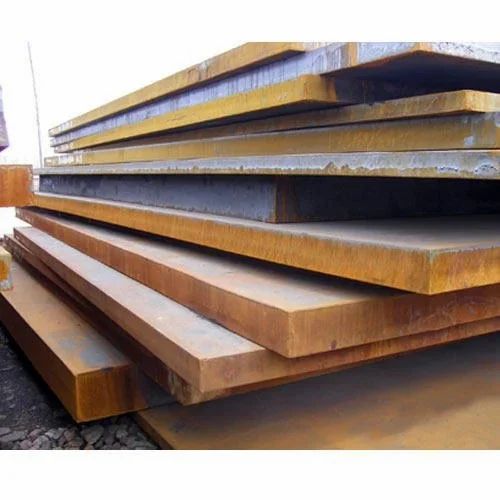
Final Recommendation
For most structural applications involving S335J2WP requiring -20°C impact toughness, AWS E7018-W2 (stick electrode) or AWS E71T1-W2 (flux-cored wire) are robust, industry-standard choices. Always consult with your welding consumable supplier, provide the base material specification and requirements, and request the supplier's technical data sheet to validate the chemical composition and certified impact toughness values.


