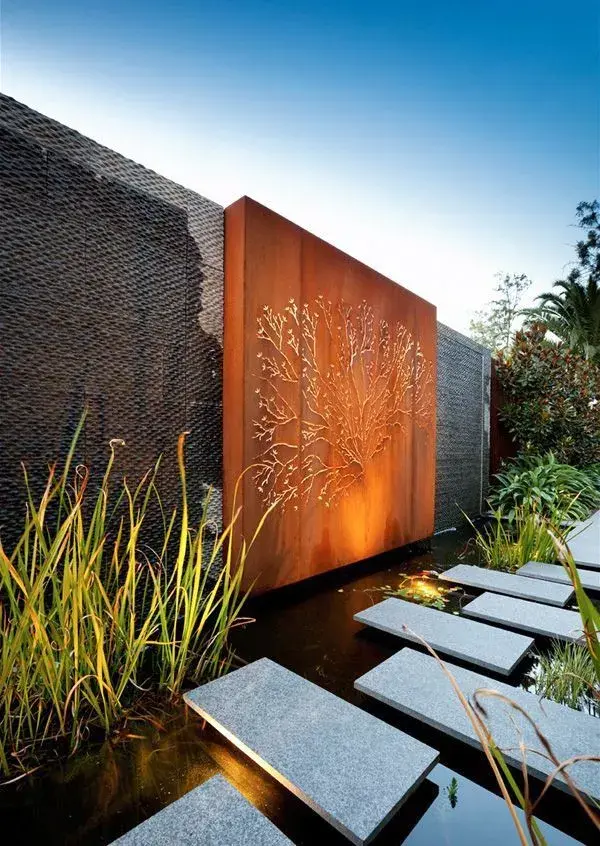
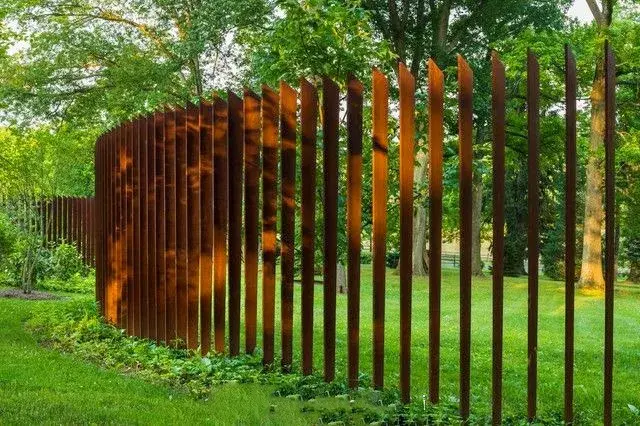
Weathering steel, a commonly used metal material in landscape design
1. Material Introduction
Weathering steel, also known as atmospheric corrosion resistant steel, originated from Corten steel in North America. Weathering steel is a low-alloy steel series that falls between ordinary steel and stainless steel. It is made by adding small amounts of corrosion-resistant elements such as copper and nickel to ordinary carbon steel, possessing the strength, toughness, ductility, formability, weldability, abrasion resistance, and high-temperature resistance of high-quality steel. Its weather resistance is 2 to 8 times that of ordinary carbon steel, and its paintability is 1.5 to 10 times that of ordinary carbon steel. Simultaneously, it has rust resistance , enabling components to have corrosion resistance, extended service life, reduced thickness and consumption, and labor and energy savings .
Weathering principle : When weathering elements such as phosphorus, copper, chromium, and nickel are added to steel, a dense and highly adhesive oxide layer is formed between the rust layer and the substrate. This special dense oxide layer has a stable and uniform natural rust-red color, which can prevent oxygen and water in the atmosphere from penetrating into the substrate, protect the substrate under the rust layer, and slow down its corrosion rate.
2. Material properties
(1) Unique expressive characteristics: It has outstanding visual expressiveness, and the rusted steel will change over time. Its color, brightness and saturation are higher than those of ordinary building materials, so it is easier to stand out against the background of garden greenery.
(2) Strong shaping ability: Weathering steel is relatively easy to shape into a variety of shapes and can maintain excellent integrity.
(3) Clear spatial definition: The space is clearly and accurately divided using very thin steel plates , making the site concise, bright and powerful.
3. Product process and classification
Rust stabilization treatment method Rust stabilization treatment uses chemical methods (rust solution) to slowly dissolve the film on the surface of the steel plate, causing it to stabilize and form a uniform rust layer. This rust layer has a protective effect and can inhibit the rust that flows out in the early stages of steel use.
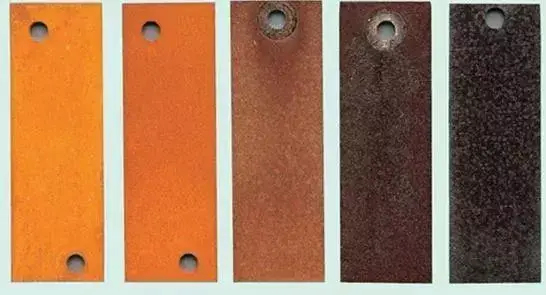
Note : In South China, it takes at least 1-2 years for a stable, dense rust-red protective layer to form from brand-new weathering steel plates, and even longer, about 5-6 years, in some dry areas. Therefore, most products on the market use rust accelerators to speed up the formation of the rust layer. It is important to choose a suitable rust accelerator and a suitable processing method.
Application of weathering steel in landscape design