


Fabricators and engineers often struggle to choose the right forming processes for Q500NH Corten Steel-its high strength (yield ≥500MPa) makes some worry about brittleness or surface damage during forming, while its corrosion-resistant properties require processes that don't compromise its patina. Unlike ordinary steel, Q500NH balances strength and ductility, but not all forming methods are suitable for its unique traits. So, which forming processes work best for Q500NH, and how to ensure smooth, high-quality results? The core answer is clear: Q500NH Corten Steel is compatible with most common metal forming processes, with cold forming, hot forming, and welding being the most practical-each suited for different thicknesses and project needs. Below is a concise, actionable guide.
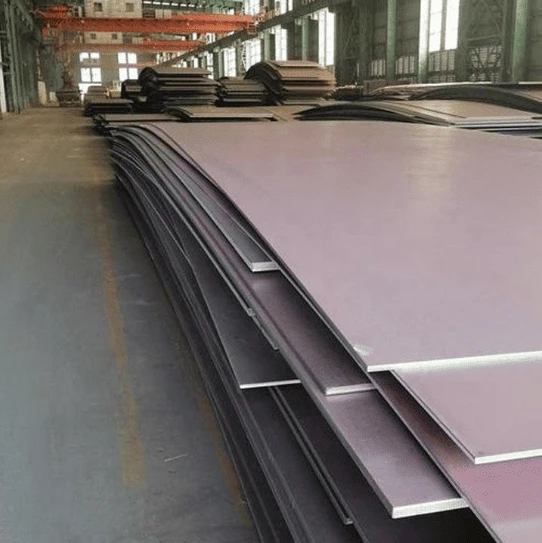
Most Suitable Forming Processes for Q500NH (Practical & Common)
These processes are widely used for Q500NH, leveraging its ductility while preserving its high strength and corrosion resistance, with no complex equipment required:
1. Cold Forming (Best for Thin-to-Medium Plates)
Applicable Thickness: 3mm–20mm (thin to medium plates, the most commonly formed range for Q500NH).
Common Methods: Bending, rolling, punching, and shearing-ideal for decorative components, guardrails, and small structural parts.
Practical Tips: Use sharp tools to avoid surface scratches (which damage future patina); limit bending radius to 2–3 times the plate thickness to prevent cracks.
2. Hot Forming (Best for Thick Plates & Complex Shapes)
Applicable Thickness: 20mm–100mm (thick plates, or complex shapes that cold forming can't achieve).
Common Methods: Hot bending, forging, and press forming-suited for heavy-duty components like bridge nodes and machinery bases.
Practical Tips: Heat Q500NH to 800–1000℃ (avoid overheating above 1100℃, which weakens its strength); let it cool naturally after forming to retain ductility.
3. Welding (Essential for Assembly)
Compatibility: Fully weldable, with arc welding (SMAW, GMAW) being the most practical for Q500NH Corten Steel.
Key Note: Welding doesn't compromise its corrosion resistance-use Corten-compatible welding rods to ensure the weld joint forms a uniform patina with the base metal.
Practical Tips: Preheat plates >20mm to 80–120℃ before welding to avoid cold cracks; let the joint cool naturally after welding.

Forming Processes to Avoid for Q500NH
These processes risk damaging Q500NH's structure or surface, leading to reduced strength or corrosion resistance:
High-speed stamping (for thick plates): Causes excessive stress and surface deformation, increasing crack risks.
Cold forming with too small a bending radius: Leads to brittle fracture, especially for plates >16mm.
Welding with non-Corten rods: Creates weld joints that don't match the base metal's corrosion resistance, leading to uneven rust.

Quick Selection Tip for Forming Processes
Simplify your choice with this rule of thumb: For thin plates (≤20mm) and simple shapes → cold forming; for thick plates (>20mm) or complex shapes → hot forming; for assembly → arc welding with Corten-compatible rods. This ensures efficiency, quality, and long-term performance of Q500NH components.

In short, Q500NH Corten Steel is versatile for forming, with cold forming, hot forming, and arc welding being the most suitable processes. By matching the process to the plate thickness and project needs, you can form Q500NH smoothly while preserving its high strength and corrosion resistance.


