


The main benefit of Corten A and Corten B weathering steel is their ability to resist rust. Unlike most low alloy steels, this type of steel doesn't rust when it gets wet.
Instead, Corten A and Corten B weathering steel develop a stable layer of rust known as a 'patina.' This layer acts as a protective barrier against further corrosion.
Unlike standard steel, where rust can spread and cause damage, the patina on Corten steel helps keep the steel underneath strong and protected.
Key Features
Corten steel, also known as Cor-Ten steel, is a family of atmospheric corrosion-resistant steels characterized by the addition of copper, chromium, and other alloying elements that allow it to form a stable, protective rust-like surface layer.
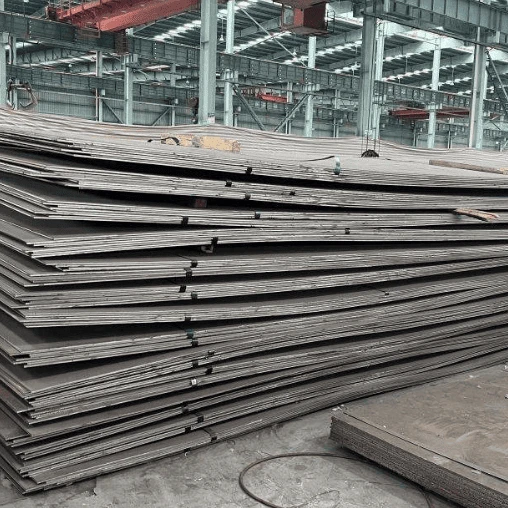
This patina acts as a barrier to further oxidation, meaning the steel can endure decades of outdoor exposure without requiring paint or surface treatment-typically achieving a service life of 40–120 years depending on climate.
Both Corten A and Corten B offer a visually warm, rustic appearance and are widely used in architecture, public art, outdoor installations, and bridge construction where durability and aesthetics are equally valued.
Corten A contains a slightly higher phosphorus content along with copper, nickel, and chromium, which enhances its ability to develop a fine, uniform protective patina.
This makes Corten A particularly well-suited for decorative cladding, façade elements, and flue gas systems where surface appearance and atmospheric corrosion resistance are priorities rather than mechanical load capacity.
Corten B shares the same corrosion-resistant properties but incorporates a balanced alloy composition designed to improve tensile strength and impact resistance, making it more appropriate for structural and load-bearing use, such as building frameworks, heavy outdoor structures, and large-scale landscape engineering.
Difference Between Corten A Chemical Composition and Corten B Chemical Composition
| Grade | C | Si | Mn | P | S | Al | V | Cu | Cr | Ni |
|---|---|---|---|---|---|---|---|---|---|---|
| Corten A | 0.12 | 0.25/0.75 | 0.20/0.50 | 0.07/0.15 | 0.030 | 0.015/0.06 | – | 0.25/0.55 | 0.50/1.25 | 0.65 |
| Grade | C | Si | Mn | P | S | Al | V | Cu | Cr | Ni |
| Corten B | 0.19 | 0.30/0.65 | 0.80/1.25 | 0.035 | 0.030 | 0.020/0.06 | 0.02/0.10 | 0.25/0.40 | 0.40/0.65 | 0.40 |
Difference Between Corten a Mechanical Properties and Corten B Mechanical Properties
| Grade | Thickness (mm) Strip Products |
Plate Products | Yield Strength Rel N/mm² Minimum |
Tensile Strength Rm N/mm² Minimum |
Elongation A50 % Minimum |
|---|---|---|---|---|---|
| Corten A | 2 – 12 | 6 – 12 | 345 | 485 | 20 |
| Grade | Thickness (mm) Strip Products |
Plate Products | Yield Strength Rel N/mm² Minimum |
Tensile Strength Rm N/mm² Minimum |
Elongation A50 % Minimum |
| Corten B | 2 – 13 | 6 – 40 | 345 | 485 | 19 |
Corten A Grades and Equivalents
| Corten | EN 10025-5:2004 |
|---|---|
| Corten A | S355 J0WP |
Corten B Grades and Equivalents
| Corten | EN 10025-5:2004 |
|---|---|
| Corten B | S355J2W |
Uses of Corten A vs Corten B
 Corten steel, which includes both Corten A and Corten B grades, is widely recognized for its ability to withstand atmospheric exposure while maintaining a distinctive appearance.
Although both variants share similar weathering characteristics, they are engineered with slightly different compositions to suit different applications.
Corten A incorporates alloying elements such as copper, chromium, nickel, and a small amount of phosphorus.
This specific formulation encourages the formation of a fine, stable patina layer, making the material particularly suitable for architectural façades, outdoor artworks, monuments, and decorative installations where visual expression and exposure to open air are key considerations.
Corten B, while similar in general composition, is produced with a balanced alloy system designed to offer improved mechanical strength and structural durability.
This makes it more appropriate for heavy-duty or load-bearing environments such as building frameworks, bridge structures, retaining systems, and large landscape installations where long-term performance and resilience are required in addition to corrosion resistance.
Advantages of Corten A and Corten B
| Advantage | Corten A Steel | Corten B Steel |
|---|---|---|
| Natural Corrosion Protection | Forms a stable rust-like surface that protects against further rusting, eliminating the need for painting and regular maintenance. | Forms a stable rust-like surface that protects against further rusting, eliminating the need for painting and regular maintenance. |
|
Corrosion Resistance |
Good corrosion resistance in general weather conditions. |
Higher corrosion resistance, especially in salty or acidic environments, suitable for marine applications. |
|
Enhanced Strength and Durability |
Suitable for general applications with adequate strength and durability. |
Contains additional alloys (vanadium, copper, manganese) that enhance strength and durability, ideal for heavy-duty applications like bridges. |
|
Aesthetic Appeal |
Unique rust-like appearance adds to its aesthetic value, popular for artistic installations and outdoor sculptures. |
Unique rust-like appearance adds to its aesthetic value, popular for artistic installations and outdoor sculptures. |
Disadvantages of Corten A and Corten B
|
Disadvantage |
Corten A Steel |
Corten B Steel |
|---|---|---|
|
Initial Cost |
Generally more expensive than traditional carbon steel due to its unique properties and alloys. This cost may be offset by lower maintenance and painting needs over time. |
Generally more expensive than traditional carbon steel due to its additional alloys. This cost may be offset by lower maintenance and painting needs over time. |
|
Staining or Runoff |
Can cause staining or runoff during weathering, which may damage surrounding materials or structures. |
Can cause staining or runoff during weathering, which may damage surrounding materials or structures. |
|
Aesthetic Preferences |
The rust-like appearance might not fit all design styles or preferences, especially if a uniform or traditional look is desired. |
The rust-like appearance might not fit all design styles or preferences, especially if a uniform or traditional look is desired. |
|
Application Suitability |
May not be suitable for all applications. Environmental conditions, load-bearing needs, and aesthetic requirements should be considered. |
May not be suitable for all applications. Environmental conditions, load-bearing needs, and aesthetic requirements should be considered. |
Contact now to get Corten A Quote


