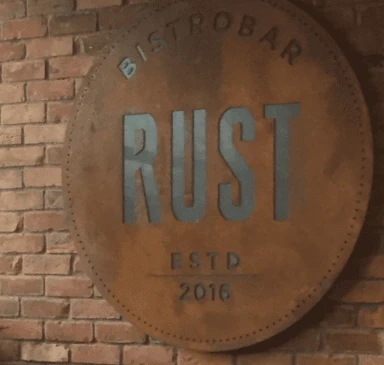
1. Why Weathering Steel Resists Rain
When the patina is fully mature (6–12 months of natural weathering or 2–4 weeks of artificial acceleration), it forms a dense, non-porous barrier that blocks rainwater from penetrating the steel substrate.
Rain actually aids in the patina maturation process during the initial stage: the dry-wet cycle of rain and sunlight promotes the uniform oxidation of the steel surface, helping the patina to densify faster.

2. Key Risks of Rain Exposure (and How to Avoid Them)
Stagnant Water Accumulation: If the guide sign has flat surfaces, recessed areas, or blocked drainage, rainwater will pool and soften the patina, causing peeling or pitting corrosion over time.
Acid Rain Impact: In industrial or urban areas, acid rain (containing sulfur dioxide or nitrogen oxides) can react with the patina, weakening its protective structure.
Fastener Corrosion: Using carbon steel bolts or brackets will cause rust stains to spread onto the sign surface when exposed to rain, damaging the patina's appearance.

3. Optimization Measures to Enhance Rain Resistance
Structural Drainage Design
Add a 2–5° slope to the sign panel to ensure rainwater flows off quickly, avoiding pooling.
Drill small drainage holes (3–5 mm diameter) at the bottom edge of the panel for recessed or framed signs.
Mount the sign with a 5–10 cm gap between the panel and the wall/backing to allow air circulation and prevent moisture trapping.
Patina Reinforcement
Accelerate patina formation before installing the sign outdoors-this skips the loose initial rust stage and ensures the sign has a stable protective layer when exposed to rain.
Apply a transparent breathable fluorocarbon sealant after patina maturation (especially for signs in acid rain-prone areas). The sealant locks in the patina structure without blocking air flow, and resists rainwater erosion. Reapply every 2–3 years.
Corrosion-Resistant Accessories
Use 304/316 stainless steel fasteners, brackets, and backing frames to avoid galvanic corrosion and rust stains caused by rain.
For engraved text or logos, seal the grooves with a thin layer of breathable sealant to prevent rainwater from accumulating in the crevices.

4. Maintenance Tips for Rainy Environments
Rinse the sign surface with fresh water every 3 months to remove dust, mud, or acid rain residues that may adhere to the patina.
Inspect the sign quarterly for signs of patina peeling or pitting (especially at welds or edges) and touch up damaged areas with patina accelerator and sealant.