


1. Natural Patina Formation (No Artificial Treatment)

2. Artificial Patina Acceleration (For Fast-Track Projects)
Clean the sign surface thoroughly to remove oil, dust, and factory oxide scales.
Apply a dedicated weathering steel patina accelerator (containing iron sulfate, copper chloride, etc.) evenly on the surface.
Maintain the environment at 70–90% relative humidity and 20–30°C temperature (use a humidity chamber or misting system for outdoor operations).
Rinse the surface with fresh water after 2–4 weeks to remove residual chemicals; the patina will stabilize into a dense, protective layer.
3. Key Notes for Scenic Guide Signs
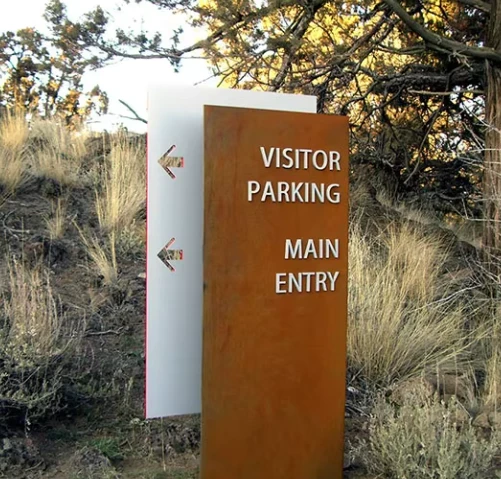
Text/Logo Protection: If the sign has engraved or inlaid house numbers/logos, conduct artificial patina acceleration after text customization. This prevents loose rust from covering the text during the formation process.
Uniformity Requirements: For a group of guide signs in the same scenic area, select steel panels from the same batch and treat them with artificial acceleration together-this ensures consistent patina color across all signs.
Post-Formation Maintenance: Once the patina matures, apply a thin layer of transparent breathable sealant (especially for signs in rainy or coastal scenic areas) to lock in the patina structure and extend its service life.


