


Buyers tackling projects in frigid regions often question whether Q460NH Corten Steel can endure extreme low temperatures-prolonged freezing, sudden temperature drops, and frost raise fears of brittle fracture, reduced toughness, or compromised structural safety. As a high-strength Corten Steel, Q460NH excels in heavy-duty load-bearing scenarios, but extreme cold tests its ability to maintain core mechanical properties. So, can it withstand extreme low temperatures, and what precautions are needed? The core answer is clear: Q460NH Corten Steel can reliably withstand moderate low temperatures (down to -20℃), but not extreme cold (below -20℃); specialized variants or targeted protection can extend its usability in harsher frigid environments. Below is a concise, actionable guide.

First: What Counts as "Extreme Low Temperatures"?
For practical project planning, we define it simply: Moderate low temperatures = -10℃ to -20℃ (common in temperate cold zones); Extreme low temperatures = below -20℃ (e.g., arctic regions, high-altitude frigid zones with prolonged freezing). This distinction is key to choosing whether Q460NH is suitable.
Q460NH's Low-Temperature Performance (Per GB/T 4171)
Q460NH's ability to resist cold relies on its low-temperature toughness (resistance to brittle fracture), a key index compliant with GB/T 4171 standards:
At -10℃ to 0℃: Maintains excellent toughness (impact energy ≥34J), no risk of brittle fracture; performs as reliably as in ambient temperatures for heavy-load structures.
At -10℃ to -20℃: Toughness slightly decreases but remains safe (impact energy ≥27J); simple preheating during welding/forming prevents cracks.
Below -20℃ (extreme cold): Toughness drops sharply, leading to high risk of brittle fracture-unsuitable for structural use without modification.

Practical Adaptation & Protection Tips
To maximize Q460NH's performance in cold regions (without extreme freezing), follow these easy tips:
Preheating: For welding/forming below -10℃, preheat evenly to 100-150℃ (use a temperature gauge) to reduce internal stress and avoid brittle cracks.
Storage & Installation: Store indoors or use breathable waterproof tarps to prevent ice buildup on the surface; avoid installing in areas with frequent freeze-thaw cycles (if possible).
Specialized Variants: For regions down to -40℃, choose Q460NH's low-temperature grade (Q460NHG), which has enhanced toughness for extreme cold.

When to Avoid Q460NH (Extreme Cold Scenarios)
Never use standard Q460NH in these environments-safety risks are unavoidable:
Prolonged temperatures below -20℃ (e.g., arctic construction, high-altitude cold zones with permanent frost).
Extreme cold + heavy loads (e.g., large bridge supports, industrial equipment frames in frigid regions)-brittle fracture may occur under tension.
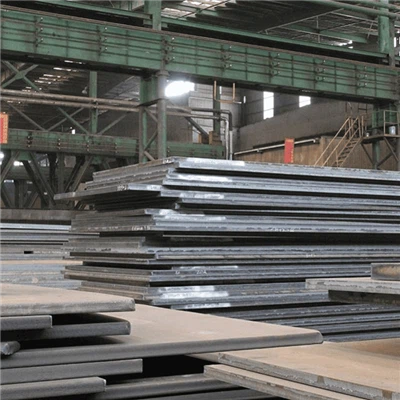
In summary, standard Q460NH Corten Steel handles moderate low temperatures (down to -20℃) reliably with simple protection, but not extreme cold (below -20℃). For harsher frigid projects, opt for its low-temperature variant (Q460NHG) to ensure structural safety. By matching it to your region's cold grade, you leverage its high strength and corrosion resistance in cold environments.


