


Comparing Weathering Steel and Painted Carbon Steel in Lifecycle Cost
Introduction
When selecting materials for outdoor structures, lifecycle cost is often more important than initial material price. Weathering steel and painted carbon steel are both widely used, but their long-term cost profiles differ significantly due to maintenance requirements and durability.

Initial Cost vs. Long-Term Investment
Painted carbon steel typically has a lower initial material cost. However, this advantage is offset by the need for surface preparation, coating application, and regular repainting throughout the service life. Weathering steel, by contrast, is supplied without paint or coating, reducing fabrication and installation steps at the outset.
Maintenance and Repair Costs
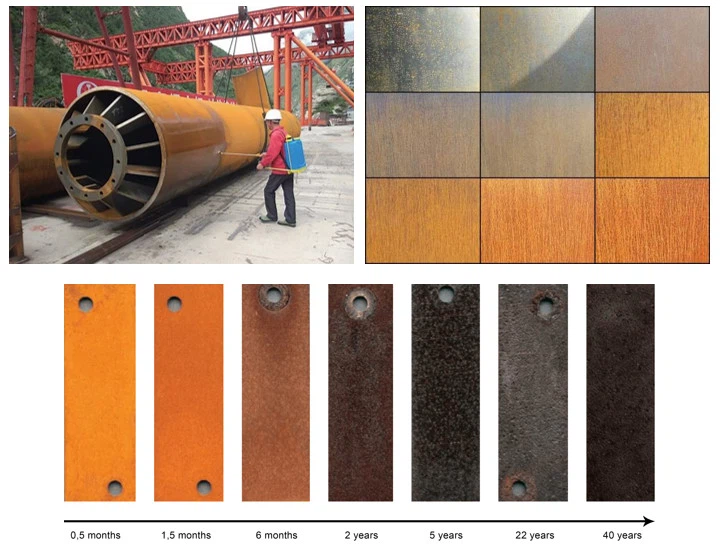
The most significant lifecycle cost difference lies in maintenance. Painted carbon steel relies on the integrity of its coating system. Over time, coatings degrade due to UV exposure, moisture, and mechanical damage, requiring periodic inspection, surface repair, and full recoating. These activities involve labor, equipment, downtime, and environmental controls. Weathering steel forms a stable protective patina that naturally limits further corrosion, eliminating the need for routine repainting in suitable environments.
Service Life and Performance Stability
Weathering steel demonstrates stable corrosion performance once the patina has matured. Corrosion rates decrease substantially, and section loss remains predictable and limited. Painted systems, on the other hand, may experience localized corrosion beneath damaged coatings, which can accelerate deterioration if not addressed promptly.
Indirect and Environmental Costs
Paint maintenance often generates additional indirect costs, including access scaffolding, traffic disruption, and waste disposal. Weathering steel minimizes these factors and avoids the use of solvents and coatings, supporting more sustainable construction practices.

Conclusion
While painted carbon steel may appear economical at the initial stage, weathering steel often delivers a lower total lifecycle cost. Reduced maintenance, predictable performance, and long-term durability make weathering steel a cost-effective solution for structures designed for extended service life.


