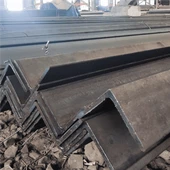
Landscape edging has one simple job to do extremely well: hold a boundary, keep growing media and gravel where they belong, and still look right after a decade of weather. Weathering steel achieves this through its living finish. A corten steel edge is a rolled or folded steel section that forms its own protective patina outdoors, so the boundary line stays crisp without annual painting or sealing.
What Makes Weathering Steel Edging Perform Outdoors
Weathering steel is carbon steel alloyed with copper, phosphorus, silicon, chromium and nickel. Under alternating wet and dry conditions the surface develops a compact oxide layer that resists further atmospheric corrosion. Grades including EN 10025-5 S235J0W and S355J2W, ASTM A588 Grade A, JIS G 3114 SPA-H and GB/T 4171 Q355GNH are all used for edging, border and planter profiles.
| Property | Typical value |
|---|---|
| Material | Weathering steel to SPA-H / ASTM A588 / EN 10025-5 |
| Common thickness | 1.5 mm to 6.0 mm |
| Standard heights | 75, 100, 150, 200 and 300 mm, with custom heights available |
| Profile forms | Flanged strip, angle, saw-tooth, curved and radius-bent |
| Outdoor service life | 20 to 40 years, depending on climate |
| Maintenance | No painting and no sealing required |
The self-protecting patina is what separates this material from painted steel strip. There is no coating to renew, no film to trap moisture underneath, and no need to lift the edging for repainting. The edge simply weathers, darkens and settles into the garden.
Design Benefits in Garden and Yard Schemes
Natural appearance: the tone moves from orange-brown to deep rustic bronze and blends into planting.
High structural strength: a thin section carries the edge load without bowing or spreading.
Crack and chip resistance: with no coating to flake, the profile survives freeze-thaw cycles.
Flexible geometry: straight runs, long radii, saw-tooth and mitred returns come from the same system.
Fast installation: sections are joined with clamps and fixed with stakes using basic hand tools.
Because the material is formed rather than cast, it can be produced to a tight tolerance across a long run. That matters on a curved lawn edge, where gaps and steps between sections are immediately visible. A radius-bent strip holds a continuous line, while an angled profile tucks neatly under turf and gravel without a visible lip.
Applications in Residential and Commercial Projects
Flower beds and shrub borders. Edging defines the bed cleanly, prevents soil migration and keeps mulch contained. The warm patina contrasts with green foliage and helps hold a crisp line through the season.
Walkways and driveways. Along gravel paths, stone walkways and concrete drives, the edge stops decorative stone migrating into lawns and planting beds, so the path keeps its definition with minimal sweeping.
Lawn-to-patio transitions. The strip forms a stable visual and structural break between turf, terrace and patio, stopping grass creeping into paving and framing seating areas with a modern architectural line.
Pond and water feature framing. Weathering steel performs well in moisture-prone situations, which makes it suitable for outlining ponds, rills and reflecting pools beside stone, timber and aquatic planting.
Raised planters and tiered beds. Formed into vertical edging walls, the strip becomes a structural element for layered gardens, sloped-yard stabilisation and elevated planting zones.
Contemporary architectural landscapes. Minimalist schemes, geometric layouts and industrial-modern or zen-style gardens all benefit from the clean lines and the way the surface matures rather than wears.
Installation Sequence and Detailing
Mark the edge line and cut a shallow trench slightly wider than the section.
Check levels along the run and anywhere the ground falls away.
Set the first section, then lock following sections end to end with clamps.
Drive steel stakes at the recommended spacing, keeping the top of the edge on a consistent line.
Backfill with excavated soil or gravel and compact in layers on both faces.
Water the finished run to settle the backfill and check that surface water drains away from the steel.
Most garden-scale runs need no heavy plant, only clamps, stakes and basic digging tools. Where the edge also retains soil, increase the stake length and add a small concrete or gravel haunch behind the toe so the section cannot rotate.
Frequently Asked Questions
Q: How thick should garden edging be?
For borders and paths, 1.5 mm to 3.0 mm is adequate. Where the edge retains soil or supports a raised bed, 3.0 mm to 6.0 mm gives a stiffer section that will not bow under load.
Q: Will the edging rust through?
No. Once the patina has formed, the oxide layer slows further corrosion dramatically, and a well-detailed run commonly gives 20 to 40 years of service outdoors.
Q: Can it be used in a curved design?
Yes. Radius-bent sections follow long curves, and short flanged units handle tight radii. For complex organic shapes, drawing the layout as a single spline before fabrication avoids visible steps between parts.
Q: Does it need sealing or painting?
Neither is required. Sealing only interrupts the oxidation cycle that creates the protective layer, so an untreated surface gives the best long-term performance.
Q: Will it stain adjacent paving?
Some oxide run-off is normal while the patina is forming. Keep a gravel margin, set light paving back slightly from the edge, and the marking will stop once the surface stabilises.
Q: Can it be installed on a slope?
It can. Step the sections down the slope, or use a stepped cut so the top line follows the fall in tidy increments rather than a continuous ramp.