


When sourcing a 400MPa Corten Steel for outdoor welded structures, engineering teams are often overwhelmed by the range of SMA400 series grades defined under Japan's JIS G 3114:2022 standard. While every variant in this family shares the same core classification as hot-rolled atmospheric corrosion-resistant structural steels, their suffix designations (A, B, BP, C, CW, W) signal non-negotiable, standard-mandated differences in chemical makeup, mechanical performance, and environmental suitability. Among them, SMA400CW stands out as the highest-performing all-round grade for harsh, demanding conditions, with capabilities that set it apart from every other variant in the series.

1. Low-Temperature Impact Toughness: The Defining Performance Gap
The most critical distinction between SMA400CW and the rest of the SMA400 family is its industry-leading low-temperature fracture resistance, strictly mandated by JIS G 3114:2022. Each grade's minimum Charpy V-notch impact toughness requirement (27 Joules, the global benchmark for structural safety) is tied to a specific test temperature, defining its safe cold-weather operating limits:
SMA400A: 27J at 20°C (room temperature only, no freeze resistance)
SMA400B / SMA400BP: 27J at 0°C (suitable only for temperate climates with occasional short freezes)
SMA400C: 27J at -10°C (limited use for regions with mild, intermittent sub-zero exposure)
SMA400CW: 27J at -20°C (the strictest requirement in the entire SMA400 series)
SMA400W: 27J at 0°C (optimized for corrosion resistance, not cold-climate performance)
This makes SMA400CW the only SMA400 series grade certified for sustained sub-zero exposure down to -20°C, eliminating the risk of sudden brittle fracture in frigid northern climates that would render all other standard variants unsafe for load-bearing use.

2. Chemical Composition: Balanced Corrosion Resistance & Structural Integrity
All SMA400 series grades share a core copper-chromium corrosion-fighting blend (0.30–0.50% copper, 0.45–0.75% chromium) to form a self-healing protective patina, but they diverge sharply in alloying and impurity controls that define long-term performance:
Nickel content (the key corrosion differentiator): Entry-level grades (SMA400A, B, BP) have a near-zero nickel limit of ≤0.03% to keep upfront costs low. SMA400C allows optional nickel up to 0.30% for mild toughness gains. Only SMA400CW and SMA400W require a mandatory 0.20–0.60% nickel addition, which strengthens the patina to resist chloride ions from coastal salt air and acidic sulfur dioxide from industrial emissions.
Tightened impurity limits: SMA400CW caps phosphorus and sulfur at ≤0.030% each, stricter than the 0.035% limit for SMA400A/B/BP. This eliminates grain boundary weakening, preventing hot cracking during welding and localized pitting corrosion in aggressive environments.
Ultra-low carbon content: SMA400CW has a maximum carbon limit of 0.12%, tighter than the 0.18% cap for SMA400A/B/BP and 0.15% for SMA400C. This reduces hardening in the weld heat-affected zone, delivering superior weldability for heavy structural fabrication.

3. Fabrication & Weldability: Simplified Heavy Structural Use
While all SMA400 series grades are designed for welded structural applications, SMA400CW's calibrated composition makes it the most factory-friendly grade for heavy, high-integrity fabrication:
No preheating is required for sections up to 25mm thick in normal ambient temperatures, thanks to its ultra-low carbon content. Thicker sections only require minimal preheating (50–80°C), compared to the more stringent preheating requirements for higher-carbon SMA400 variants.
Its refined grain structure and low impurity limits reduce edge cracking during cold forming, even for complex curved profiles, while retaining its impact toughness after shaping.
Unlike SMA400W, which is optimized solely for corrosion resistance, SMA400CW's balanced alloying ensures weld joints match both the parent steel's low-temperature toughness and corrosion resistance, eliminating weak points in harsh environments.

4. Use Case & Cost Tradeoffs: Right Grade for the Right Environment
Each SMA400 series grade is engineered for a specific set of applications, with clear cost and performance tradeoffs:
Upfront cost ranking (lowest to highest): SMA400A < SMA400BP < SMA400B < SMA400C < SMA400CW < SMA400W
Ideal applications:
Entry-level grades (SMA400A, B, BP): Cost-effective for mild, temperate rural/suburban projects, such as landscape structures and low-rise architectural framing, with no exposure to extreme cold, pollution, or salt air.
SMA400C: Limited use for regions with occasional sub-zero temperatures down to -10°C, with no aggressive corrosion risks.
SMA400CW: The only grade suitable for projects facing combined harsh conditions: sustained frigid winters, moderate industrial pollution, or low-exposure coastal environments. It is ideal for cold-climate bridge superstructures, industrial plant framing, and coastal pedestrian infrastructure.
SMA400W: Optimized for high-pollution or coastal projects with no extreme low-temperature requirements, carrying a similar material premium to SMA400CW but no cold-climate toughness guarantee.
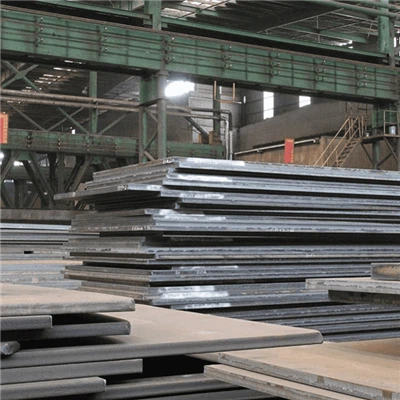
In summary, SMA400CW Corten Steel is the most versatile high-performance grade in the SMA400 series, per JIS G 3114:2022. It combines the strictest low-temperature toughness in the family with nickel-enhanced corrosion resistance and superior weldability, solving the core limitations of standard SMA400 variants in harsh, multi-stressor environments. While entry-level grades deliver better value for mild, temperate projects, SMA400CW is the only reliable, code-compliant choice for projects that demand both cold-climate safety and long-term corrosion resistance.


