


Corten Steel is widely favored for its ability to form a dense, self-protective α-FeOOH nanocrystalline rust layer in natural environments, which achieves long-term corrosion resistance. However, the formation cycle of this protective rust layer is not fixed-it is significantly affected by climatic conditions. Factors such as humidity, salt spray concentration, and pollutant content in different environments can lead to a 2-5 fold difference in the rust layer formation cycle. This article focuses on analyzing the impact of typical climatic environments (such as coastal high-salt-spray areas and inland arid regions) on the formation cycle of Corten Steel's rust layer, providing a reference for practical application and project scheduling.
1. Coastal High-Salt-Spray Areas (e.g., coastal cities, ports)
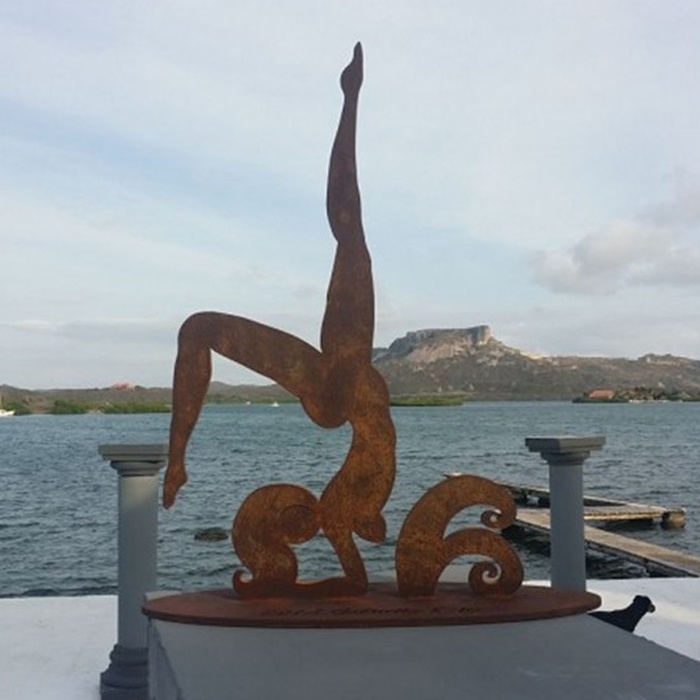
Coastal high-salt-spray areas are the most challenging environment for the formation of Corten Steel's self-protective rust layer. The core characteristics of this environment are high relative humidity (usually 75%-90%) and high concentration of Cl⁻ in the air (from sea salt spray). Cl⁻ has strong corrosiveness: it can easily penetrate the initial loose rust layer, destroy the enrichment process of alloying elements (such as Cu, Cr, Ni) on the substrate surface, and hinder the transformation of the rust layer into the dense α-FeOOH crystal form. In severe cases, it may even cause pitting corrosion, making it impossible to form a complete self-protective rust layer.
Impact on formation cycle: The formation cycle of the self-protective rust layer is significantly prolonged, usually taking 12-24 months. Without any auxiliary protective measures, some areas may never form a stable protective rust layer. In practical applications, by selecting high-grade weather-resistant Corten Steel (e.g., Q355GNH equivalent, S355J2W equivalent) and matching auxiliary protective measures such as silane impregnation, the formation cycle can be shortened to 9-15 months. It should be noted that the continuous water supply brought by sea breezes will accelerate the initial corrosion rate, but the interference of Cl⁻ is more significant, resulting in an evolutionary characteristic of "fast initial stage and slow later stage" for the rust layer.
2. Inland Arid Regions (e.g., northwest Gobi, inland plains)
Inland arid regions are characterized by low humidity, low pollution, and large temperature differences. The relative humidity is mostly between 30%-50%, and the insufficient supply of water is the main factor restricting the formation of the rust layer. The formation of the self-protective rust layer of Corten Steel relies on the electrolyte formed by water. Insufficient humidity will lead to the lack of electrolyte, making the oxidation reaction of the steel surface unable to proceed smoothly, and the evolution of the rust layer will stagnate.
Impact on formation cycle: This is the environment with the longest formation cycle of the self-protective rust layer. It takes 3-5 months to form the initial loose γ-FeOOH rust layer, 6-8 months for the transition stage (alloy element enrichment and crystal form transformation), and the formation cycle of the stable self-protective rust layer is as long as 12-18 months. In some extremely arid areas (such as deserts) where the relative humidity is long-term below 30%, it is even impossible to form a complete self-protective rust layer. At this time, artificial spraying of simulated rainwater can be used to assist the formation of the rust layer. In addition, the "condensation-drying" cycle caused by large day and night temperature differences can slightly accelerate the evolution of the rust layer, but the overall impact is limited.

3. Rural/Inland Mild Regions (e.g., rural areas in the south of the Yangtze River, inland North China)
Rural or inland mild regions are the most favorable environments for the formation of Corten Steel's self-protective rust layer. The relative humidity here is stably maintained between 50%-75%, providing sufficient water for the formation of the electrolyte. At the same time, the content of atmospheric pollutants (mainly a small amount of dust and CO₂) is low, which will not interfere with the crystal form transformation of the rust layer.
Impact on formation cycle: The formation cycle is the shortest, usually 6-9 months. Specifically, the initial loose rust layer can be formed in only 1-2 months, the transition stage takes 2-3 months, and the stable α-FeOOH nanocrystalline rust layer is formed in 6-9 months. The rust layer formation process is stable, the crystal form transformation is sufficient, and the finally formed rust layer is uniform and dense, with the best protective performance-the annual corrosion rate can be as low as 0.01-0.02 mm/year.

4. Industrial Atmospheric Regions (e.g., steel industrial zones, chemical parks)
Industrial atmospheric regions are characterized by high concentrations of pollutants. The air contains a large amount of corrosive media such as SO₂, NOx, and dust, and the relative humidity is mostly between 60%-80%. These pollutants can accelerate the initial corrosion of Corten Steel, but the acidic components (such as H₂SO₄ formed by SO₂ dissolving in water) will destroy the stability of the rust layer and interfere with the enrichment of alloying elements.
Impact on formation cycle: The initial formation of the rust layer is accelerated (the initial loose rust layer can be formed in 0.5-1 month, and the transition stage takes 1-2 months), but the overall formation cycle of the self-protective rust layer is prolonged to 9-12 months due to the interference of pollutants. In heavily polluted areas (such as heavy chemical parks), acidic media will continuously erode the rust layer, making it difficult to form a stable α-FeOOH rust layer. It is necessary to use auxiliary protective measures such as rust layer curing agents to ensure the formation of the protective rust layer.

Summary and Practical Suggestions
Different climatic environments affect the formation cycle of Corten Steel's self-protective rust layer by changing the supply of water, the concentration of corrosive media (such as Cl⁻, SO₂), and other key factors. To sum up: the formation cycle is the longest in inland arid regions (12-18 months), the shortest in rural mild regions (6-9 months), and relatively long in industrial atmospheric regions (9-12 months) and coastal high-salt-spray regions (12-24 months) due to pollutant interference.
For foreign customers engaged in engineering projects, it is recommended to: 1) Select the appropriate Corten Steel grade according to the local climate environment (e.g., high-grade Corten Steel for coastal areas); 2) Formulate a reasonable project schedule based on the rust layer formation cycle of the target environment; 3) Adopt necessary auxiliary protective measures for harsh environments to ensure the timely formation of the self-protective rust layer and the long-term service life of the project.


