


Perforated Corten Steel Sheets are made from weathering steel, originally developed by U.S. Steel in 1933. The name COR-TEN comes from COR (Corrosion Resistance) and TEN (Tensile Strength).
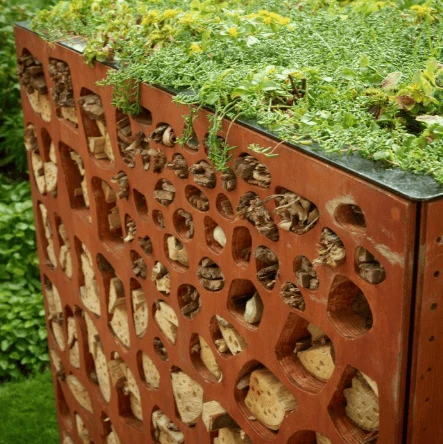
Unlike ordinary steel, Corten steel forms a stable, self-protecting oxide layer (patina) when exposed to air and moisture. This layer prevents further corrosion - eliminating the need for painting and reducing maintenance costs significantly.
Weathering Steel Specifications Commonly Used for Perforated Panels
| Standard | Typical Yield Strength | Typical Tensile Strength | Thickness Range | Product Forms | Notes |
|---|---|---|---|---|---|
| ASTM A242 | ≥ 345 MPa | ≥ 485 MPa | Up to 20 mm | Plate / Sheet | Early weathering steel, architecture use |
| ASTM A588 | ≥ 345 MPa | ≥ 485 MPa | Up to 100 mm | Plate / Structural Sections | Improved corrosion resistance, most widely used |
| ASTM A606-4 | ≥ 345 MPa | ≥ 485 MPa | 0.5–3 mm | Coil / Sheet (Cold Rolled) | Ideal for cladding and perforated façade panels |
| ASTM A847 | ≥ 345 MPa | ≥ 485 MPa | Pipe / Tube profiles | Tubing | Used for decorative screens, railings, frames |
How Perforated Corten Steel Sheets Are Made
1. Material Selection
Sheets are typically produced in:
1.0 mm – 6.0 mm thickness
Widths up to 1,500 mm
Coils or flat sheets
2. Perforation Processes
| Method | Key Benefit | Suitable Application |
|---|---|---|
| CNC Punching | Fast and economical | Standard perforation patterns & large projects |
| Laser Perforation | Complex shapes and ultra-clean edges | Architectural facades & customized design work |
| Rotary Needle Rollers | High-speed continuous perforation | Cladding and continuous panels |
3. Surface Stabilization
To control early rust runoff, panels are usually:
Pre-weathered for 2–6 months, or
Accelerated Patina Treatment is applied
This greatly reduces rust staining on adjacent building surfaces.
Advantages of Perforated Corten Steel Sheets
| Advantage | Technical Details / Data |
|---|---|
| High Structural Strength | Tensile Strength ≥ 485 MPa supports load-bearing façade framing |
| Long Service Life | Patina layer reduces corrosion by 5–8× vs. regular carbon steel |
| Low Maintenance | No repainting needed - patina self-repairs when scratched |
| Aesthetic Impact | Rust-brown tone blends with landscape, stone, concrete, or greenery |
| Improved Ventilation & Light Control | Perforation rate can range from 10%–45% open area |
| Sustainable Material | 100% recyclable, contributes to LEED/green building scores |
Potential Disadvantages (and Solutions)
| Issue | Explanation | Mitigation |
|---|---|---|
| Rust Runoff at Early Weathering Stage | Patina not yet stabilized | Pre-weather panels or apply runoff channels |
| Not Suitable for Coastal / Marine Zones | Salt inhibits patina formation | Apply sealing coating or choose stainless steel |
| Higher Cost vs. Mild Steel | Alloyed with Cu/Cr/Ni for weathering | Offset by lifetime maintenance savings |
Common Applications
Architectural & Building
Perforated exterior wall cladding
Decorative ventilated facades
Balcony & staircase screening
Ceiling and soffit panels / sun shading systems
Landscape & Public Space
Garden screens & partition walls
Pavilion and walkway cladding
Outdoor art installations
Infrastructure & Industrial
Acoustic barriers
Ventilation covers and mechanical screening
Light diffusion and airflow control systems


