


Many civil engineering and heavy-duty projects require Q235NH Corten Steel in non-standard thicknesses, with a common question: Can it be customized to thicknesses over 100mm, and what process controls are needed to ensure quality? Standard Q235NH supply ranges from 3mm to 50mm, but custom orders often demand thicker plates for load-bearing or specialized applications. Based on production practice and GB/T 4171 standards, the core conclusion is clear: Q235NH is available in custom thicknesses (including over 100mm, up to 150mm), but requires strict process controls to avoid toughness degradation and ensure corrosion resistance. Below is a concise, actionable breakdown.
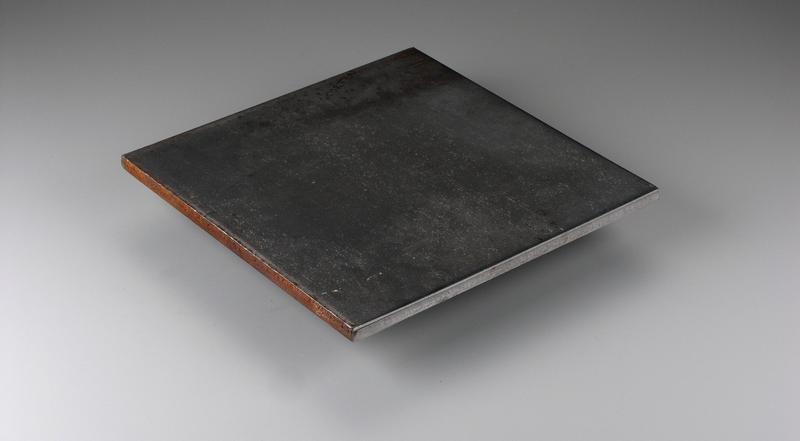
Custom Thickness Range for Q235NH
Q235NH's custom thickness capacity is determined by mill rolling equipment and material properties, with clear feasible limits:
Common Custom Range: 50mm to 100mm – This range is widely achievable by most steel mills, with mature production processes and shorter lead times (2-4 weeks).
Special Custom Range: 100mm to 150mm – Thicknesses over 100mm are feasible but require large-scale hot rolling mills and additional process optimization; lead times extend to 4-6 weeks.
Feasibility Note: Thicknesses over 150mm are not recommended for Q235NH. The material's low carbon and alloy content makes it difficult to ensure uniform internal structure, leading to increased brittleness and corrosion inconsistency.

Key Process Controls for Custom-Thickness Q235NH
Custom thick plates (especially over 100mm) face risks of grain coarsening, internal defects, and uneven corrosion resistance. Strict process controls are mandatory to mitigate these issues:
Hot Rolling Process: Adopt multi-pass hot rolling with controlled temperature (850-1100℃) to refine grain structure. Avoid excessive rolling force, which can cause internal cracks in thick plates.
Cooling Control: Use slow air cooling (normalization) instead of rapid cooling. For plates over 100mm, extend cooling time to 24-48 hours to reduce residual stress and avoid hardening.
Alloy Content Adjustment: Slightly increase Cu (to 0.40-0.50%) and Cr (to 1.00-1.20%) for plates over 100mm, ensuring the entire cross-section forms a uniform protective patina.
Internal Quality Inspection: Implement ultrasonic testing (UT) to detect internal defects (e.g., porosity, inclusions) – critical for thick plates used in load-bearing applications.
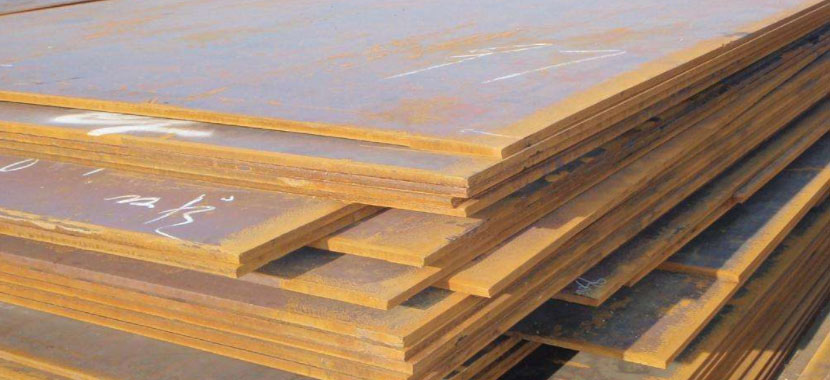
Quality Verification for Custom-Thickness Plates
When purchasing custom-thickness Q235NH, request these additional verifications to ensure compliance:
Mechanical Property Testing: Confirm yield strength (≥235MPa) and impact energy (≥27J at -20℃) across the plate's cross-section – thick plates often have lower toughness at the core if not properly processed.
Z-Direction Test: For plates over 50mm, verify Z15/Z25 properties to prevent lamellar tearing during welding, a common risk in thick weldments.
Corrosion Resistance Sampling: Request corrosion test reports for the custom plate, ensuring the thick cross-section forms a stable patina (not just the surface).

Practical Tips for Custom-Thickness Orders
Communicate Early: Inform the supplier of your exact thickness requirement (e.g., 120mm) and application (load-bearing/non-load-bearing) to allow process optimization.
Lead Time Planning: Allocate extra time for custom production – plates over 100mm may require 4-6 weeks, plus shipping and inspection.
Cost Consideration: Custom thicknesses (especially over 100mm) cost 30-50% more than standard ranges, due to additional processing and inspection.

In summary, Q235NH can be customized to thicknesses over 100mm (up to 150mm) for specialized projects, but strict process controls (temperature, cooling, alloy adjustment) and quality verification are non-negotiable. By working closely with a qualified mill and clarifying your requirements upfront, you can obtain custom-thickness Q235NH that meets both structural and corrosion resistance needs.


