


Coastal bridge and marine engineering projects face an unforgiving dual challenge: the relentless corrosion risk from chloride-laden salt spray and tidal moisture, and the exorbitant cost of ongoing maintenance in remote, harsh marine environments. Corten Steel has long been valued for its low-maintenance, corrosion-resistant performance in atmospheric settings, but its viability for coastal and marine work varies dramatically by grade. For SMA400CW Corten Steel, strictly standardized under Japan's JIS G 3114:2022 specification for hot-rolled atmospheric corrosion-resistant welded steels, its suitability is not a universal yes or no. Instead, it is defined by clear, standard-backed exposure boundaries: it delivers reliable, cost-effective performance for targeted low-exposure coastal bridge applications, but is not engineered for high-exposure marine engineering or nearshore structures with direct saltwater contact.

JIS G 3114:2022 Performance Foundation for Coastal Use
SMA400CW's coastal viability stems directly from its JIS-mandated alloy formulation, which sets it apart from entry-level SMA400 series grades. Unlike SMA400BP, which has a near-zero nickel limit of ≤0.03%, SMA400CW requires a controlled 0.20–0.60% nickel addition, paired with a core corrosion-fighting blend of 0.30–0.50% copper and 0.45–0.75% chromium. This nickel enhancement strengthens the steel's self-healing protective patina, improving its resistance to chloride ion penetration from coastal salt air. It also delivers a guaranteed minimum 27J Charpy V-notch impact toughness at -20°C, making it suitable for cold coastal climates where standard grades risk brittle fracture in freezing winter temperatures.
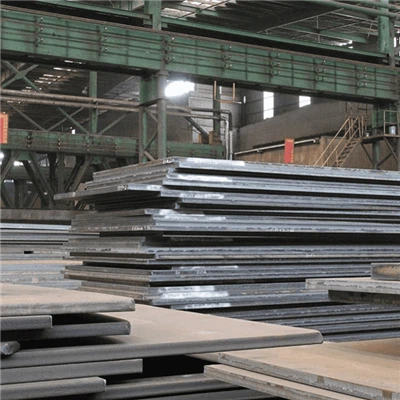
Eligible Coastal Bridge Applications (JIS-Aligned)
SMA400CW is fully suitable only for low-exposure coastal bridge projects, defined by JIS G 3114:2022 as locations ≥1 kilometer from the shoreline, with no direct salt spray splash, tidal contact, or seawater immersion. In these settings, its stabilized corrosion rate holds at 0.03–0.06 mm/year, delivering a 20–25 year service life with minimal maintenance. Ideal use cases include:
Pedestrian bridge railings, safety barriers, and non-load-bearing aesthetic elements for coastal town footbridges and landscape bridges
Inland-facing structural framing, canopy supports, and access platforms for low-rise coastal bridge facilities
Perimeter infrastructure and utility supports for coastal bridge projects with no direct marine exposure
In these eligible applications, SMA400CW outperforms standard SMA400BP by 30–40% in corrosion resistance, while eliminating the costly 5–7 year repainting cycles required for painted carbon steel in coastal areas.

High-Exposure Scenarios: Not Recommended per JIS G 3114:2022
Critically, JIS G 3114:2022 does not endorse SMA400CW for high-exposure coastal or marine engineering applications, where its performance degrades rapidly and poses structural safety risks. These non-eligible settings include:
Locations within 500 meters of the shoreline, with sustained direct salt spray splash
Tidal zones, splash zones, or any application with intermittent or continuous seawater immersion
Load-bearing superstructures, girders, or pier columns for long-span nearshore or sea-crossing bridges
Port infrastructure, marine fenders, or any marine engineering element with direct contact to saltwater
In these high-chloride environments, even the nickel-enhanced patina of SMA400CW cannot withstand continuous salt exposure. Chloride ions penetrate and break down the protective oxide layer, preventing it from re-forming and pushing the corrosion rate above 0.08 mm/year. This leads to severe localized pitting corrosion, cutting service life to 15 years or less and creating a high risk of premature structural failure.

Practical Best Practices for Approved Coastal Bridge Use
To maximize SMA400CW's performance and service life in eligible coastal bridge applications, follow these JIS-aligned guidelines:
Increase the design corrosion allowance from the standard 1–1.5 mm to a minimum 2 mm, to offset accelerated salt-related corrosion over the full service life
Implement bi-monthly low-pressure fresh water rinses to remove surface salt deposits, preventing chloride buildup that breaks down the protective patina
Design all horizontal surfaces with a minimum 3° slope and dedicated drain holes to eliminate standing water, which traps salt and accelerates localized corrosion
Use only weathering steel-matched welding consumables with identical nickel and chromium content, to ensure weld joints match the parent steel's corrosion resistance
Strictly avoid carbon steel cross-contamination during fabrication and installation, which causes galvanic pitting exacerbated by coastal salt air

In summary, SMA400CW Corten Steel is suitable for targeted, low-exposure coastal bridge applications fully aligned with JIS G 3114:2022's design limits, where it delivers a cost-effective, low-maintenance alternative to painted carbon steel and outperforms standard SMA400 series grades. It is not, however, suitable for high-exposure marine engineering or nearshore bridge structures with direct salt spray or seawater contact. For these harsher marine settings, specialized high-alloy marine steels are required to ensure long-term structural integrity and safety.


