


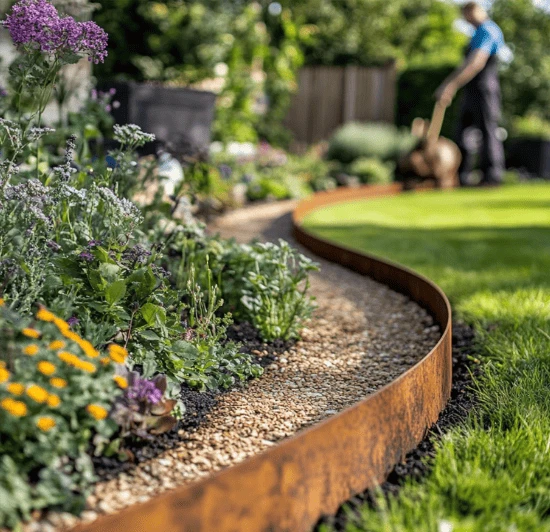
Corten steel landscape edging is widely used in residential gardens, commercial landscaping, lawn borders, flower beds and gravel pathways.
Compared with timber or plastic edging, weathering steel provides higher material stiffness, customizable profiles and a natural rust-colored appearance under suitable outdoor exposure conditions.
However, selecting the right metal garden bed edging involves more than choosing a weathering steel grade. Thickness, edging height, section length, folded profiles and anchoring methods all affect its performance.
Gnee supplies custom corten metal edging with material sourcing, cutting, bending, forming, surface treatment and export packaging services.
How Metal Garden Bed Edging Thickness Affects Structural Stability
The thickness of metal garden bed edging affects its resistance to bending, its weight and its suitability for different landscape boundaries.
For a flat steel strip of the same height and length, bending stiffness in the thickness direction is approximately proportional to the cube of the thickness. Increasing the thickness from 1.5 mm to 2 mm therefore produces a larger increase in local bending stiffness than the thickness difference alone suggests.
This does not mean that a thicker strip can automatically withstand any soil load. Edging height, profile design, support spacing and ground pressure must also be evaluated.
Metal Garden Bed Edging Thickness Comparison
|
Thickness |
Relative bending stiffness |
Reference application |
|
1.5 mm |
1.00× |
Light-duty lawn and flower bed borders |
|
2.0 mm |
2.37× |
General garden and lawn edging |
|
3.0 mm |
8.00× |
More rigid borders and taller profiles |
For ordinary metal edging for lawns, thicknesses of around 1.5–2 mm are commonly used in commercial edging systems. Thicker options, including 3 mm, may be selected where higher stiffness or larger exposed heights are required.
Gnee can fabricate different steel thicknesses based on project drawings. The final specification should be confirmed against the intended landscaping load and installation arrangement.
How Corten Landscape Edging Height and Length Affect Installation
Corten landscape edging is available in different heights and lengths to suit garden beds, lawns, gravel paths and commercial landscape borders.
Edging height determines the depth of material separation and the exposed border above ground. Section length affects the number of joints, transportation requirements and on-site installation work.
A 100 mm edging strip may be suitable for a low lawn boundary, while a 150–200 mm profile provides additional separation height for planting areas and pathways. Taller profiles are not automatically retaining walls and may require reinforced fixing systems.
Corten Steel Landscape Edging Size Selection
|
Application |
Reference height |
Reference thickness |
|---|---|---|
|
Lawn edging |
75–150 mm |
1.5–2 mm |
|
Garden bed edging |
100–200 mm |
1.5–3 mm |
|
Gravel path edging |
100–200 mm |
2–3 mm |
|
Raised garden border |
200–300 mm |
2–3 mm or engineered |
Why Section Length Matters for Metal Edging for Gardens
For a 100-meter continuous garden border, using 1-meter sections requires 100 pieces, while using 2-meter sections reduces the requirement to 50 pieces. Longer sections can reduce the number of joints, although transportation, handling and bending limitations must also be considered.
In one UK customer inquiry received by Gnee, the requested corten steel landscape edging specifications were 450 meters in total, with 10-meter lengths, 2 mm thickness and 100 mm height.
If supplied as requested, this would require 45 individual strips. Such long-section requirements need a separate fabrication and shipping review.
Why Folded Corten Metal Edging Offers Better Edge Performance
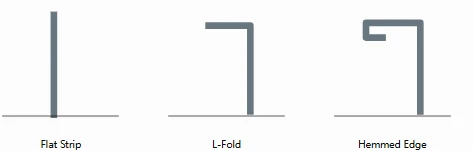
The cross-sectional profile is another important factor in the performance of corten metal edging. Even when two products use the same steel grade and thickness, a flat strip and a folded-edge strip can have different stiffness, edge safety and installation characteristics.
Folding the top edge changes the cross-sectional geometry, which can improve local rigidity and reduce the exposure of sharp sheet-metal edges.
This is especially relevant to garden edging metal used near walkways, residential lawns and public landscaping areas.
How Metal Gravel Edging and Lawn Edging Improve Landscape Separation
Metal gravel edging and metal edging for lawns serve different functions, even when the same weathering steel material is used.
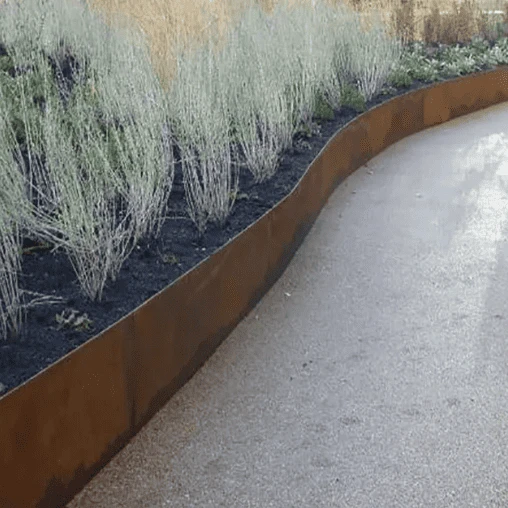
Lawn edging mainly defines the transition between grass and planting areas. Gravel edging must also help retain loose stones and resist lateral displacement from compacted aggregates, pedestrian use or maintenance activities.
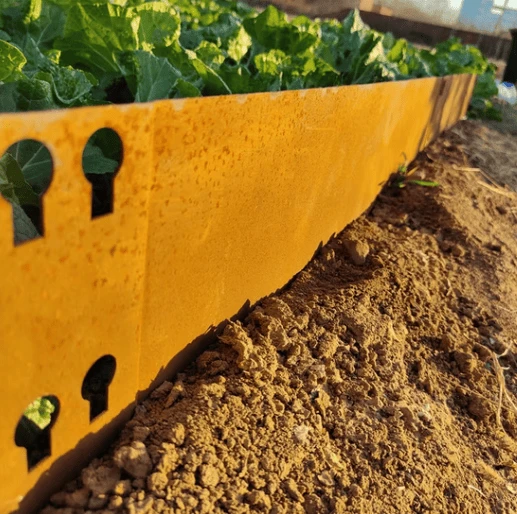
For both applications, edging height, the buried portion, anchor type and connection method are important. Inadequate fixing may allow steel strips to tilt or separate at the joints.
Installing Metal Edging: Connection and Fixing Options
|
Fixing method |
Typical use |
Design consideration |
|---|---|---|
|
Ground stakes |
Lawn and garden beds |
Soil strength and stake spacing |
|
Joining plates |
Long straight boundaries |
Joint alignment |
|
Bolted joints |
Detachable sections |
Hole size and bolt location |
|
Preformed corners |
Rectangular garden beds |
Angle and dimensional accuracy |
|
Reinforced supports |
Taller borders |
Soil pressure and stability |
Commercial Corten steel edging systems commonly use 2 mm steel with heights of 100, 150 or 200 mm, supported by appropriate joining and staking systems. For larger borders or higher gravel loads, a stronger section and closer supports may be needed.
Gnee can evaluate custom punched fixing holes, corner pieces, connectors and folded profiles according to the approved drawings.
How Corten Steel Landscape Edging Dimensions Affect Material Weight and Cost
For bulk corten steel landscape edging orders, thickness and section length affect steel consumption, unit weight, handling and freight requirements.
For a simple flat steel strip, theoretical weight can be estimated from its dimensions and a steel density of approximately 7,850 kg/m³. Folded profiles, punched holes, coating and accessories may change the actual finished weight. The table below compares theoretical weights for 2,000 mm long flat edging strips.
Corten Steel Landscape Edging Theoretical Weight Table
|
Thickness |
Height |
Length |
Weight per strip |
|---|---|---|---|
|
1.5 mm |
100 mm |
2000 mm |
2.36 kg |
|
2.0 mm |
100 mm |
2000 mm |
3.14 kg |
|
2.0 mm |
150 mm |
2000 mm |
4.71 kg |
|
2.0 mm |
200 mm |
2000 mm |
6.28 kg |
|
3.0 mm |
100 mm |
2000 mm |
4.71 kg |
|
3.0 mm |
150 mm |
2000 mm |
7.07 kg |
|
3.0 mm |
200 mm |
2000 mm |
9.42 kg |
For example, a project requiring 450 meters of 100 mm high, 2 mm thick flat Corten edging would have an approximate theoretical steel weight of 706.5 kg before fabrication allowances and packaging.
This calculation provides a reference for material consumption and logistics planning. It should not be treated as a finished-product quotation or shipping weight.
Export Performance of Gnee Corten Steel Landscape Edging
For overseas landscaping contractors, purchasing fabricated steel edging requires not only dimensional flexibility but also consistent production, product inspection and shipment coordination.
Gnee has supplied weathering steel landscape products to European markets, including a 25.428-ton Corten edging project for the Netherlands and a 20.91-ton SPA-H fabricated component project for France.
Actual Corten Steel Edging Supply Records
|
Project |
Netherlands |
France |
|---|---|---|
|
Product |
Corten edging |
SPA-H fabricated weathering steel components |
|
Shipment weight |
25.428 t |
20.91 t |
|
Steel thickness |
- |
1.5 / 2.0 mm |
|
Documented quantity |
- |
17,800 pcs |
|
Inspection evidence |
Material inspection documentation |
Dimensional and appearance inspection |
|
Packaging |
Export protective packaging |
Cartons and pallets |
SPA-H Corten Landscape Edging Components Supplied to France
The 20.91-ton French order provides a documented example of multi-size fabricated weathering steel components. The inspection report identifies three dimensions and their respective quantities.
|
Material |
Dimensions (mm) |
Quantity |
Batch weight |
|---|---|---|---|
|
SPA-H |
1.5 × 113 × 2000 |
4,400 pcs |
11,709 kg |
|
SPA-H |
1.5 × 213 × 2000 |
1,400 pcs |
7,023 kg |
|
SPA-H |
2 × 40 × 289 |
12,000 pcs |
2,178 kg |
|
Total |
- |
17,800 pcs |
20,910 kg |
The project underwent dimensional, appearance and packaging checks. The inspection records reported acceptable dimensions and surfaces without obvious scratches. The goods were packed in cartons and placed on pallets.
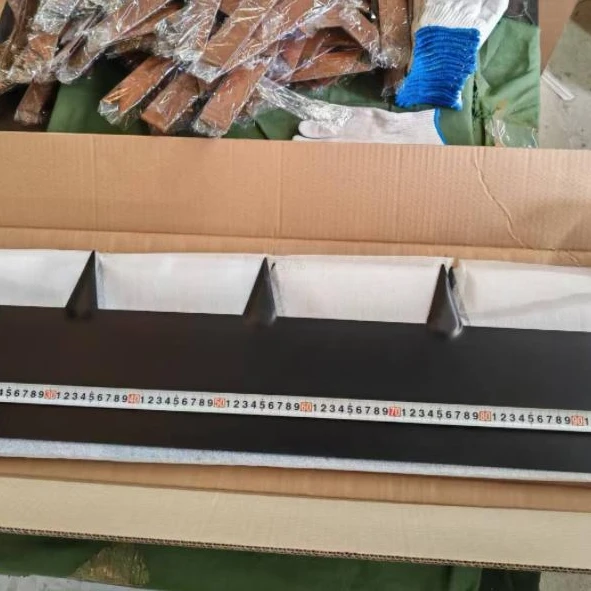
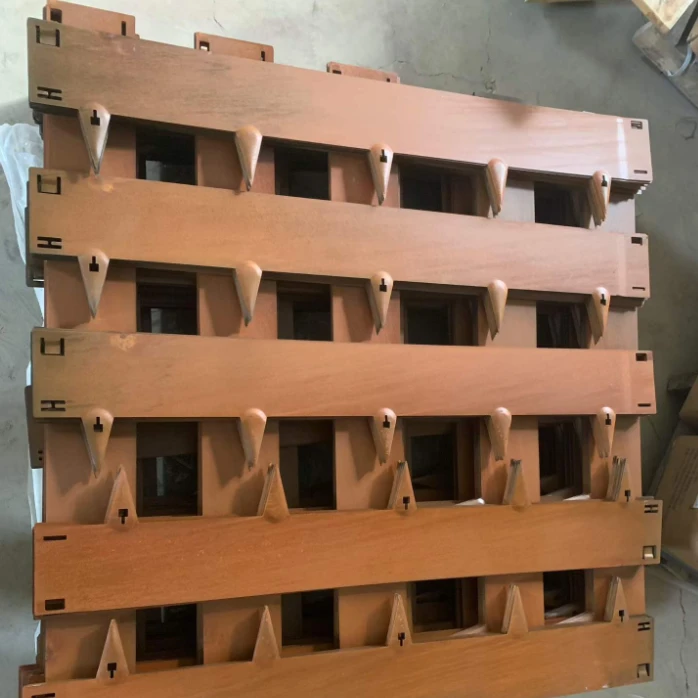
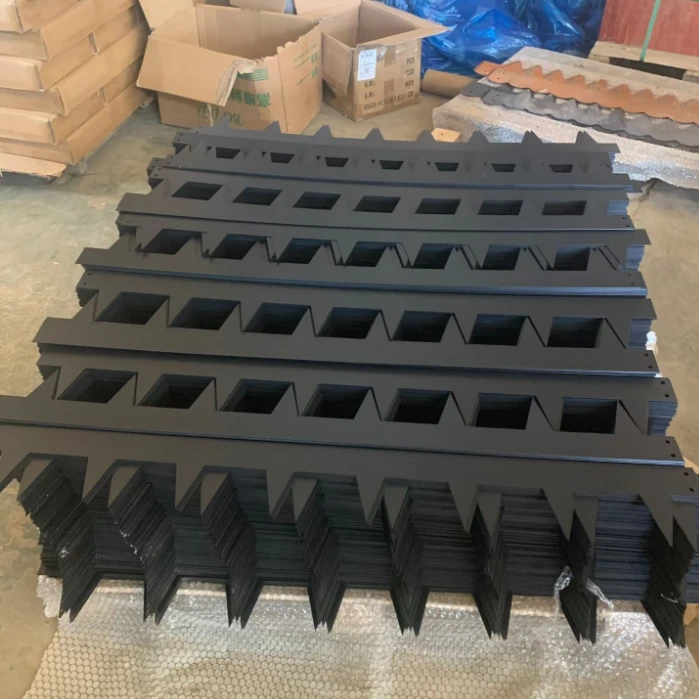
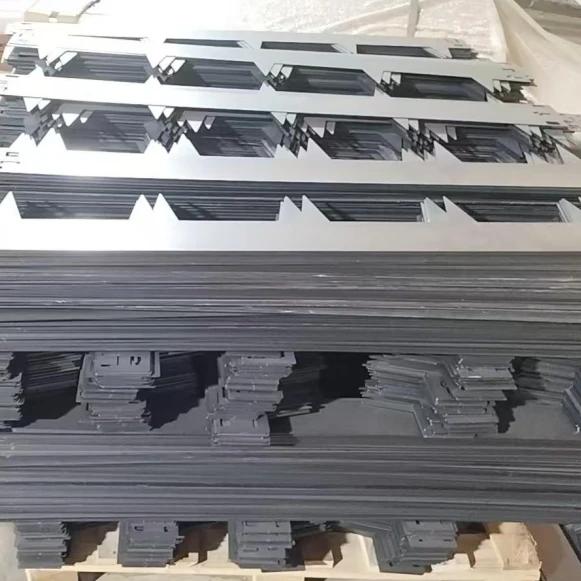
These records demonstrate the supply of multiple fabricated profiles within one order, which is relevant to landscaping projects requiring custom edging rather than standard-size steel sheets.
Custom Corten Metal Edging Manufacturing And Export Services
The benefits of corten metal edging depend on selecting suitable materials, dimensions, edge profiles and installation details for the intended landscape environment.
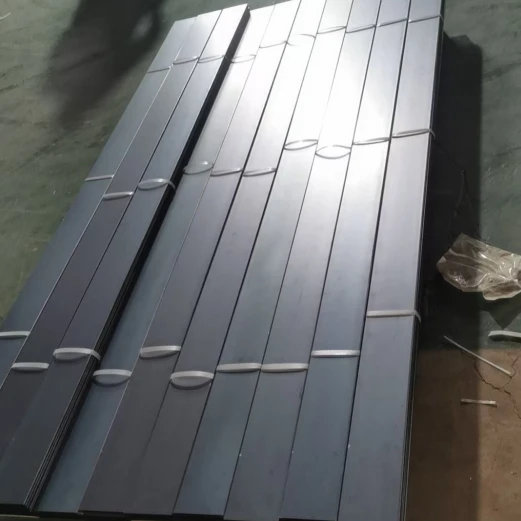
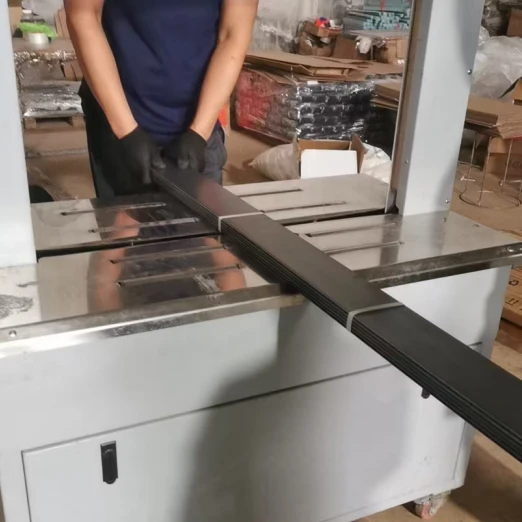
Gnee provides material sourcing, steel cutting, bending, punching, forming, surface treatment, dimensional inspection and export packaging for customized edging orders.
For garden contractors, landscape architects and distributors, we can review drawings for straight lawn edging, metal gravel edging, garden bed borders and fabricated corner components.
Customers can submit their required steel grade, thickness, height, length, profile drawing, fixing details, total quantity and destination for a project-based quotation.
Contact Gnee for Custom Corten Steel Landscape Edging Specifications and Pricing.


