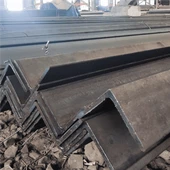
Artificial rust layer treatment is widely used in Corten Steel applications (especially artistic landscapes and architectural decorations) to achieve uniform rust color and shorten the rust formation cycle. The adhesion of the artificial rust layer is a core performance indicator-poor adhesion will lead to rust powder shedding, polluting the environment or affecting the aesthetic effect. Understanding the factors that affect adhesion and corresponding improvement measures is crucial for foreign customers to ensure project quality. This article will systematically analyze these key points and provide practical guidance.

1. Key Factors Affecting the Adhesion of Corten Steel's Artificial Rust Layer
The adhesion of the artificial rust layer depends on the interaction between the Corten Steel substrate, rust layer composition and the artificial rusting process. The main influencing factors are as follows:
1.1 Substrate Surface Cleanliness and Roughness
The cleanliness and roughness of the Corten Steel surface directly affect the contact area and bonding force between the rust layer and the substrate:
If there are oil stains, oxide scale, welding slag or dust on the substrate surface, they will form a barrier between the substrate and the rust layer, resulting in poor adhesion. For example, oil stains will prevent the rust accelerator from reacting with the steel substrate, leading to the rust layer peeling off easily;
Insufficient surface roughness (too smooth) reduces the mechanical interlocking effect between the rust layer and the substrate. The ideal surface roughness (Ra) should be controlled at 3.2-6.3μm. Excessively high roughness (>6.3μm) will cause the rust accelerator to accumulate in the grooves, resulting in uneven rust layer and reduced overall adhesion.
1.2 Composition and Concentration of Rust Accelerator
The composition and concentration of the artificial rust accelerator are key to forming a dense and well-adhered rust layer:
Rust accelerators with unreasonable compositions (e.g., excessive strong acid components) will corrode the Corten Steel substrate excessively, forming a loose rust layer (mainly γ-FeOOH) with poor adhesion. High-quality rust accelerators should be based on weak acids (such as organic acids) and supplemented with Cu²⁺, Cr³⁺ ions to promote the formation of dense α-FeOOH;
Excessively high concentration of rust accelerator will cause rapid rust formation, resulting in internal stress in the rust layer; too low concentration will lead to incomplete rust formation. Both situations will reduce the adhesion of the rust layer. The recommended concentration is usually 5-10% (mass fraction), which needs to be adjusted according to the Corten Steel grade (e.g., A588, S355J2W).
1.3 Artificial Rusting Process Parameters
Process parameters such as temperature, humidity and curing time during artificial rusting also have a significant impact on adhesion:
Temperature and humidity: The optimal temperature for artificial rusting is 20-30℃, and the relative humidity is 70-85%. Too high temperature (>35℃) will accelerate the evaporation of the rust accelerator solution, leading to uneven rust layer and internal cracks; too low humidity (<60%) will slow down the rusting reaction, resulting in loose rust layer;
Curing time: Insufficient curing time (e.g., less than 24 hours) will cause the rust layer to not fully crystallize and bond with the substrate; excessive curing time (more than 72 hours) in high-humidity environments may lead to secondary corrosion, reducing adhesion.
1.4 Corten Steel Alloy Composition
The alloy composition of Corten Steel affects the formation of the artificial rust layer and its adhesion to the substrate. Corten Steel grades with stable alloy ratios (Cu: 0.25-0.55%, Cr: 0.30-1.25%, Cu+Cr+Ni ≥0.80%) such as ASTM A588 Gr.K and EN 10025-5 S355J2W can form a dense α-FeOOH rust layer with strong adhesion. If the alloy element content is insufficient (e.g., Cu<0.25%), only loose rust can be formed, and the adhesion is significantly reduced.

2. Practical Measures to Improve the Adhesion of the Artificial Rust Layer
Aiming at the above influencing factors, the following targeted measures can effectively improve the adhesion of the Corten Steel artificial rust layer, ensuring the durability and aesthetic effect of the rust layer:
2.1 Strict Substrate Surface Pretreatment
Clean the surface: First, use a wire brush or sandblasting to remove oxide scale and welding slag, then use a degreasing agent (such as alkaline degreasing fluid) to remove oil stains, and finally rinse with clean water and dry thoroughly (surface water content ≤0.5%);
Control roughness: Use sandblasting or grinding to adjust the surface roughness to Ra 3.2-6.3μm. After treatment, the surface should be free of sharp edges and corners to avoid stress concentration in the rust layer.
2.2 Select High-Quality Rust Accelerator and Control Concentration
Choose professional Corten Steel artificial rust accelerators (avoid using inferior acidic solutions). It is recommended to select products that have passed the ASTM D3359 tape test (adhesion grade ≥2B);
Before mass construction, conduct a small-scale test: Adjust the rust accelerator concentration according to the Corten Steel grade, and determine the optimal concentration by testing the adhesion of the rust layer (tape test) after 48 hours of rust formation.
2.3 Optimize Artificial Rusting Process Parameters
Control the environment: Conduct artificial rusting in a controlled environment (temperature 20-30℃, relative humidity 70-85%). If constructing outdoors, avoid direct sunlight and rain, and use a shed to adjust the environment;
Standardize the process flow: After spraying the rust accelerator, let it stand for 24-48 hours for natural curing. During the curing period, avoid touching or shaking the components. After the rust layer is formed, check the adhesion first-only proceed to the next step (such as curing) if the adhesion is qualified.
2.4 Post-Treatment of the Rust Layer
After the artificial rust layer is formed, appropriate post-treatment can further enhance adhesion:
Light sanding: Use fine sandpaper (400-600 mesh) to lightly sand the surface of the rust layer to remove loose rust powder on the surface and improve the compactness of the rust layer;
Apply rust layer curing agent: Spray a transparent weather-resistant rust layer curing agent (such as acrylic resin-based curing agent) on the surface. The curing agent can penetrate into the pores of the rust layer, lock the rust layer structure, and significantly improve adhesion and wear resistance without changing the rust color.

3. Practical Quality Inspection Suggestions for Foreign Customers
To ensure that the adhesion of the artificial rust layer meets the requirements, foreign customers can conduct the following simple and effective quality inspections:
Tape test (ASTM D3359): Stick a standard pressure-sensitive tape firmly on the rust layer, then tear it off quickly. If there is no obvious rust powder on the tape, the adhesion is qualified (grade ≥2B);
Rub test: Use a dry cotton cloth to rub the rust layer 10 times. If there is no obvious rust powder on the cotton cloth, it indicates good adhesion;
Long-term observation: Place the test piece in an outdoor environment for 1 month. If the rust layer does not peel or shed, it means the adhesion is stable and meets the actual use requirements.
In conclusion, the adhesion of Corten Steel's artificial rust layer is affected by substrate pretreatment, rust accelerator quality, process parameters and other factors. By strictly controlling the substrate surface state, selecting appropriate materials and optimizing the process, the adhesion of the artificial rust layer can be effectively improved. For foreign customers, standardized construction and quality inspection can ensure that the Corten Steel components maintain a stable and beautiful rust layer effect during long-term use, reducing subsequent maintenance costs.