


The straightforward, crucial answer is this: The service life of bare S355W Corten steel in a coastal salt spray environment is unpredictable and often unacceptably short for critical structures. Unlike its reliable performance inland, the marine atmosphere disrupts its core protective mechanism, leading to accelerated material loss.

Why the Salt Spray Environment is Problematic
Corten steel protects itself by forming a dense, stable rust patina that blocks further oxygen and moisture. This process requires regular, complete drying cycles. In a coastal setting, this fails:
Patina Disruption: Airborne salt chlorides are highly corrosive and hygroscopic (moisture-attracting). They settle on the steel, prevent the patina from stabilizing, and create a continuously corrosive, wet film.
Accelerated Corrosion: Instead of the protective layer, the steel undergoes a faster, more linear corrosion attack. The corrosion rate can be 5 to 10 times higher than in a rural inland atmosphere.
Variable Severity: "Coastal" ranges from moderate (a few hundred meters inland) to severe (direct splash zone). Distance from the shore, wind direction, and sun exposure dramatically affect the corrosion rate.

The Engineering Approach: Designing for a Known Loss
Since a fixed "lifespan" doesn't exist, engineers use a different method: corrosion allowance. They design with an extra thickness of steel intended to be sacrificially lost over the project's life.
Typical Corrosion Rates & Calculation:
Data from exposure tests and standards like ISO 9223 indicate that for bare weathering steel in a coastal (C4-C5 corrosivity) environment:
First-Year Loss: Can be as high as 0.1 mm of thickness (per side).
Long-Term Average: A conservative ongoing rate might be 0.05 - 0.075 mm per year per side.
Service Life Example:
If your design requires a 10 mm thick plate to carry loads, and you want a 50-year life:
Total Corrosion Allowance Needed: 0.075 mm/year * 50 years = 3.75 mm (per side).
Required Initial Thickness: 10 mm + 3.75 mm = 13.75 mm minimum.
Using thinner plate than this calculated minimum would risk structural failure before the intended service life.

Key Practical Implications and Alternatives
Not a "Maintenance-Free" Solution: Bare S355W on the coast is a high-maintenance choice, requiring frequent inspection for excessive thinning, especially at edges and connections.
Critical Design Details are Non-Negotiable:
Avoid Traps: Design must eliminate pockets, crevices, and horizontal surfaces where salt and water can accumulate.
Ensure Drainage: All parts must freely drain and dry quickly.

Consider Superior Alternatives:
For Mild Coastal Atmospheres (100m+ inland): Using bare Corten with a substantially increased corrosion allowance can be feasible for non-critical applications.
For Moderate to Severe Exposure: The most reliable and common solution is to use S355W as a substrate with a high-performance coating system (e.g., zinc-rich primer with epoxy/polyurethane topcoats). This provides predictable, long-term protection.
For Critical Infrastructure: Standard carbon steel with a certified marine coating or hot-dip galvanizing is often a more predictable and economical choice than bare Corten in these conditions.
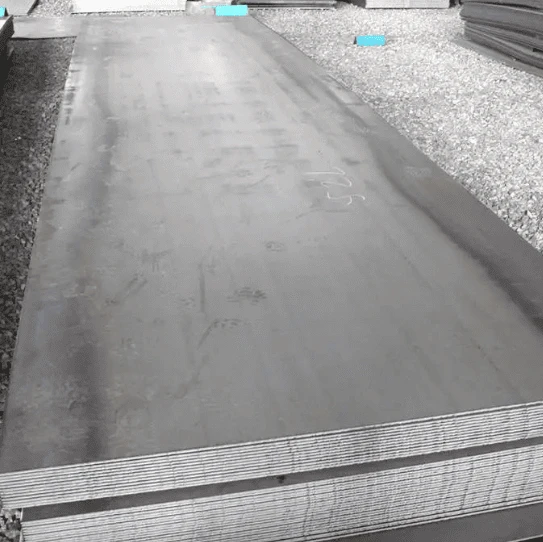
In summary, while bare S355W Corten steel possesses inherent weathering resistance, a coastal salt spray environment largely negates this advantage. Its effective service life is not a guaranteed number of years but a function of intentionally added extra thickness. For most coastal projects, specifying a protective coating system from the outset is the wisest path to ensure durability, safety, and predictable lifetime costs.


