


When selecting Q550NH Corten Steel for structural, industrial, or outdoor projects, yield strength is one of the most critical metrics-yet it's often confused with tensile strength, leading to costly选型 mistakes. For a high-strength weather-resistant steel like Q550NH, its yield strength directly determines how much load it can bear before permanent deformation occurs, which is vital for project safety and durability. Many buyers wonder: what exactly is the yield strength of Q550NH Corten Steel, and how does it impact their specific applications? The core answer is clear: Compliant with GB/T 4171 standards, the minimum yield strength of Q550NH Corten Steel is 550MPa, with slight, negligible variations based on plate thickness, ensuring reliable performance in high-load scenarios. Below is a concise, actionable guide.

Yield Strength Explained (Simple, No Jargon)
Put simply, yield strength is the maximum amount of force Q550NH can withstand without permanent deformation. Once the steel exceeds this force, it will no longer return to its original shape-this is a critical "safety threshold" for design. Unlike tensile strength (the point where steel breaks), yield strength focuses on permanent damage, making it essential for load-bearing components.
Standard Yield Strength of Q550NH (By Thickness)
Q550NH's yield strength strictly adheres to the GB/T 4171 standard (the official benchmark for Corten Steel). Variations by thickness are minimal and do not compromise its high-strength performance:
Plate thickness ≤16mm: Minimum yield strength = 550MPa (core standard value, ideal for light-to-medium high-stress parts like guardrails or decorative structural components).
Plate thickness 16-40mm: Minimum yield strength = 540MPa (minor reduction, still far exceeding medium-strength Corten Steel, suitable for industrial frames).
Plate thickness 40-100mm: Minimum yield strength = 530MPa (suited for thick, heavy-load components like machinery bases or bridge nodes).
Custom thick plates (>100mm): Minimum yield strength = 520MPa (still maintains high-strength advantages for extreme load scenarios).
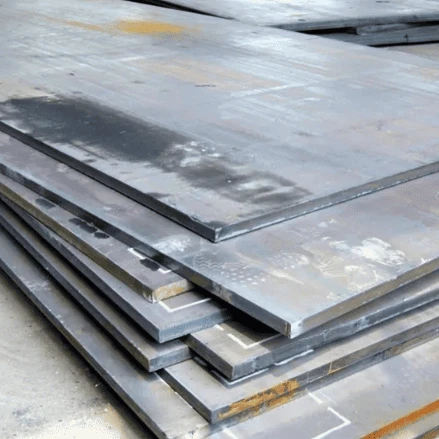
Why Q550NH's Yield Strength Matters for Your Project
The 550MPa minimum yield strength isn't just a number-it delivers tangible value and safety for your applications:
Safety First: It ensures Q550NH can handle designed loads (static or dynamic) without permanent deformation, reducing the risk of structural failure or accidents.
Material Efficiency: Its high yield strength allows you to use thinner plates than ordinary steel to meet the same load requirements, cutting material costs for large-scale projects.
Versatility: With this yield strength, Q550NH is suitable for diverse high-load scenarios-from industrial machinery to outdoor infrastructure-without extra reinforcement.

Common Mistake to Avoid
Don't confuse yield strength with tensile strength: Yield strength (≥550MPa) is the "permanent deformation point," while tensile strength (≥720MPa for Q550NH) is the "breaking point." Always design your project so that the maximum load stays well below the yield strength to avoid irreversible damage.
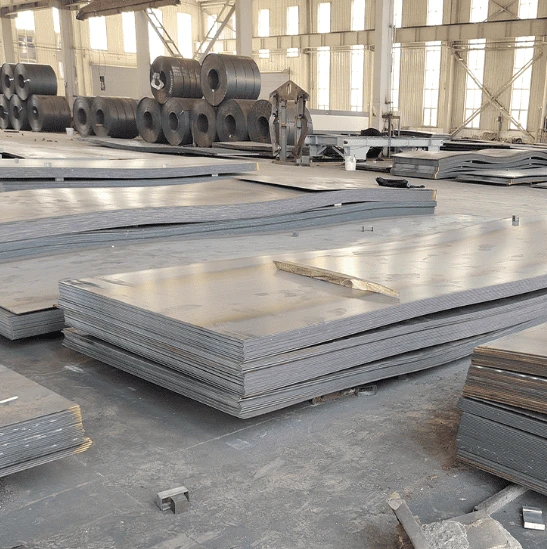
In short, Q550NH Corten Steel has a standard minimum yield strength of 550MPa (with minor thickness adjustments), a key feature of its high-performance design. By understanding this metric and its impact, you can confidently select Q550NH for your load-bearing or high-stress projects, ensuring safety and durability.


