


Corten steel is valued for its weathering resistance and strength, but its performance in fire is a distinct consideration. Here's a clear analysis of its capabilities and limitations for fire-resistant applications.
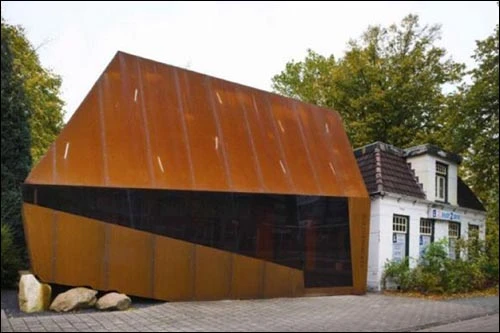
1. The Reality: Corten Steel's Behavior in Fire
Like all structural steels, S235J0W Corten loses strength at high temperatures. Its critical yield strength begins to drop noticeably around 500°C, with severe reduction by 600°C. In a standard fire, unprotected steel members can reach these temperatures in minutes, risking structural failure.
The key distinction is that Corten's protective rust layer (patina) offers no meaningful fire resistance. Its primary function is atmospheric corrosion protection, not thermal insulation.
2. Direct Use: Possibilities and Major Limitations
Corten steel can be used in structural parts designed for fire resistance, but never in a "bare" state when fire rating is required. Its application follows the same engineering principles as ordinary structural steel:
Inherent Fire Resistance Method: For heavy, bulky sections (e.g., large columns or beams), the steel's thermal mass can inherently slow temperature rise. This can sometimes eliminate the need for additional protection in specific, calculated scenarios, but this is rare and requires meticulous engineering analysis.
Mandatory Protection for Most Cases: For most commercial and public structures, building codes require a verified fire resistance period (e.g., 60, 90, 120 minutes). Achieving this with Corten steel always requires a certified fire protection system.
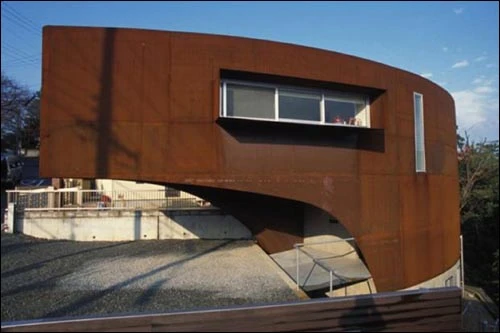
3. Compatible Fire Protection Coatings and Systems
The good news is that all major fire protection systems compatible with carbon steel are also suitable for Corten, provided the surface is properly prepared. The patina itself must be addressed.
| System Type | How It Works | Key Considerations for Corten |
|---|---|---|
| Intumescent Coatings | Thin paint that swells into a thick insulating char when heated. | Most common for exposed architecture. Surface must be clean and free of loose patina. Typically requires a compatible primer over a grit-blasted surface. The final color can be matched to the Corten aesthetic. |
| Cementitious / Vermiculite Sprays | Thick, spray-applied cement-based insulation. | Highly effective and lower cost. Used where appearance isn't critical (e.g., in voids). Excellent adhesion to clean, prepared Corten. Adds significant thickness. |
| Fire-Resistant Boards (Calcium Silicate etc.) | Rigid boards fixed mechanically around the steel. | Clean, non-destructive option. Protects the Corten's appearance underneath. Ideal for complex shapes or where minimal site mess is desired. |
Critical Preparation Step: For coating adhesion, the stable patina is often considered a weak boundary layer. Best practice involves gentle abrasive blasting to remove loose oxides, followed by thorough cleaning, before applying any fire protection primer. Always consult the coating manufacturer for their specific surface preparation requirements.

4. Practical Recommendation: A Two-Stage Approach
For projects desiring both the Corten aesthetic and fire safety, a proven strategy is:
Weather First: Allow the Corten steel to develop its stable patina on-site before applying fire protection.
Prepare and Protect: Then, prepare the specified areas (by gentle abrasive cleaning) and apply the certified intumescent coating system.
This method ensures the visual effect is achieved while guaranteeing the required fire performance.
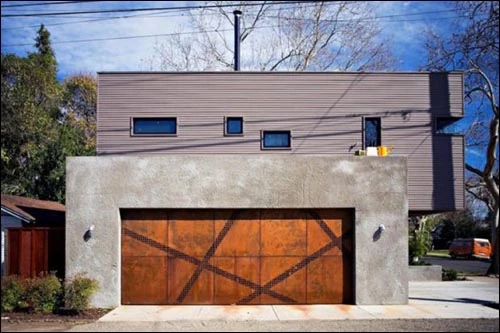
In summary, S235J0W Corten steel is an excellent structural material but is not a fire-resistant material by itself. It can successfully form the core of a fire-resistant design when paired with a properly selected and applied passive fire protection system, following strict surface preparation guidelines. The key is to integrate fire protection into the design from the outset.


