


Many buyers and fabricators confuse the surface oxidation of ASTM A606 Type 2 Corten Steel with the damaging rust of ordinary carbon steel-leading to a common question: Does this Corten grade rust the same way as regular carbon steel? Will it deteriorate and need replacement just as quickly? The core answer is clear: No, ASTM A606 Type 2 does not rust like ordinary carbon steel-its unique alloy composition creates a protective patina that stops corrosion, unlike carbon steel's unregulated, destructive rust. Below is a concise, practical breakdown of the key differences and why it matters for your project.

Key Difference: Patina (Protective) vs. Rust (Destructive)
The biggest distinction lies in what happens after initial surface oxidation-one is a defense, the other is damage:
Ordinary Carbon Steel: When exposed to air and moisture, it forms loose, flaky rust (iron oxide). This rust does not bond to the steel surface-instead, it peels away, exposing fresh steel to further corrosion. Over time, this process eats away at the steel, leading to weakness and eventual failure (often within 10–15 years outdoors).
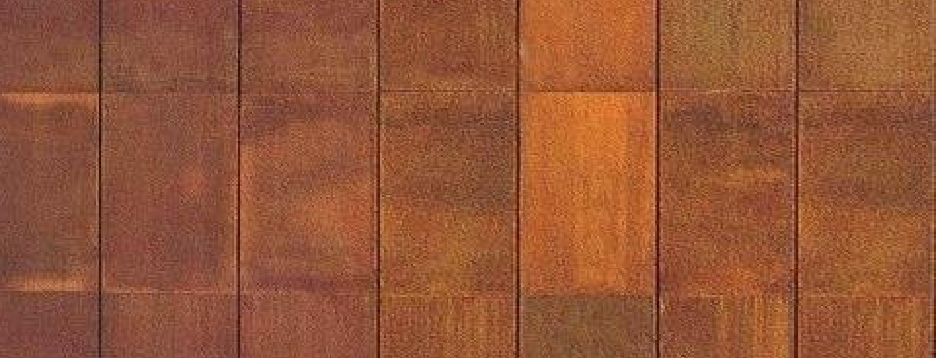
ASTM A606 Type 2 Corten Steel: Initial surface oxidation (light orange, similar to rust) is the first step in forming a dense, adherent patina. This patina (a stable oxide layer) bonds tightly to the steel, blocking oxygen and moisture from penetrating the surface. Once fully formed, corrosion stops-no flaking, no deterioration, and a service life of 25+ years outdoors.

Why the Difference? Alloy Composition (ASTM-Specified)
The reason ASTM A606 Type 2 doesn't rust like carbon steel is its carefully balanced alloy blend, required by ASTM standards:
ASTM A606 Type 2 contains a minimum of 0.20% copper (heat analysis), plus small amounts of chromium-these elements react with oxygen and moisture to form the stable, protective patina.
Ordinary carbon steel has no such alloying elements. Its iron content reacts freely with the environment, creating unregulated, destructive rust with no protective properties.
Practical Ways to Tell Them Apart (On-Site)
For project planning or inspection, you can easily distinguish between ASTM A606 Type 2's patina and carbon steel's rust:
Texture: Corten patina is smooth, dense, and tightly bonded to the steel (you can't easily scrape it off). Carbon steel rust is flaky, powdery, and peels away with minimal pressure.
Color Evolution: ASTM A606 Type 2's patina evolves from light orange to rich gray-brown over 3–12 months. Carbon steel rust stays orange-brown and continues to darken as it deteriorates.
Long-Term Performance: Corten's patina stops changing once fully formed; carbon steel rust continues to spread and eat away at the material.

Practical Value for Your Projects
This difference directly impacts your project's cost and longevity:
Ordinary carbon steel requires frequent painting/sealing to prevent rust-adding maintenance costs and labor over time.
ASTM A606 Type 2's patina eliminates the need for coatings, reducing long-term expenses and ensuring durability without extra effort.
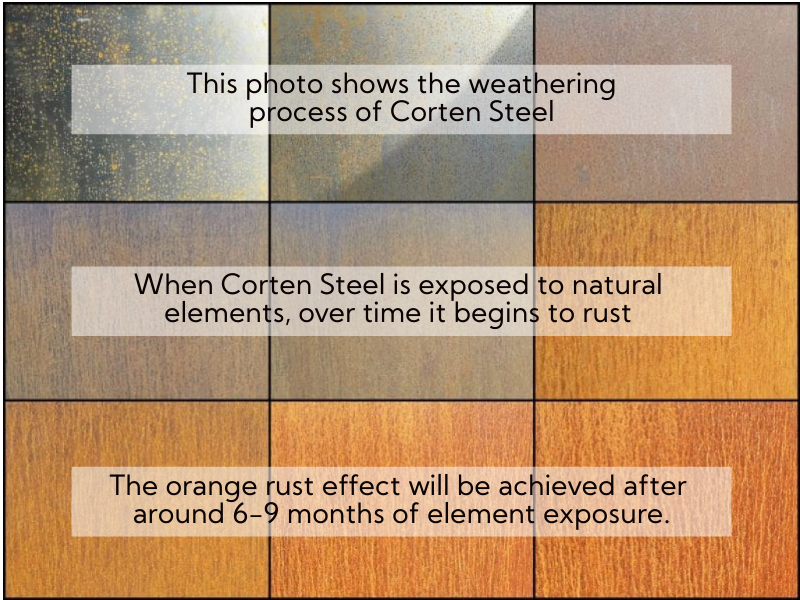
In short, ASTM A606 Type 2 Corten Steel does not rust like ordinary carbon steel. Its ASTM-specified alloy composition creates a protective patina that turns initial oxidation into a defense, not damage-making it a far more durable, low-maintenance choice for outdoor architectural and light structural projects.


