


The surface goes through four clear stages as it forms a stable protective patina. Timing depends on climate (wet‑dry cycles, humidity, pollution).
1. Initial Stage: Bright Steel Surface (0–1 month)
Surface is the original metallic gray of steel.
No obvious rust; only slight discoloration in humid environments.
2. Early Rusting Stage: Yellow–Orange Rust (1–6 months)
Surface turns yellow, orange, or bright red rust.
Rust layer is loose, porous, easy to rub off.
Obvious rust runoff when it rains.
Corrosion is still relatively fast.
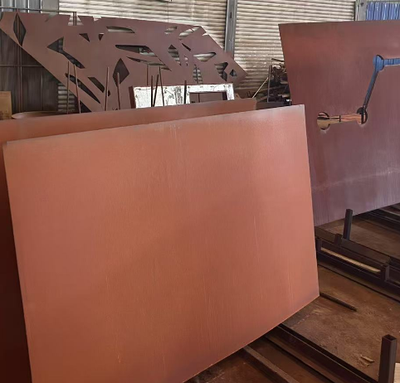
3. Transition Stage: Darkening & Densifying (6–24 months)
Color gradually deepens to reddish brown → dark brown → brownish black.
Rust layer becomes denser, adheres more tightly, less likely to flake.
Rust runoff gradually reduces.
Surface starts to feel smoother, less powdery.
4. Stable Patina Stage (2–3 years, or longer in clean air)
Surface turns stable dark brown or gray‑brown.
Forms a compact, tight, continuous protective patina.
Almost no rust runoff; surface is dry and firm.
Corrosion rate drops to a very low, stable level.
The appearance remains basically unchanged for decades.


