


The stable protective rust layer is the core of Q235NH Corten Steel's atmospheric corrosion resistance-it blocks moisture and oxygen from eroding the substrate, extending service life. In suburban environments (mild humidity, low pollution), the formation rate of this rust layer directly affects project maintenance plans. How long does it take for Q235NH to form such a stable layer? Based on field exposure tests and corrosion science research, the core conclusion is clear:Q235NH typically takes 6 to 12 months to form a stable protective rust layer in suburban environments, with the process divided into four stages, and is influenced by local humidity, temperature, and trace pollutants. Below is a concise, evidence-based breakdown.
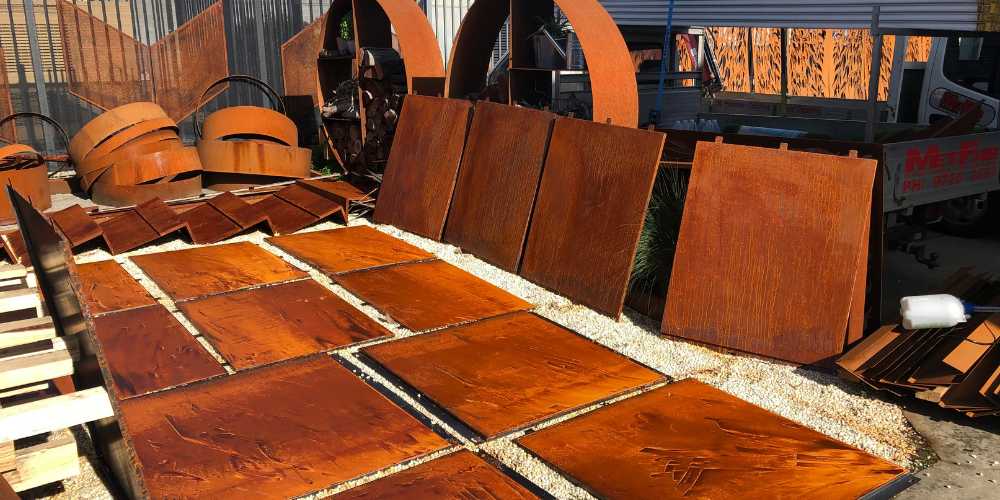
Key Background: Four Stages of Rust Layer Formation
Q235NH's rust layer forms and stabilizes gradually, with each stage showing distinct characteristics. Corrosion dynamics research indicates the process follows four linear stages, totaling 6-12 months in suburban settings:
Stage 1 (1-2 Months): Initial Rusting: The steel surface reacts rapidly with oxygen and moisture, forming loose reddish-brown rust (mainly Fe(OH)₃ and Fe₃O₄). No protection yet-rust may flake slightly.
Stage 2 (2-4 Months): Rust Layer Accumulation: Trace Cu and Cr in Q235NH begin to enrich on the surface, promoting the formation of flaky γ-FeOOH. The rust layer thickens and becomes denser, reducing corrosion rate.
Stage 3 (4-6 Months): Patchy Stabilization: The rust layer covers the entire surface, with cotton ball-like α-FeOOH forming to fill gaps. Minor exposed areas are continuously repaired, and the layer starts to show preliminary protective effects.
Stage 4 (6-12 Months): Full Stabilization: α-FeOOH and γ-FeOOH form a dense, adherent composite layer. The rust layer stops flaking, and corrosion rate drops to 1/3 of the initial stage-officially becoming a stable protective barrier.

How Suburban Environments Affect Formation Time
Suburban environments (C2-C3 corrosion grade) are mild, but three factors adjust the formation cycle slightly:
Humidity: Suburban relative humidity (60-75%) accelerates rusting without causing excessive flaking. Higher humidity (>80%) shortens the cycle to 6-8 months; lower humidity (<50%) extends it to 9-12 months.
Temperature & Pollutants: Moderate temperatures (10-25℃) optimize reaction rates. Trace NO₂ and SO₂ in suburban air (lower than urban areas) have minimal impact-unlike industrial zones where pollutants speed up but weaken the rust layer.
Surface Condition: Shot-blasted surfaces form rust layers 1-2 months faster than mill-finished ones, as the rough surface provides more reaction sites.
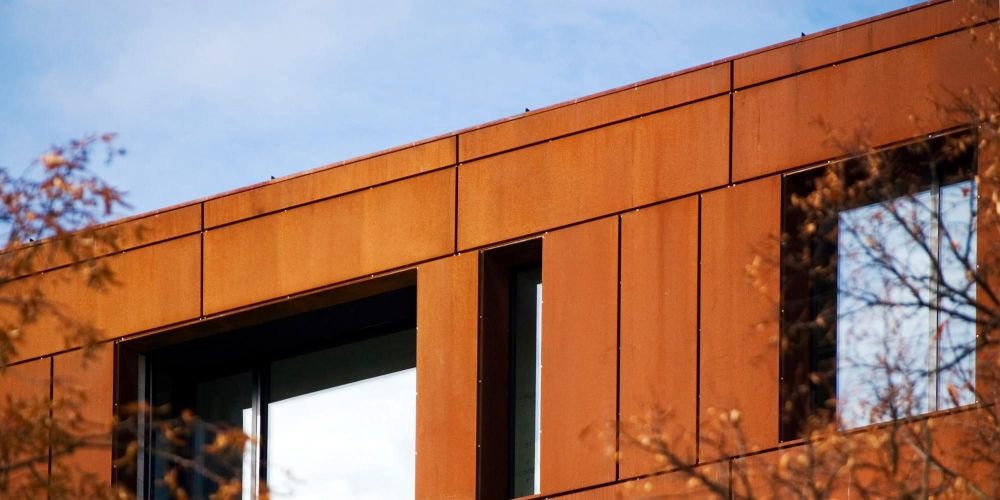
Practical Tips to Accelerate & Protect Stable Rust Layers
To ensure the rust layer forms stably and efficiently in suburban environments, follow these actionable measures:
Initial Cleaning: Remove surface oil, dust, and loose scale before exposure-avoid harsh detergents that damage the base metal. Rinse with fresh water monthly in the first 3 months.
Avoid Premature Coating: Do not apply paint or anti-corrosion coatings within 6 months; they block natural oxidation and prevent stable rust layer formation. If aesthetics are needed, use rust converters after 3 months.
Prevent Mechanical Damage: Avoid scratching the surface during installation-damaged areas take extra 2-3 months to re-stabilize, becoming corrosion weak points.
Common Misconceptions to Avoid
Confusing "initial rust" with "stable rust": Reddish-brown rust in 1-2 months is not protective; only the dense, non-flaking layer after 6 months works.
High-pressure water washing: Blasts off the forming rust layer, extending the stabilization cycle by 3-4 months.
Ignoring trace pollutants: Near suburban industrial parks, SO₂ may cause rust layer cracking-increase cleaning frequency to once every 2 weeks.

In summary, Q235NH Corten Steel takes 6-12 months to form a stable protective rust layer in suburban environments, following four distinct formation stages. Humidity and surface condition are the main influencing factors. By allowing natural oxidation, avoiding premature interference, and maintaining surface cleanliness, users can ensure the rust layer stabilizes efficiently, maximizing Q235NH's corrosion resistance and service life.


