


The short and critical answer is: Rarely, and never in submerged or splash zones without extensive protection. While S235J0W Corten steel excels in terrestrial atmospheres, the marine offshore environment presents one of its toughest challenges.
Here's why it's problematic and what you must consider if its use is being evaluated.

The Core Problem: Salt vs. The Protective Patina
Corten steel's magic lies in its stable, adherent rust patina that blocks further corrosion. In a marine offshore setting, this process is fundamentally disrupted:
Chloride Attack: Constant salt spray deposits chlorides, which are highly corrosive and penetrate the patina.
Wet/Dry Cycles: The patina requires alternating cycles to stabilize. In offshore settings, surfaces may stay wet for too long or be constantly washed, preventing the stable layer from forming.
Result: Instead of a protective patina, you get accelerated, likely uneven corrosion. The corrosion rate can be 5-10 times higher than in an inland atmospheric environment.

Essential Precautions & Alternatives
If architectural or specific design requirements make its use necessary in above-splash-zone atmospheric areas, these non-negotiable measures apply:
- Upgrade the Material Specification: For any marine-influenced atmosphere, select a copper-nickel-chromium alloy steel designed for higher chloride resistance. Look for grades like S355J2WP+N (under EN 10025-5) or ASTM A690 (specifically for marine piling). These offer better inherent performance, though still not for direct immersion.
- Mandatory Protective Coating System: The steel must be coated. The system typically includes:
- Blast Cleaning: To Sa 2½ (Very Thorough) standard.
- A Compatible Primer: Often a zinc-rich epoxy primer, applied to a specified dry film thickness (DFT).
- Durable Topcoats: Multiple coats of high-performance epoxy/polyurethane systems to a total DFT often exceeding 300 microns.
- This approach treats the Corten as a high-grade substrate, not as an exposed weathering steel.
- Critical Design Details:
- Avoid Moisture Traps: Design must eliminate pockets, crevices, and horizontal surfaces where saltwater can accumulate.
- Increased Thickness: Apply a corrosion allowance – adding extra material thickness to account for expected metal loss over the structure's lifespan.
- Isolation from Other Metals: Use proper insulation to prevent galvanic corrosion where Corten connects to stainless steel or aluminum.
- Cathodic Protection (For Submerged/Splash Zones):
- If any part is in the tidal or splash zone, sacrificial anodes or impressed current systems are mandatory, treating the Corten like ordinary carbon steel.
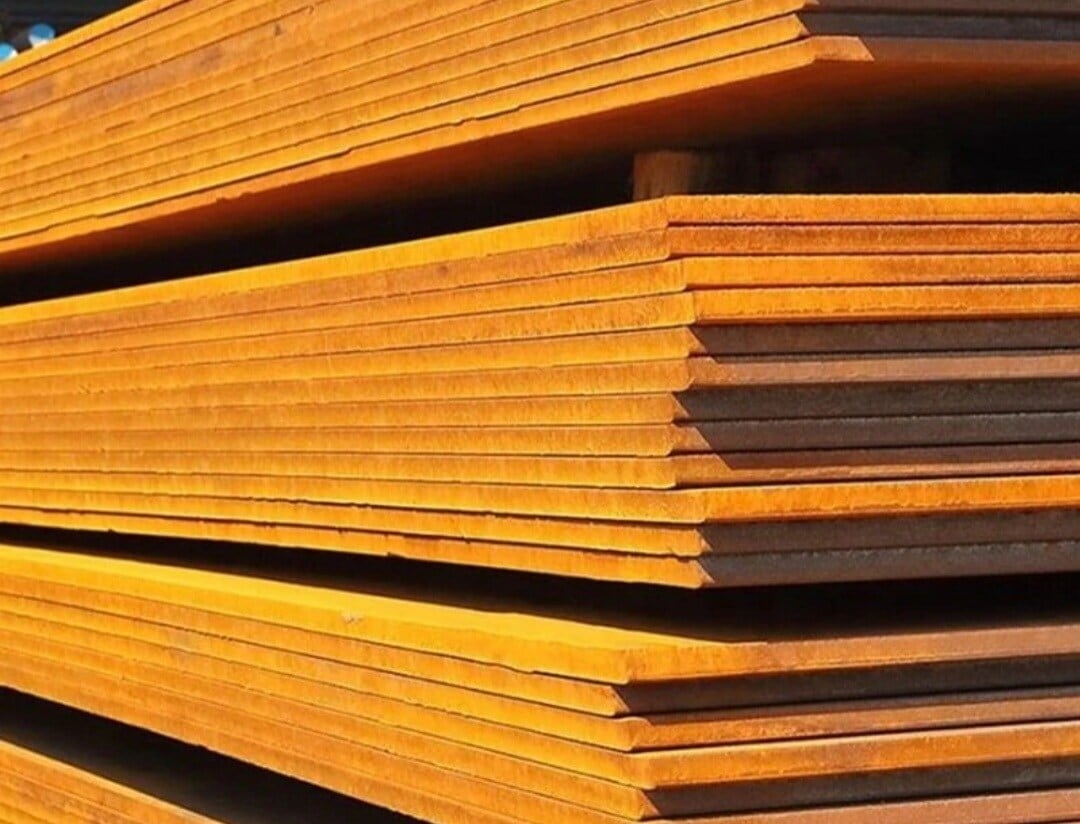
Practical Verdict
For most offshore structural applications (platforms, wind turbine towers, submerged components), standard carbon steel with a robust, maintained coating system or specialist marine-grade alloys are more reliable and economical choices.
Using S235J0W Corten in a marine offshore environment is a high-maintenance engineering choice, not a low-maintenance aesthetic one. It requires upfront acknowledgment of its limitations, a significant investment in protection, and a commitment to long-term inspection and maintenance. Always consult with a marine corrosion engineer during the material selection phase.


