


This is where ASTM A588 weathering steel stands out-not just as an HSLA material, but as a long-term engineering solution to reduce maintenance and improve structural durability.
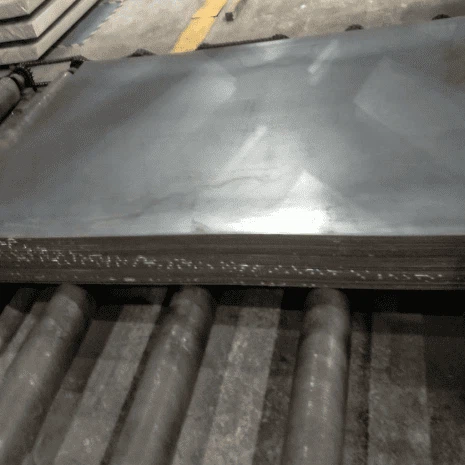
ASTM A588 weathering steel
Below are the 10 most common questions buyers, engineers, and contractors ask before choosing A588-and the answers that actually impact project decisions.
Q1: Can A588 Really Be "Maintenance-Free" Without Painting?
The short answer: In the right environment-yes.
A588 forms a self-protecting patina, a dense oxide layer that blocks oxygen and slows further corrosion.
| Comparison | Standard Carbon Steel | A588 Weathering Steel |
|---|---|---|
| Maintenance Cycle | Repaint every 5–10 years | No repainting required |
| Lifecycle Cost | High | Reduced by 50–70% |
Over a 30-year lifecycle, A588 significantly reduces:
Maintenance labor
Coating costs
Operational downtime
Q2: What's the Difference Between A588, A242, and A709-50W?
This is a common material selection confusion.
| Grade | Best Use | Key Difference |
|---|---|---|
| A242 | Thin plates | Slightly better corrosion resistance, limited thickness |
| A588 | Structural plates | Up to 8" thickness with 50 ksi strength |
| A709-50W | Bridges | Optimized for highway/bridge standards |
For heavy structural and outdoor applications, A588 is the most versatile and stable choice.
Q3: Is A588 More Expensive? When Do You Break Even?
Yes-initially.
A588 costs about 15–25% more than A36 or Q355. But eliminates painting and long-term maintenance Most projects reach cost break-even in 8–10 years, after which A588 becomes significantly more economical.
Q4: Is A588 Difficult to Weld?
Not difficult-but requires the right materials.
| Factor | Recommendation |
|---|---|
| Weldability | Good |
| Requirement | Use weathering-grade welding consumables |
| Risk | Wrong filler → visible corrosion mismatch |
Using standard welding rods can cause:
Rust inconsistency
Weak weld zones
Poor aesthetics in exposed structures
Q5: How Can You Speed Up the Rusting (Patina) Process?
Naturally, A588 takes 2–4 years to develop a stable patina.
For projects with tight deadlines:
- Pre-weathering treatment can accelerate this process
- Achieves uniform rust appearance in 24–48 hours
Q6: Will Rust Run-Off Stain Concrete or Stone?
Yes-especially in the early stage.
This is known as rust bleeding, and it's one of the biggest concerns in corten steel edging and architectural applications.
Proven Solutions:
| Method | Purpose |
|---|---|
| Drainage channels | Direct water away from surfaces |
| Pre-weathering | Stabilizes rust layer early |
| Material transition | Use dark stone or coated base |
This is not a material flaw-it's a design issue that must be addressed early.
Q7: Where Should You NOT Use A588?
A588 performs best in wet-dry cycling environments. Avoid:
| Environment | Risk |
|---|---|
| Coastal areas (<1 km from sea) | Salt damages patina |
| Constantly wet zones | No stable oxide layer forms |
| Poor drainage systems | Accelerated corrosion |
Q8: How Do You Identify Genuine A588 Steel?
This is a major procurement concern.
Check the Mill Test Certificate (MTC):
| Element | Why It Matters |
|---|---|
| Copper (Cu) | Corrosion resistance |
| Chromium (Cr) | Oxide stability |
| Nickel (Ni) | Patina adhesion |
| Vanadium (V) | Strength enhancement |
Q9: What Are the Mechanical Properties of A588?
Here are the standard values engineers rely on:
| Property | Value |
|---|---|
| Yield Strength | ≥ 50 ksi (345 MPa) |
| Tensile Strength | ≥ 70 ksi (485 MPa) |
| Elongation | 18–21% |
Q10: What Sizes and Specifications Are Available?
Typical supply ranges (can vary by supplier):
| Parameter | Range |
|---|---|
| Thickness | 3mm – 200mm |
| Width | Up to 3000mm |
| Length | Up to 12000mm |
Final Advice for Decision Makers
Choosing A588 is not just about material-it's about long-term strategy.
3 Key Recommendations:
1. Don't focus only on price
Calculate total lifecycle cost (LCC) over 30–50 years
2. Match all components
Use weathering-grade:
Welding materials
Bolts and fasteners
3. Design comes first
Proper drainage and detailing prevent:
Rust staining
Uneven corrosion
Structural issues
ASTM A588 weathering steel solves two of the biggest challenges in outdoor steel applications:
- High maintenance costs
- Long-term structural durability
From bridges to landscape edging systems, its combination of 50 ksi strength, HSLA composition, and self-protecting patina makes it a proven solution for modern engineering projects.

When used correctly, A588 doesn't just perform-it reduces cost, risk, and maintenance for decades.
Contact now to get A588 Corten Steel Plate Quote

What is A588 steel equivalent to?
The ASTM A588 grade A plate is equivalent to Corten A steel plate. ASTM A242 plate is equivalent to Corten B.
What is A588 steel material?
A588 is a type of weathering steel that's renowned for its exceptional corrosion resistance. With its unique ability to form a protective rust-like surface, it eliminates the need for additional coatings, reducing maintenance costs. ASTM A588 is also referred to as Corten® and covers structural shapes, plate, and bar.
What is the difference between A36 and A588 steel?
A588 generally has higher strength than A36. Corrosion Resistance: The A36 is not designed to be corrosion resistant and surface corrosion will often occur when exposed to atmospheric conditions. However, A588 is a weathering steel with enhanced corrosion resistance.
Can A588 steel be galvanized?
Can weathering steel (e.g. ASTM A588, A709 Weathering, COR-TEN) be galvanized? Weathering steel can be galvanized successfully and is considered for applications such as bridges, transmission towers, lamp standards, and pole-line hardware.


