


When selecting a 400MPa-grade Corten Steel for outdoor welded structures, engineering teams often face a common challenge: navigating the multiple SMA400 series grades defined under JIS G 3114:2022, and understanding how they differ. While every grade in the SMA400 family shares a core classification as hot-rolled atmospheric corrosion-resistant welded structural steels, their suffix designations (BP, A, B, C, W) signal strict, standard-mandated differences in chemical makeup, mechanical performance, and intended use cases. These distinctions directly impact a project's upfront cost, long-term service life, and suitability for specific environmental conditions.
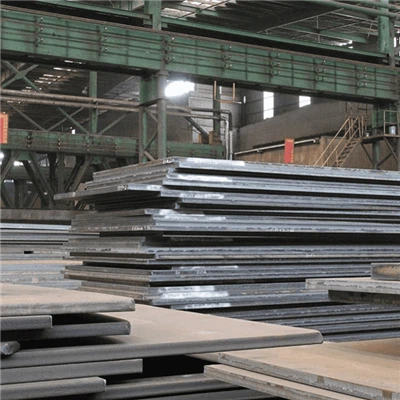
1. Chemical Composition: The Defining Difference
The most impactful gap between SMA400BP and other SMA400 series grades lies in its alloy formulation, specifically its near-zero nickel content:
SMA400BP: Per JIS G 3114:2022, this grade has a maximum nickel content of ≤0.03%, a deliberate formulation to keep material costs accessible. It relies on a fixed 0.30–0.50% copper and 0.45–0.75% chromium blend to deliver core corrosion resistance for mild atmospheric environments.
Other SMA400 grades: SMA400A/B/C allow up to 0.30% nickel to enhance toughness, while the corrosion-resistant SMA400W (marine/industrial variant) requires 0.20–0.60% nickel to boost resistance to chloride and acidic contaminants.
This difference makes SMA400BP the lowest-upfront-cost grade in the SMA400 series, while higher-nickel variants carry a material premium for enhanced harsh-environment performance.

2. Mechanical Performance & Temperature Limits
All SMA400 series grades share a 400–510 MPa tensile strength range, but they diverge sharply in impact toughness and low-temperature performance, per JIS G 3114:2022:
SMA400BP: Guarantees a minimum 27J Charpy V-notch impact toughness at 0°C, matching the standard SMA400B grade. This makes it suitable for temperate climates with occasional freezing temperatures, but not for sustained sub-zero conditions.
SMA400A: Only requires 27J impact toughness at 20°C, limiting it to warm, mild environments with no freeze risk.
SMA400C: Delivers 27J impact toughness at -10°C, engineered for regions with prolonged cold winters.
SMA400W: Offers matching or enhanced low-temperature toughness, paired with its alloy-boosted corrosion resistance.
SMA400BP's thickness-dependent yield strength (215–245 MPa) aligns with the broader SMA400 series, making it code-compliant for standard light-to-moderate load structural designs.
3. Intended Use Cases & Lifecycle Value
Each SMA400 series grade is optimized for a specific set of applications, and this is where the practical differences matter most for project teams:
SMA400BP: The most cost-effective choice for non-extreme, mild-environment projects, including rural pedestrian bridge railings, suburban architectural framing, landscape structures, and light industrial building exteriors. It delivers a 25–35 year service life with minimal maintenance in these settings.
SMA400C: Mandatory for projects in cold climates with sustained temperatures below -10°C, where its low-temperature toughness prevents brittle fracture.
SMA400W: Required for low-exposure coastal or moderate industrial environments, where its nickel-enhanced alloy system resists salt and acid-driven corrosion that would break down SMA400BP's protective patina.
SMA400A: Limited to non-critical, warm-climate applications with minimal structural stress requirements.

In summary, SMA400BP stands out from the broader SMA400 series as the most cost-effective, general-purpose Corten Steel grade for standard outdoor welded structures, per JIS G 3114:2022. Its balanced, low-nickel formulation delivers reliable performance for non-extreme projects, while other SMA400 variants are purpose-built for specific harsh conditions that fall outside SMA400BP's design limits.


