


Unlike standard carbon steel, bare S235J2W Corten steel is specifically formulated to be left unpainted, developing a protective rust layer called a patina. However, in industrial environments with high sulfur dioxide (SO₂) content, its lifespan depends directly on three key engineering factors: material loss rate, the stability of the protective patina, and design choices.
Because the environment actively challenges the material's natural protection, there is no fixed service life. Instead, successful projects use a calculated approach based on predictable corrosion rates.

Corrosion Rates and Engineering Calculations
Data from long-term exposure helps engineers plan. In industrial atmospheres, the initial corrosion of weathering steel is higher as the patina forms, then slows down.
A representative data set for Corten steel shows the following average thickness loss per exposed surface:
| Environment | Thickness Loss (First 10 Years) | Thickness Loss (Subsequent 10-Year Periods) |
|---|---|---|
| Industrial (with SO₂) | 0.20 mm (8/1000 in) | 0.10 mm (4/1000 in) |
| Rural | 0.10 mm (4/1000 in) | 0.05 mm (2/1000 in) |
Practical Application: To ensure a 50-year life, an engineer would calculate the sacrificial thickness (corrosion allowance) needed. For a simple industrial application, this could be:
First 10 years: 0.20 mm
Next 40 years: 4 decades × 0.10 mm/decade = 0.40 mm
Total allowance per side: 0.60 mm
The steel plate must be specified to be at least 0.60 mm thicker than the minimum required for structural strength. For critical infrastructure like bridges, design lives of 80-120 years are common, requiring proportionally larger allowances.
Why Industrial SO₂ Environments Are Challenging
The performance gap between industrial and rural settings occurs because the patina's formation is sensitive to environmental chemistry.
Patina Disruption: Sulfur dioxide dissolves in moisture to form sulfuric acid, which can prevent the stable iron oxyhydroxides in a protective patina from forming. The result can be a rust layer that is less adhesive and more porous.
Unstable Wet/Dry Cycles: The protective layer requires regular cycles of wetting and thorough drying to stabilize. Industrial areas with high humidity or frequent acidic rain can prolong wetness, slowing proper patina development.
Variable Severity: "Industrial" can range from moderate to severe. Proximity to chemical plants, prevailing winds, and local rainfall patterns create micro-environments with vastly different corrosion potentials.
Key Design Principles for Maximizing Service Life
The structure's design is as important as the material choice. These principles are critical in harsh environments:
Ensure Drainage and Drying: Design must eliminate water traps. All surfaces should be sloped, and details should avoid crevices where moisture and acidic deposits can accumulate.
Provide Air Circulation: Position elements to maximize airflow, which accelerates drying after rain-a key factor in patina stabilization.
Specify Adequate Thickness: As shown in the calculation, starting with extra steel thickness (corrosion allowance) is the primary method to guarantee a long service life.
Plan for Maintenance: Even "maintenance-free" Corten steel requires periodic inspection in aggressive environments. This involves clearing debris that traps moisture and checking for any localized issues.
Final Recommendations for Specification
To ensure your S235J2W Corten steel structure meets lifespan expectations in an industrial zone:
Conduct a Site-Specific Assessment: Evaluate the exact location's corrosivity (considering SO₂ levels, humidity, and other pollutants).
Define the Design Life: Clearly state the required service life (e.g., 50, 80, or 100 years).
Calculate and Specify the Corrosion Allowance: Work with your structural engineer to add the necessary extra thickness to all exposed members from the outset.
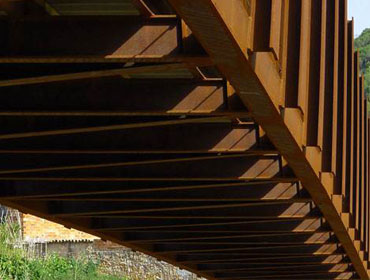
Mandate Good Detailing: Ensure the architectural and structural designs follow the drainage and ventilation principles outlined above.
In summary, bare S235J2W Corten steel can deliver a long service life in industrial environments, but its success is not guaranteed-it must be engineered. By calculating a corrosion allowance based on known loss rates and adhering to strict design-for-durability principles, you can reliably achieve a service life of 50 years or more for your project.
I hope this clarifies the key considerations for your project. For more specific guidance, consulting with a corrosion or materials engineer familiar with your local industrial conditions is always recommended.


