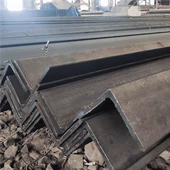
When purchasing or fabricating with Q415NH Corten Steel, choosing the right thickness is critical-too thin, and it may lack load-bearing capacity; too thick, and it wastes cost and complicates processing. Many buyers struggle to confirm its standard thickness range, often confusing it with lower-grade Corten Steel or assuming "one thickness fits all." As a medium-high strength weather-resistant steel compliant with GB/T 4171, Q415NH has a clear standard thickness range, tailored to diverse outdoor structural and decorative needs. So, what is its standard thickness range, and how to choose the right one for your project? Based on national standards and industrial supply practice, the core answer is clear: The standard thickness range of Q415NH Corten Steel is 3mm to 300mm, with 1mm to 100mm being the most commonly used for mainstream outdoor projects. Below is a concise, actionable guide.

Standard Thickness Range (Per GB/T 4171)
Q415NH Corten Steel's thickness is standardized to meet different load and fabrication requirements, with clear supply ranges for practical use:
Full Standard Range: 3mm to 300mm - this covers all industrial applications, from thin decorative components to ultra-thick structural plates[3].
Most Common Range: 1mm to 100mm - accounting for 90% of outdoor projects, as it balances processability, strength, and cost-effectiveness.
Key Note: Thicknesses below 3mm are available in small batches (down to 1mm) for specific thin-walled components, while those above 100mm (up to 300mm) are for heavy-duty structural needs.

Common Thickness Segments & Practical Applications
Different thicknesses of Q415NH suit different projects-here's how to match them to your needs:
1. Thin Thickness (1mm - 10mm)
Suitable For: Outdoor decorative components (cladding, screens, signage, planters) and light structural parts (small guardrails, decorative frames).
Practical Tip: Easy to cut, bend, and weld, requiring no special processing equipment; ideal for custom decorative shapes.
2. Medium Thickness (10mm - 40mm)
Suitable For: Mainstream outdoor structural projects (bridge supports, warehouse frames, heavy-duty guardrails, industrial platforms)-the most widely used segment.
Practical Tip: Maintains stable strength (yield strength ≥415MPa for thickness ≤16mm) and corrosion resistance, balancing load-bearing and processability.
3. Thick Thickness (40mm - 300mm)
Suitable For: Heavy-duty structural components (large bridge nodes, offshore container frames, thick equipment supports) in harsh outdoor environments.
Practical Tip: Thicknesses above 40mm have a slight yield strength reduction (e.g., ≥395MPa for 40-60mm) but retain excellent toughness; preheating is needed before welding.

Thickness & Performance: Key Connection
Understanding how thickness affects Q415NH's performance helps avoid wrong choices:
Strength: Yield strength decreases slightly with increasing thickness (per GB/T 4171), but remains above 395MPa even for 60mm+ plates, ensuring structural stability.
Corrosion Resistance: Thickness does not affect patina formation-even thin 3mm plates form a stable protective patina, same as thick plates.
Processability: Thicker plates (>20mm) require preheating before welding; thinner plates (≤10mm) can be formed and welded without extra steps.

Custom Thickness Availability
If your project requires a thickness outside the standard range (e.g., below 1mm or above 300mm), most manufacturers can provide custom rolling, subject to minimum order quantities. For mainstream projects, however, choosing from the 3mm-100mm range is more cost-effective and ensures faster delivery.
In summary, Q415NH Corten Steel's standard thickness range is 3mm-300mm, with 1mm-100mm being the most practical for most outdoor projects. By matching the thickness to your project's load, application, and fabrication needs, you can optimize cost, performance, and processing efficiency.