


The depth of grooved joints (pipe joints) and the grooves on high-hardness Q355NHB weathering steel pipes shall comply with the national standard "Automatic Sprinkler System – Grooved Pipe Joints" GB5131.11.
Flexible joints should be installed in areas subject to vibration or in buried pipelines. In other locations, rigid joints should be used. When rigid joints are installed, a flexible joint should be provided after every 4–5 rigid joints.
When using mechanical tees and four-way fittings, the size of openings and spacing between them should not compromise the strength of the main pipe. Typically, the maximum opening diameter should be less than half the diameter of the main pipe. If the opening exceeds half the pipe diameter, clamp-type three-way or four-way fittings should be used.
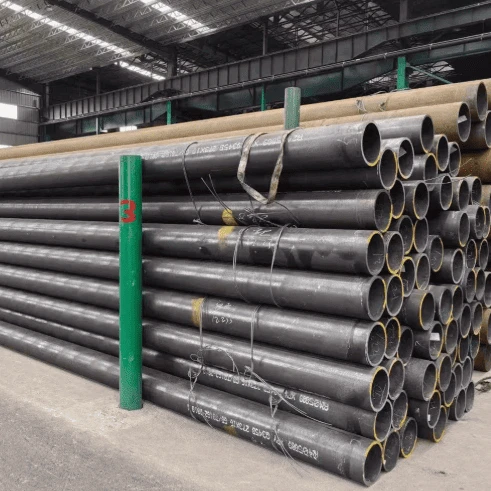
The spacing between openings is determined by the opening size and should generally be no less than 2 meters. When grooved connections are joined to other interface types, a conversion joint must be applied.
When reducing the diameter of Q355NHB weather-resistant steel pipes connected with grooved fittings, grooved reducers should be used. Core repairs are not allowed at elbows; if core repair is required, it may be applied at a tee, but not more than twice at a cross. Pipes with a nominal diameter greater than 50 mm should not use core repairs.
Grooved fittings should be equipped with EPDM C-type sealing rings, which provide good elasticity. After installation and compression, a gap should remain in the center of the C-shaped sealing ring.
Inspection quantity: Perform a 30% spot inspection based on the total quantity, with a minimum of 10 pieces. Inspection method: visual check and measurement with a ruler.
When using slotted grooved connections, the wall thickness of high-hardness Q355NHB weathering steel pipes shall comply with the requirements of GB5131.11 – Automatic Sprinkler System Grooved Pipe Connections.
1. What is Q355NHB steel?
Q355NHB is a Chinese standard weathering steel grade under GB/T 4171. The "Q" stands for yield strength, "355" means a minimum yield strength of 355 MPa, "NH" indicates weathering (atmospheric corrosion-resistant) steel, and "B" is the quality grade. It is designed to form a dense and stable rust layer on its surface when exposed to the atmosphere, which protects the steel from further corrosion and significantly extends its service life.
2. What is the difference between Q355NHB and ordinary carbon steel?
Unlike ordinary carbon steel, Q355NHB contains alloying elements such as copper, chromium, nickel, and phosphorus, which allow it to form a protective oxide layer after exposure to rain and air. This natural patina prevents moisture and oxygen from penetrating into the steel, while carbon steel continues to rust until it deteriorates. As a result, Q355NHB has much better corrosion resistance and requires far less maintenance over time.
3. What are the main applications of Q355NHB steel?
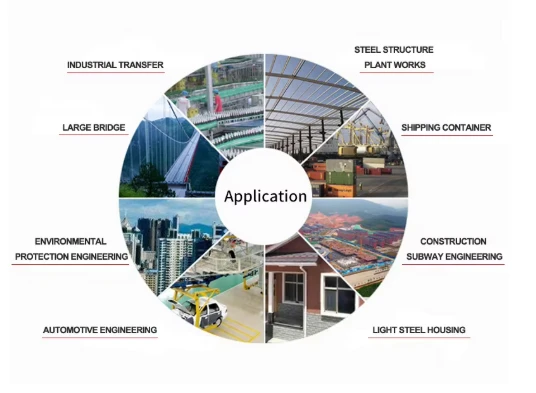
Q355NHB is widely used in bridges, railway vehicles, container structures, outdoor buildings, power transmission towers, and architectural façades where long-term atmospheric exposure is expected. It is also popular in modern architectural and landscape designs because its natural rust color provides an attractive industrial and aesthetic appearance without the need for painting.
4. Is Q355NHB equivalent to ASTM A588 weathering steel?
Q355NHB is often considered the Chinese equivalent of ASTM A588 because both are weathering steels with similar corrosion-resistant mechanisms and mechanical strength levels. However, they follow different national standards and have slightly different chemical composition ranges. In practical engineering, Q355NHB can usually be used as a substitute for A588 in many structural and architectural applications after technical confirmation.
5. Does Q355NHB require painting or coating?
In most outdoor applications, Q355NHB does not require painting because it naturally forms a stable rust layer that protects the steel. This eliminates the need for periodic repainting, significantly reducing maintenance costs. However, in environments with high chloride content, such as marine or coastal areas, additional protective coatings may be recommended to ensure long-term durability.
6. What are the mechanical properties of Q355NHB?
Q355NHB has a minimum yield strength of 355 MPa and a tensile strength typically between 470 and 630 MPa, depending on plate thickness. It also offers good elongation and impact toughness, allowing it to withstand dynamic loads, vibration, and temperature variations. These properties make it suitable for both structural and load-bearing applications.
7. Is Q355NHB easy to weld and process?
Yes, Q355NHB has good weldability, cutting performance, and forming ability, similar to conventional low-alloy structural steels. Standard welding methods such as MIG, TIG, and submerged arc welding can be used, though low-hydrogen electrodes are recommended to avoid cracking. Preheating may be required for thicker plates to ensure weld quality.
8. How does Q355NHB save maintenance costs?
Because Q355NHB forms a self-protecting rust layer, it does not need regular repainting or anti-corrosion treatment like carbon steel. Over the life of a structure, this can reduce maintenance costs by more than 50%, especially for bridges, outdoor steel frames, and large exposed structures, making it a very cost-effective solution.


