


When investing in outdoor structural steel, asset owners and engineering teams don't just buy material-they buy decades of predictable performance and low lifecycle costs. For harsh environments, from frigid northern winters to salt-laden coastal air and industrial pollution, many standard Corten Steel grades fall short of their design lifespan, succumbing to premature corrosion or brittle fracture years earlier than expected. For SMA400CW Corten Steel, strictly standardized under Japan's JIS G 3114:2022 specification for hot-rolled atmospheric corrosion-resistant welded steels, its expected outdoor service life is not a one-size-fits-all number. Instead, it is a predictable, JIS-validated range, directly tied to environmental exposure, design compliance, and basic maintenance. When deployed within its intended use cases, it delivers 30–50% longer service life than entry-level SMA400 series grades, even in the most demanding conditions.

JIS G 3114:2022 Core Benchmark for Lifespan Predictability
A Corten Steel structure's end-of-service life is defined by when cumulative corrosion loss exceeds the design's corrosion allowance, reducing structural load capacity below mandatory safety thresholds. SMA400CW's lifespan is rooted in its JIS-mandated alloy formulation: a required 0.20–0.60% nickel addition, paired with 0.30–0.50% copper and 0.45–0.75% chromium, creates a dense, self-healing protective patina that stabilizes corrosion rates far more reliably than low-nickel SMA400 variants. Its ultra-low 0.12% maximum carbon content and tightened impurity limits also eliminate brittle fracture risk in sub-zero temperatures, ensuring structural integrity is retained for the full design life.
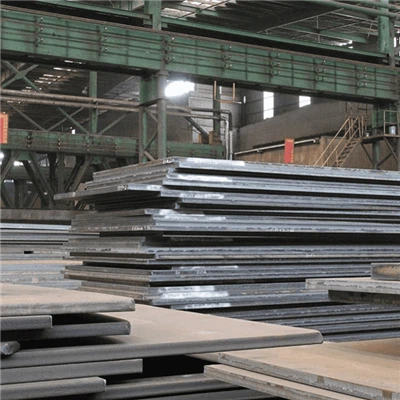
Expected Service Life by Environmental Exposure (JIS-Aligned)
All projections below assume a JIS-compliant structural design with appropriate corrosion allowance, and basic scheduled maintenance matched to the environment.
Optimal Mild Environments (Rural/Suburban, No Extreme Temperatures)For clean, low-pollution settings with no sustained sub-zero temperatures or salt exposure, SMA400CW delivers a stabilized corrosion rate of just 0.01–0.03 mm/year. With a standard 1.5 mm design corrosion allowance, this translates to an expected service life of 35–50 years, outperforming entry-level SMA400BP by 5–10 years in the same conditions thanks to its more uniform patina and reduced pitting risk.
Moderate-Challenge Environments (Light Urban Pollution, Occasional Freezing)For city environments with low-level traffic emissions, short-duration freezes down to -10°C, or low-exposure coastal locations ≥1km from the shoreline, SMA400CW maintains a corrosion rate of 0.02–0.04 mm/year. With a 2 mm corrosion allowance, the expected service life is 25–35 years. In these same settings, standard SMA400BP sees its corrosion rate spike to 0.05–0.07 mm/year, cutting its lifespan to just 15–20 years.
Harsh Eligible Environments (Sustained Sub-Zero, Moderate Industrial Pollution)This is where SMA400CW's core advantage shines: frigid regions with sustained temperatures down to -20°C, moderate industrial zones with sulfur dioxide emissions, or consistent salt-laden coastal air. It retains a controlled corrosion rate of 0.04–0.06 mm/year, with a guaranteed 27J impact toughness at -20°C to eliminate brittle fracture risk. With a 2 mm minimum corrosion allowance, the expected service life is 20–25 years. Critically, entry-level SMA400 grades are unsuitable for these conditions: their corrosion rate exceeds 0.08 mm/year, and they lose low-temperature toughness, leading to a 10–15 year lifespan with high structural failure risk.

Non-Recommended Environments: Reduced Lifespan and Safety Risks
Per JIS G 3114:2022, SMA400CW is not engineered for high-exposure marine settings, including locations within 500m of the shoreline with direct salt spray, tidal splash zones, or continuous seawater immersion. It is also not recommended for sustained temperatures below -30°C or heavy industrial environments with concentrated acidic chemical exposure. In these settings, its corrosion rate jumps above 0.08 mm/year, cutting expected service life to 15 years or less, with severe pitting corrosion and structural failure risks.

Key Steps to Maximize SMA400CW's Service Life
To hit the upper end of the projected lifespan range, follow these JIS-aligned, practical guidelines:
Compliant Structural Design: Specify a minimum 1.5 mm corrosion allowance for mild environments, and 2 mm or more for harsh eligible settings. Incorporate a minimum 3° slope on all horizontal surfaces with dedicated drain holes to eliminate standing water, the single biggest driver of accelerated corrosion.
Targeted Scheduled Maintenance: Conduct annual visual inspections for blocked drainage, debris buildup, or surface contamination. For coastal or industrial sites, implement bi-monthly low-pressure fresh water rinses to remove salt or acidic deposits that break down the protective patina.
Verified Material Compliance: Only use SMA400CW with a valid EN 10204 3.1 Material Test Certificate confirming full compliance with JIS G 3114:2022. Non-compliant or mislabeled steel will fail to form a stable patina, leading to drastically reduced service life.

In summary, SMA400CW Corten Steel delivers a predictable, JIS-validated outdoor service life of 20–35 years in its core eligible harsh environments, and up to 50 years in optimal mild conditions. Its nickel-enhanced formulation and industry-leading low-temperature toughness deliver far longer service life than entry-level SMA400 series grades in challenging settings, making it a low-lifecycle-cost choice for projects demanding long-term structural safety and minimal maintenance.


