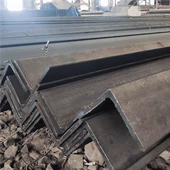
The composition of 09CuPCrNi steel typically includes alloying elements such as copper, chromium, and nickel, which contribute to its corrosion resistance properties. These elements react with the atmosphere to form a protective layer of rust, which helps to prevent further corrosion of the steel.

09CuPCrNi-A Chemical composition:
09CuPCrNi-A Chemical composition
|
Grade |
The Element Max (%) |
||||
|
09CuPCrNi-A |
C |
Si |
Mn |
P |
S |
|
≤ 0.12 |
0.25-0.75 |
0.20-0.50 |
0.06-0.12 |
≤ 0.020 |
|
|
Cr |
Cu |
Ni |
RE |
||
|
0.30-1.25 |
0.25-0.50 |
0.12-0.65 |
|||
09CuPCrNi-A Mechanical Properties
| Grade | Thickness | Yield | Tensile | Elongation | Delivery state |
| 09CuPCrNi-A | mm | Min Mpa | Mpa | Min % | |
| 4< | 345 | 480 | 24 | Hot rolling | |
| ≤ 4 | 310 | 440 | 26 | Cold rolling |

Thickness-Dependent Property Adjustments
16mm < t ≤ 40mm: Rp0.2 ≥ 335 MPa
40mm < t ≤ 63mm: Rp0.2 ≥ 325 MPa
Elongation remains ≥ 22% for t ≤ 63mm.

Key Mechanical Performance Characteristics
Ductility: High elongation (≥22%) ensures good formability, suitable for bending, cutting, and welding without cracking.
Toughness: The 20°C impact toughness ≥ 34 J meets general structural needs; for low-temperature applications (≤ 0°C), normalized heat treatment is recommended to improve low-temperature toughness (KV ≥ 27 J at -20°C).
Weldability: Low carbon equivalent (CEV ≤ 0.45%) reduces cold cracking risk during welding, making it compatible with common welding processes (SMAW, GMAW, GTAW).

Application Implications